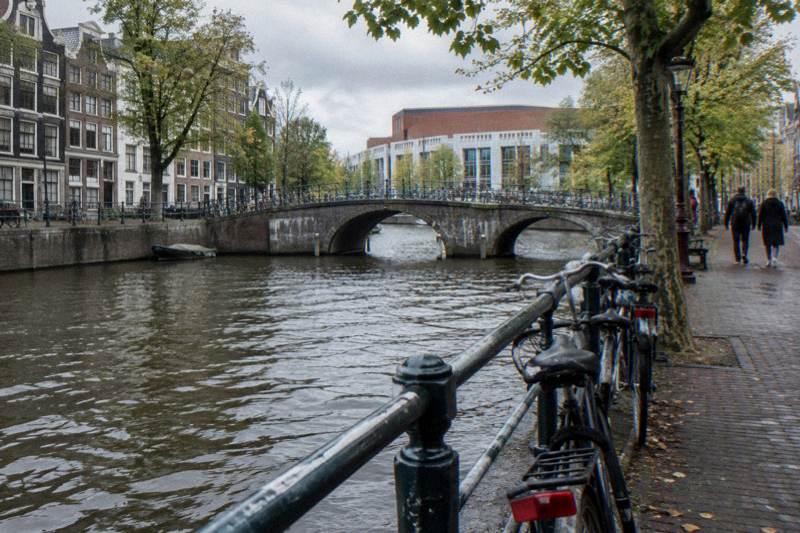
Jewish Quarter And Plantage: Free Memorials And What Costs A Ticket
The Jewish Quarter and the Plantage hold Amsterdam's most sobering memorials, and the most important of them cost nothing to enter. Here is exactly what is free, what needs a ticket, and how a free walk ties the district together.
In Short
The Hollandsche Schouwburg memorial is free, open almost every day from 10:00 to 17:00. The National Holocaust Names Memorial is free to visit. Wertheimpark and its Auschwitz Monument are a free public park, and Waterlooplein flea market is free to browse. The museums here, including the Jewish Museum, the Dutch Resistance Museum and the Portuguese Synagogue, all need a paid ticket.
Part of the Free Things To Do guides on this site, this page covers one district end to end: the Jewish Quarter and the Plantage, the strip east of the centre where Amsterdam's Jewish community lived, worked and was deported from, and where its memorials now stand.
The Plantage kept its green suburban character even as the streets around the Waterlooplein filled with workshops, markets and synagogues over the centuries. Today the district holds three memorials of national weight, a park, a market and a cluster of museums, and the split between free and paid here is unusually clear. The places of remembrance cost nothing. The museums cost money. This guide walks through each of them in turn, states the conditions exactly, and names the free GuruWalk walks that cover the ground.
What Memorials Can You Visit Free In The Jewish Quarter?
Three memorials in the Jewish Quarter and Plantage are free to visit: the Hollandsche Schouwburg on Plantage Middenlaan, the National Holocaust Names Memorial further along the same street, and the Auschwitz Monument in Wertheimpark. None of the three charges admission, none requires a booking, and all three stand in or beside public space that is free to walk through at any hour.
That is the short version, and it is worth dwelling on because it is unusual. In a city where the big museums charge EUR 25 and even several churches sell tickets, the places that carry the heaviest history here are open to anyone. The Hollandsche Schouwburg is a former theatre that served as the assembly point for deportations and is now a memorial, free to enter, no ticket, open almost every day from 10:00 to 17:00 according to its own page on jck.nl. The Names Memorial, a series of walls carrying the names of the Jewish victims from the Netherlands, is free to walk along. Wertheimpark, the small green space facing the Plantage, holds the Auschwitz Monument and is a public park with no gate and no charge.
Around them sits the everyday, free fabric of the district. Waterlooplein flea market, running in the square where the market has traded for generations, costs nothing to browse. The Magere Brug, the Skinny Bridge over the Amstel, stands a short distance south and belongs to the open street. The canal sides and the Plantage Middenlaan itself are simply there, part of a UNESCO-listed canal city that charges nothing for the privilege of walking through it.
A practical note on how the free pieces fit together. The three memorials sit along or near the Plantage Middenlaan and the Mr. Visserplein, so a visitor can see all of them in one continuous walk without transport, and the flea market square sits on that same line. This is also the district where a free, pay what you want walking tour adds the most, because the buildings do not explain themselves. The Jewish Quarter Walk, 2 Hours, run by Friendly Tours Amsterdam and rated 4.9 out of 5 across 1,384 GuruWalk reviews, meets at Zwanenburgwal 15 and covers this neighbourhood in English; you can see its details on its tour page here. The meeting point and duration are on the walk's GuruWalk page; this site is independent of GuruWalk and earns a referral fee when you reserve through its links.
For readers planning a wider trip, the question of what the Anne Frank House charges is separate from this district, since that museum sits on the Prinsengracht and needs its own timed ticket.
What Is Inside The Hollandsche Schouwburg?
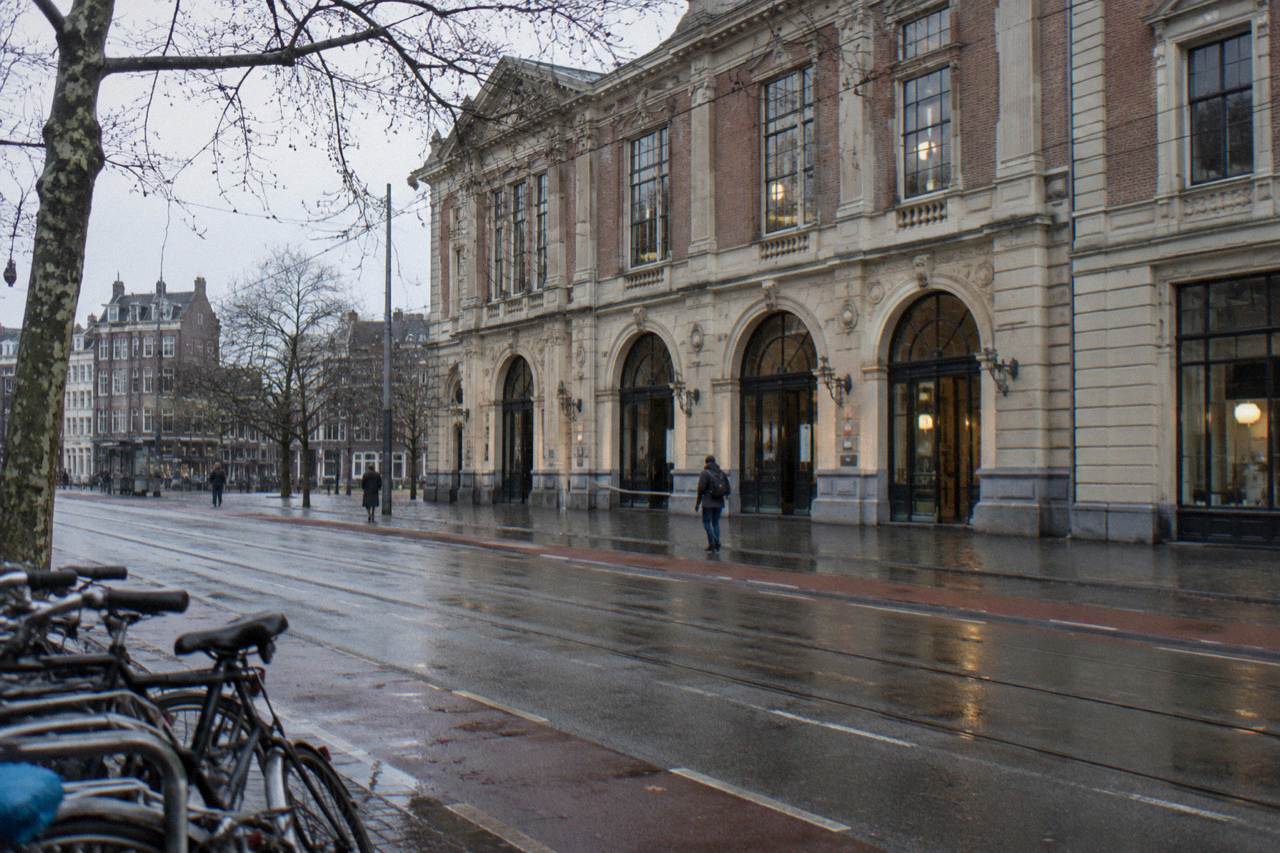
The Hollandsche Schouwburg is a free memorial inside a former theatre. During the war it was used as the assembly point from which Jewish Amsterdammers were deported; today the building holds a memorial room and a wall of names, and entry is free with no ticket needed, open almost every day from 10:00 to 17:00.
The building began as a theatre and ended the war as the worst place in the city. Jewish residents of Amsterdam were ordered to report here, and from here they were taken away to transit camps and onward. After the war the shell of the theatre was preserved rather than rebuilt, and the site became the district's principal memorial. There is no entry charge, and its operator's page on jck.nl lists the opening pattern as almost daily, 10:00 to 17:00.
What a visitor finds inside is deliberately spare. A memorial hall occupies the former auditorium, and a wall carries names connected to the deportations. The yard behind the building is part of the memorial site. Nothing about the space is commercial: there is no ticket desk for the memorial itself, and the tone is quiet and unhurried.
For anyone wondering how the site relates to the rest of the district, the answer is geographic as much as historical. The Schouwburg stands on the Plantage Middenlaan, the same street as the Jewish Museum, and a short distance from the Names Memorial, so the free memorial and the paid museum sit side by side. Visitors who want depth on the history without paying museum prices have a free option in the walking tours, and the table below sets the district's main sites against each other.
| Site in the Plantage | Free or paid | Condition stated on its own page |
|---|---|---|
| Hollandsche Schouwburg | Free | Open almost every day, 10:00 to 17:00, no ticket |
| National Holocaust Names Memorial | Free | Open public memorial |
| Wertheimpark and Auschwitz Monument | Free | Public park |
| Jewish Museum | Paid | Ticket required |
| Portuguese Synagogue | Paid | Ticket required |
| Waterlooplein flea market | Free to browse | Market square |
If you are building a day around the district rather than a single stop, a free walking tour is the cheapest way to hold the pieces together, and three of the English-language options are collected here.
Each of these is free, pay what you want, and reserved on GuruWalk: the Aldo Origins Walk, 1 Hour 45, rated 4.78 out of 5 across 261 GuruWalk reviews; the Dominika English History Walk, 2 hours, rated 4.88 out of 5 across 146 GuruWalk reviews; and the Niels Origins Walk, 2 Hours, rated 4.81 out of 5 across 116 GuruWalk reviews. All three meet in or near the old centre and treat Amsterdam's history as one story, of which the Jewish Quarter is a chapter.
What Does The National Holocaust Names Memorial Show?
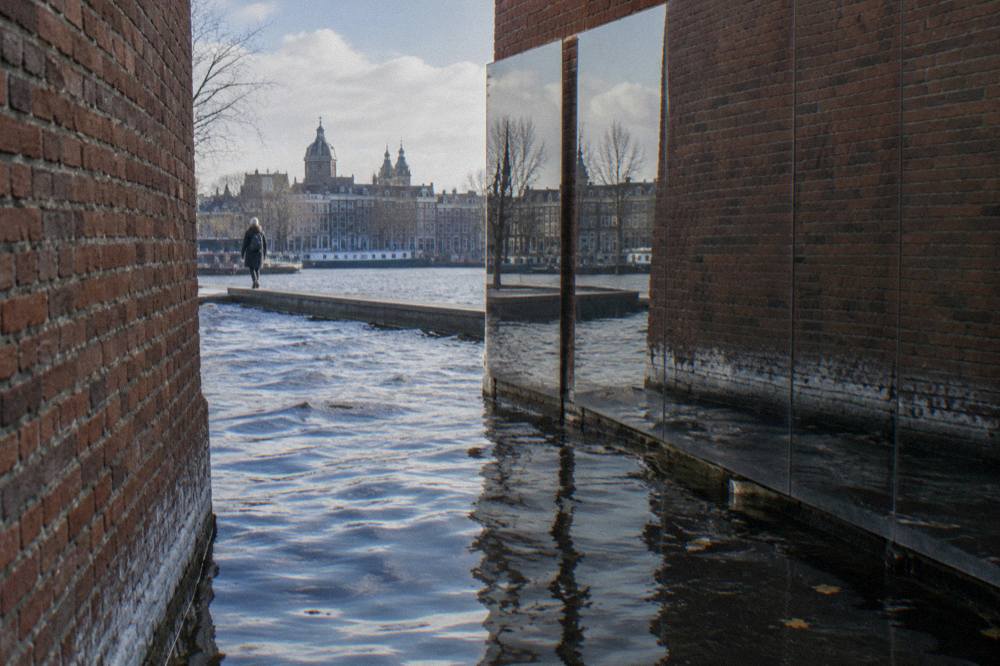
The National Holocaust Names Memorial shows the names of the Jewish victims of the persecution in the Netherlands, cut into brick walls arranged around reflective pools. It stands along the Weeperstraat side of the Mr. Visserplein area and is free to visit at any time, with no ticket, no desk and no barrier between the visitor and the walls.
The memorial consists of brick walls carrying the family names of the victims in alphabetical order, with spaces between the walls that hold mirrors and water. The names are grouped by family, so that whole households appear together on the same panels, and the scale of the walls is the first thing that strikes a visitor walking between them.
Because it is an open memorial rather than an institution, there are no hours to check and no admission of any kind. The memorial is also the meeting point named on the GuruWalk listing for a Spanish-language WWII walk in this neighbourhood, which gives a sense of how central the site has become to the district's memory landscape. Walks gather at the memorial and set out from there; the memorial itself asks nothing of the visitor but attention.
A practical comparison for planners: of the three free memorials in this guide, the Schouwburg is an indoor site with opening hours, the Names Memorial is an open-air site with none, and the Auschwitz Monument in Wertheimpark is a park monument, again with none. That difference matters on a Sunday morning or a public holiday, when the Schouwburg may be the only one of the three with a schedule to respect.
For those who want the history explained rather than simply encountered, the free walk option in English is real and well reviewed. The Jewish Quarter Walk, 2 Hours, rated 4.9 out of 5 across 1,384 GuruWalk reviews, meets at Zwanenburgwal 15, and the FreeDam Anne Frank WWII Walk, rated 4.94 out of 5 across 176 GuruWalk reviews, meets at the Hollandsche Schouwburg itself. Both are free, pay what you want, and both are reserved through the guide's own page on GuruWalk.
Why Does Wertheimpark Hold An Auschwitz Monument?
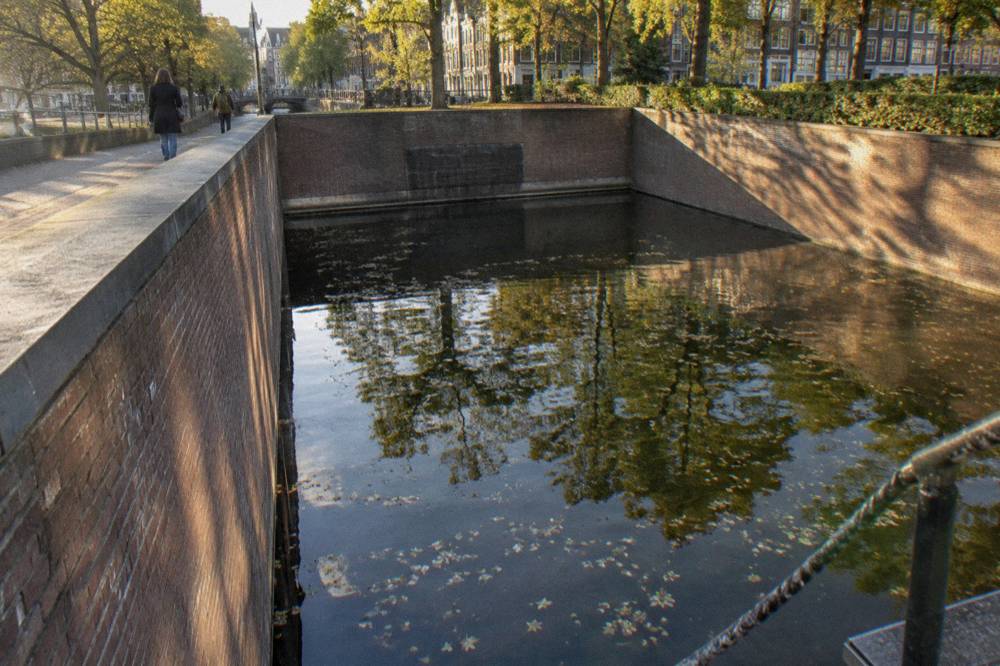
Wertheimpark holds the Auschwitz Monument as the national memorial to the victims of the Auschwitz concentration camp, and the small park facing the Plantage has carried it ever since it was placed there. The park is free public space, the monument is free to approach, and the mirrors that make up its design are set into the ground of the park.
The monument consists of mirrors set into the earth, and the ashes of Auschwitz victims are buried at the site. The design asks something of the viewer that a statue does not: looking down into the mirrors, the sky and the visitor's own face appear above the buried ground. An annual commemoration is held at the monument, but on an ordinary day it is simply a quiet corner of a public park, free to enter and free to leave.
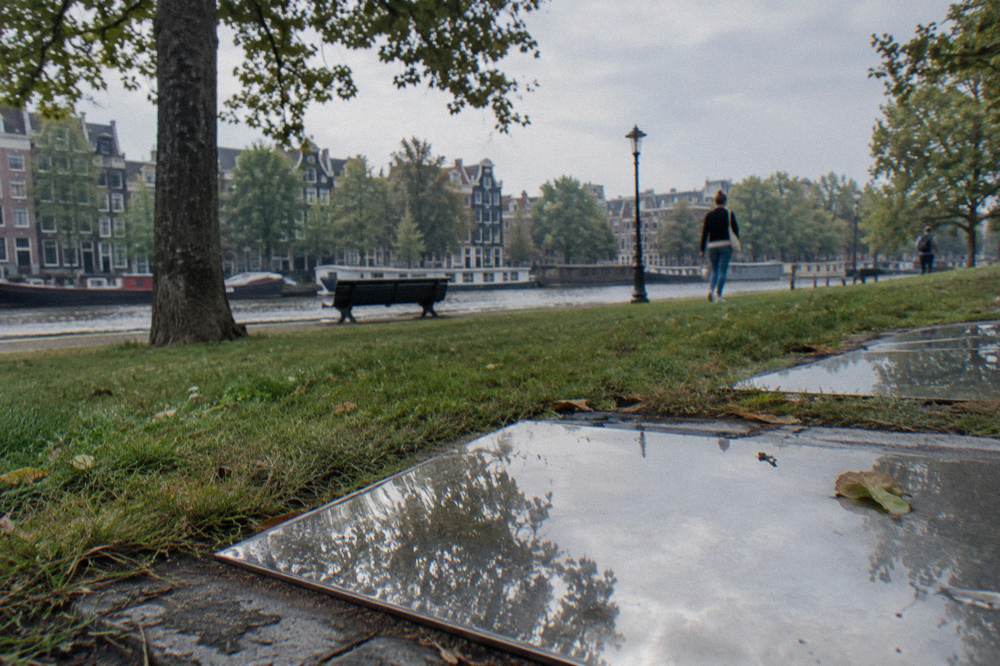
Wertheimpark itself is small by Amsterdam standards, a strip of green between the Plantage Middenlaan and the water, but it belongs to the city's network of free parks, the same family as Vondelpark and Oosterpark, all of them open to walk through at any hour. The park is one of the green spaces covered in the free parks guide. Its position makes it a natural pause between the Schouwburg and the market square.
Because the district's free memorials are the reason many visitors come, a guided walk in English that covers the same ground is worth considering. The Jewish Quarter Walk, 2 Hours by Friendly Tours Amsterdam is free, pay what you want, meets at Zwanenburgwal 15, and can be reserved on GuruWalk with no payment upfront.
The walk runs 2 hours in English, and its rating stands at 4.9 out of 5 across 1,384 GuruWalk reviews. Since the price model is pay what you want at the end, there is nothing to lose by reserving a place.
Is Waterlooplein Market Worth A Stop?
Waterlooplein flea market is worth a stop for anyone already visiting the memorials, because it sits in the same square and costs nothing to browse. It is a market in the open air, free to walk through, with second-hand goods, clothing and bric-a-brac, and it is part of the free-market layer of Amsterdam that also includes Albert Cuyp and the Noordermarkt. A free walk covers this ground: Jewish Quarter Walk, 2 Hours.
The market square has its own weight in the story of the neighbourhood. The Waterlooplein was the commercial heart of the old Jewish quarter, and the flea market that trades there today continues a tradition of trading on that square. Stalls sell a mixture of vintage clothing, records, books and household goods, and browsing is free in the way that all street markets are free: the cost only begins when you buy. You can find everything else covered here on Free Things To Do In Amsterdam.
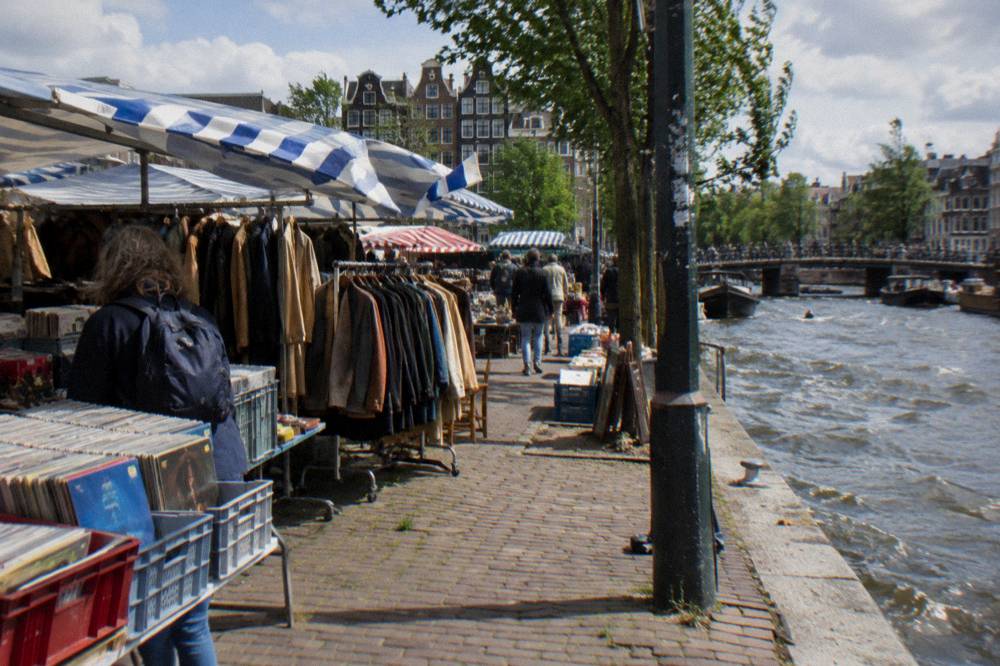
For planning purposes the market belongs on the same walk as the memorials rather than as a destination of its own. The square stands between the Plantage and the Amstel, so the natural line is Schouwburg, Names Memorial, Wertheimpark, market, and then the river. This site's free markets guide sets out the full list, from Albert Cuyp to Dappermarkt, for readers building a market day elsewhere in the city.
One honest note: a flea market is a working market, not a curated attraction. Visitors who arrive expecting heritage displays will find goods and traders instead; visitors who want a working piece of the district's street life will find exactly that, at no cost.
Which Museums Here Need A Ticket?
Every museum in this district needs a paid ticket: the Jewish Museum, the Portuguese Synagogue, the Dutch Resistance Museum and the Rembrandt House Museum all charge admission, and none has a free day or a free evening. The memorials are free; the museums are not, and no discount card makes a museum free, since each still requires a ticket or timed slot.
The split is shown so that visitors can budget honestly, not to suggest any of them is avoidable: the Jewish Museum in particular is the institution that explains the district the memorials only mark. Under-18s enter the big museums free, though that concession does not extend to adults.
| Museum or site | Admission for adults | Under-18s | Notes |
|---|---|---|---|
| Jewish Museum | Paid ticket | Free entry stated for under-18s at the big museums | Includes the synagogue complex |
| Portuguese Synagogue | Paid ticket | Concession applies as stated | The Esnoga |
| Dutch Resistance Museum | Paid ticket | Free entry stated for under-18s at the big museums | Wartime resistance history |
| Rembrandt House Museum | Paid ticket | Free entry stated for under-18s at the big museums | Rembrandt's former house |
| Hollandsche Schouwburg | Free | Free | No ticket |
| National Holocaust Names Memorial | Free | Free | Open memorial |
Two cards are sometimes sold as money-savers, and neither one is free: the Museumkaart costs EUR 75 for adults, and the I amsterdam City Card is also a paid product. The details on both are on the Museumkaart and City Card page. Neither turns a ticketed museum into a free one, and every big museum still requires its own timed slot.

For the Anne Frank House itself, which sits outside this district on the Prinsengracht, the figures are adults EUR 16.50, ages 10 to 17 EUR 7 and ages 0 to 9 EUR 1, with timed tickets sold online only through annefrank.org. The house is a common confusion with this district because the walking tours here carry Anne Frank's name in their titles; the museum is elsewhere and separately ticketed.
Which Walk Covers The Jewish Quarter And The Anne Frank Story?
Two English-language walks cover the Jewish Quarter and the Anne Frank story, both free and pay what you want: the Jewish Quarter Walk, 2 Hours by Friendly Tours Amsterdam, rated 4.9 out of 5 across 1,384 GuruWalk reviews, and the FreeDam Anne Frank WWII Walk, rated 4.94 out of 5 across 176 GuruWalk reviews. A Spanish-language option, the Spanish WWII Walk, 1 Hour 45, meets at the Names Memorial.
The two English walks differ mainly in their meeting points and duration. The Friendly Tours Amsterdam walk gathers at Zwanenburgwal 15, on the canal side of the district, and runs 2 hours. The FreeDam walk, from the same operator as the large Absolutely Amsterdam walk, gathers at the Hollandsche Schouwburg itself and runs 2 hours 30 minutes. Both are reserved on the guide's own GuruWalk page, and both are free with payment at the walker's discretion.
| Walk | Language | Duration | Meeting point | Reviews |
|---|---|---|---|---|
| Jewish Quarter Walk, 2 Hours | English | 2 hours | Zwanenburgwal 15 | 1,384 |
| FreeDam Anne Frank WWII Walk | English | 2 hours 30 minutes | Hollandsche Schouwburg, Plantage Middenlaan | 176 |
| Spanish WWII Walk, 1 Hour 45 | Spanish | 1 hour 45 minutes | National Holocaust Names Monument | 2,049 |
The Spanish option, the Spanish WWII Walk, 1 Hour 45 by Side Walks, is rated 4.89 out of 5 across 2,049 GuruWalk reviews and meets at the National Holocaust Names Memorial. It is one of the most-reviewed walks in this category on the platform, though it runs in Spanish rather than English.
After the paragraph above it is worth restating what the tour tokens on this page all share: every walk listed here is free, pay what you want, and this site is an affiliate of none of them. The guides are independent locals who publish their walks on GuruWalk.
The Jewish Quarter sits within a wider canal-and-Golden-Age landscape, and readers whose interest runs to the period rather than the war alone may prefer a walk that frames the whole historic city. The Trilingual Golden Age Walk, meeting at the obelisk on Dam Square and running in English, French and Russian for 1 hour 45 minutes, is listed on GuruWalk with 21 reviews so far, too small a pool for a rating to mean much. It is free, pay what you want, like every walk on this page.
Why Do Visitors Confuse The Free Memorials With The Ticketed Museum Next Door?
The common mistake in this district is assuming the Jewish Museum and the Hollandsche Schouwburg are one site with one price, because they stand on the same street and share an operator's website. They are separate: the Schouwburg memorial is free with no ticket, the Jewish Museum charges admission, and visitors who arrive expecting one entry point for both are the ones caught out.
The confusion is understandable. Both institutions belong to the Jewish Cultural Quarter, and their pages sit side by side on the same domain. But the Schouwburg memorial has no ticket desk, while the museum across the street is a full ticketed institution. A visitor walking the Plantage Middenlaan passes first one and then the other, and the free-to-paid boundary is invisible from the pavement.
The second mistake is the reverse: skipping the free memorials entirely because "the museum needs a ticket." The Names Memorial and the Auschwitz Monument ask nothing of a visitor but presence, and they carry the district's meaning as fully as any gallery. A day that includes only the ticketed sites and none of the free ones has missed the memorials the district exists to keep.
The third mistake is paying for orientation. This district is unusually well served by free, pay what you want walks, from the two English WWII walks above to the Spanish options that meet at the same memorials. Visitors who book a paid group tour out of habit, before checking that a free walk covers the same ground, spend money that the pay what you want model was built to make optional.
For readers ready to compare the English-language history walks across the whole city, including options that meet at Amsterdam Centraal rather than in this district, the end-of-guide selection below gathers three of them, and the wider free walking tours guide on this site covers the full picture.
All three are free, pay what you want, on GuruWalk: the Medieval City Walls Walk meets at Amsterdam Centraal's city side; the Absolutely Amsterdam walk by FreeDam Tours, rated 4.82 out of 5 across 9,929 GuruWalk reviews, meets at Beursplein in front of the Stock Exchange; and the Essential Walk, Adults Only, rated 4.94 out of 5 across 2,591 GuruWalk reviews, meets at In De Waag on the Nieuwmarkt and is an adults-only walk.
Common Questions About The Jewish Quarter Memorials
Is The Hollandsche Schouwburg Free To Enter?
Yes. The memorial inside the former theatre is free to visit, with no ticket required, and its own page lists it as open almost every day from 10:00 to 17:00. There is no admission desk for the memorial itself.
Is The National Holocaust Names Memorial Free?
Yes. The memorial carrying the names of the Jewish victims from the Netherlands is an open-air memorial with no gate, no ticket and no charge. It can be visited at any time.
Is The Auschwitz Monument In Wertheimpark Free?
Yes. Wertheimpark is a free public park and the Auschwitz Monument within it is free to approach at any hour. The mirrors of the monument are set into the ground of the park.
Which Museums In The Jewish Quarter Need A Ticket?
The Jewish Museum, the Portuguese Synagogue, the Dutch Resistance Museum and the Rembrandt House Museum all require a paid ticket. None has a free day or a free evening, and under-18 concessions apply only as each museum states them.
Are There Free Walking Tours Of The Jewish Quarter?
Yes. The Jewish Quarter Walk, 2 Hours meets at Zwanenburgwal 15 in English, and the FreeDam Anne Frank WWII Walk meets at the Hollandsche Schouwburg. Both are free, pay what you want and reserved on GuruWalk.
Is The Portuguese Synagogue Free To Visit?
No. The Portuguese Synagogue, the Esnoga, requires a paid ticket for visitors. It stands close to the free memorials, but it is one of the district's ticketed sites.