Amsterdam Markets: Free To Browse, Market By Market
Every classic Amsterdam market is free to enter and free to browse. This guide walks through the six best-known ones, what each actually sells, and how to fold a free GuruWalk into the same day.
In Short
All six of Amsterdam's classic markets, Albert Cuyp, the Bloemenmarkt, Noordermarkt and Lindengracht, Waterlooplein, Dappermarkt and Ten Katemarkt, cost nothing to browse. There is no gate, no ticket and no entry fee at any of them. You only spend money if you buy something. Each sits in a different neighbourhood, so the practical question is not cost but which market pairs with which part of your day.
Part of the Free Things To Do In Amsterdam guides series.
Which Amsterdam Markets Cost Nothing To Browse?
All six of Amsterdam's classic street markets are completely free to browse: Albert Cuyp Market, the Bloemenmarkt floating flower market, the Noordermarkt and Lindengracht market, the Waterlooplein flea market, the Dappermarkt and the Ten Katemarkt. None of them has a gate, a ticket desk or an entry charge of any kind. You pay only for what you choose to buy, and wandering, photographing the stalls and sampling the atmosphere costs nothing.
That sounds obvious, but visitors ask it more often than you would think, because several European cities do charge for wrapped-up market halls or Christmas market zones. Amsterdam does not. The city's markets sit on public streets and squares, and the free-to-browse status of each of the six is recorded the same way as a park or a square: they are open public spaces with stalls on them.
What separates them is not price but character. The Albert Cuyp and the Dappermarkt are food markets where the neighbourhood does its shopping. The Bloemenmarkt is a flower market geared to visitors, with bulbs, tulip souvenirs and cut flowers. Waterlooplein is a flea market of second-hand goods, vinyl and bric-a-brac. The Noordermarkt, in the Jordaan, pairs a farmers-style market with the bigger Lindengracht market running alongside it on the same square and canal. Ten Katemarkt, near the Kinkerstraat shopping street, is the smallest and most everyday of the six.
| Market | Neighbourhood | Free to browse | What it sells | Character |
|---|---|---|---|---|
| Albert Cuyp Market | De Pijp | Yes | Food, cheese, fish, clothing, flowers | Big neighbourhood food market |
| Bloemenmarkt | Singel, canal ring | Yes | Flowers, bulbs, tulip souvenirs | Visitor-facing flower market |
| Noordermarkt and Lindengracht | Jordaan | Yes | Produce, bread, cheese, goods | Jordaan market on square and canal |
| Waterlooplein Flea Market | Plantage edge, old centre east | Yes | Second-hand, vintage, vinyl | Flea market |
| Dappermarkt | Oost (East) | Yes | Food, clothing, household goods | Local food market |
| Ten Katemarkt | Oud-West | Yes | Food, cheese, flowers | Compact daily-goods market |
One distinction worth holding on to: free to browse is not the same as free to take. Stall holders sell everything you see, and haggling culture varies from stall to stall. Nothing in the market records prices individual stalls charge, so treat anything on a stall as priced by the seller and nothing more.
If you are building a day around markets rather than picking one, the pairings matter more than the prices. The Bloemenmarkt sits on the Singel in the canal ring, within the same UNESCO canal belt as the Nine Streets shopping streets. The Noordermarkt sits in the Jordaan, next to the Anne Frank area covered in the Jordaan, Westerkerk and Anne Frank area guide. Waterlooplein sits at the edge of the Jewish Quarter and the Plantage, where several free memorials are collected in the Jewish Quarter and Plantage free memorials guide.
What Is It Like To Walk The Albert Cuyp?
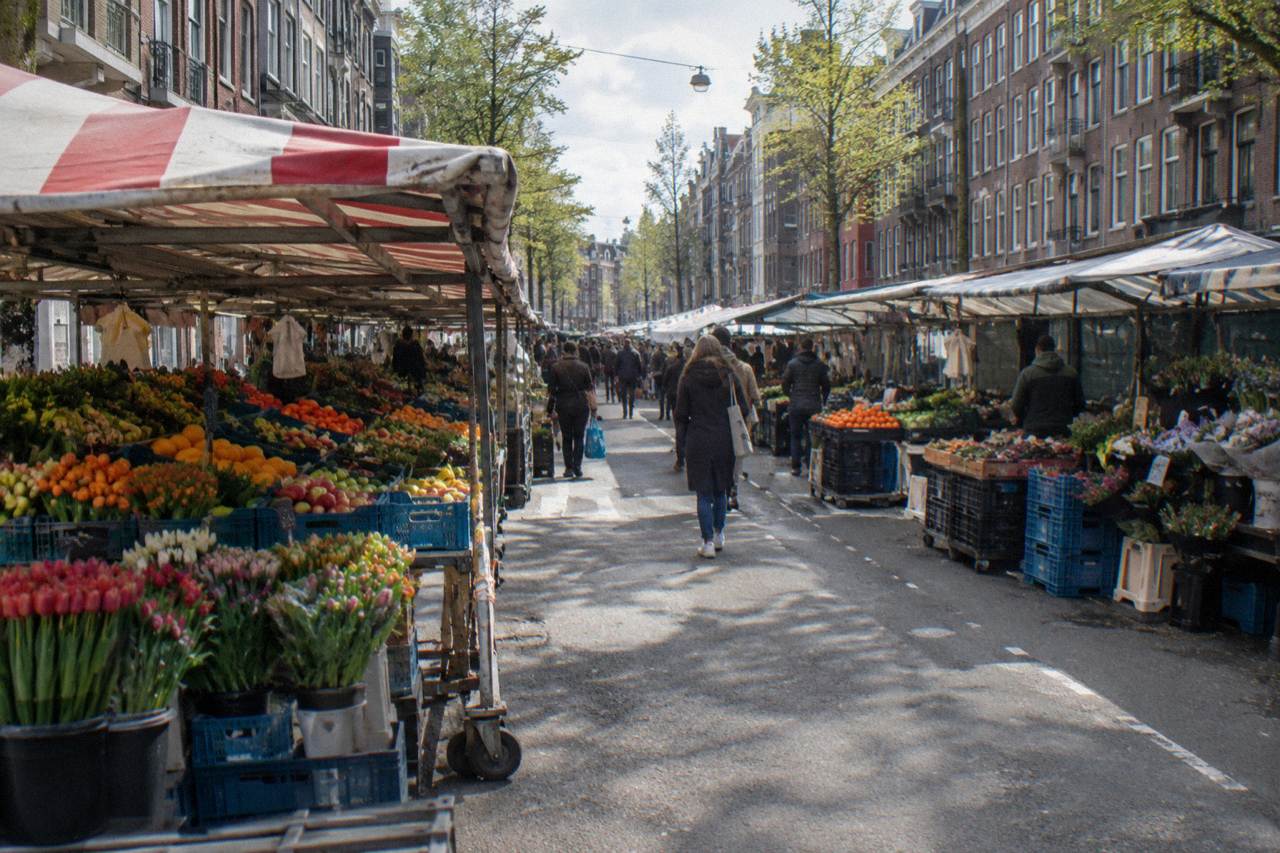
Walking the Albert Cuyp feels like moving through a busy working neighbourhood market rather than a visitor attraction, with stalls selling food, cheese, fish, flowers and clothing lining both sides of the street in De Pijp. As Amsterdam's biggest street market, it mixes locals shopping with visitors looking, and it costs nothing to walk the full length: you only pay for what you buy.
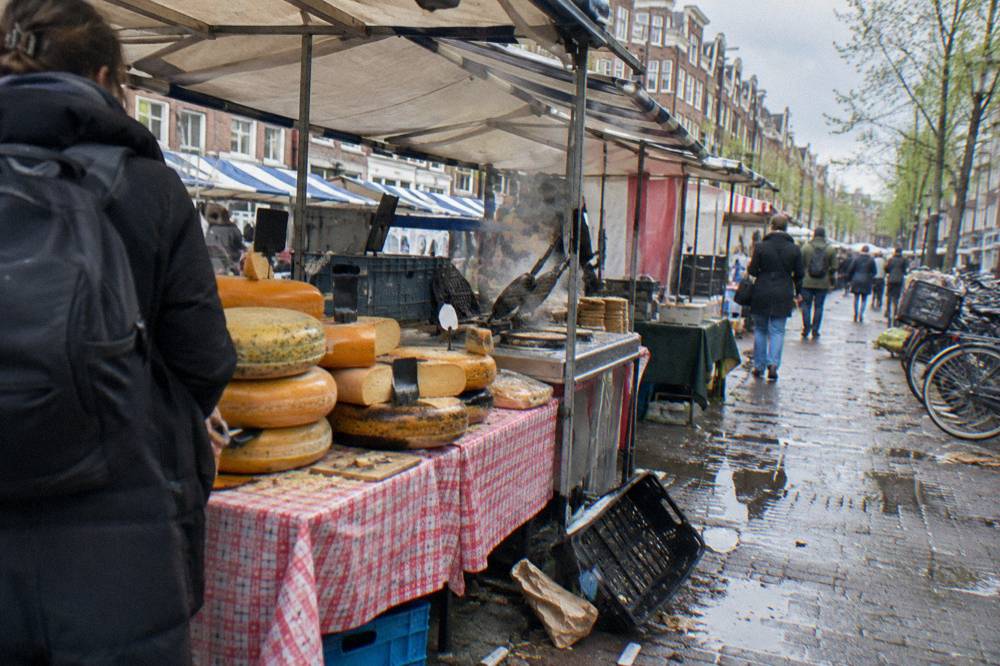
De Pijp itself is one of the city's most walkable districts, and the market is its spine. The Heineken Experience is a paid attraction, covered in the full answer on whether the Heineken Experience is free, but the market street outside it costs nothing. Stalls sell Dutch cheese in wax, fresh herring and stroopwafels, and the smell of the waffle irons is free whether you buy or not.
A practical way to fold a free guided walk into a De Pijp and old-centre day is one of the free, pay what you want GuruWalk listings. Every walk on this site is free, pay what you want, reserved on its platform, and run by independent local guides. The Absolutely Amsterdam walk by FreeDam Tours is the most reviewed English walk in the city, rated 4.82 out of 5 across 9,929 GuruWalk reviews, runs 2 hours 30 minutes, and meets at Beursplein in front of the Stock Exchange in the old centre. The Niels Origins Walk, rated 4.81 out of 5 across 116 GuruWalk reviews, runs 2 hours and meets at the National Monument on Dam Square.
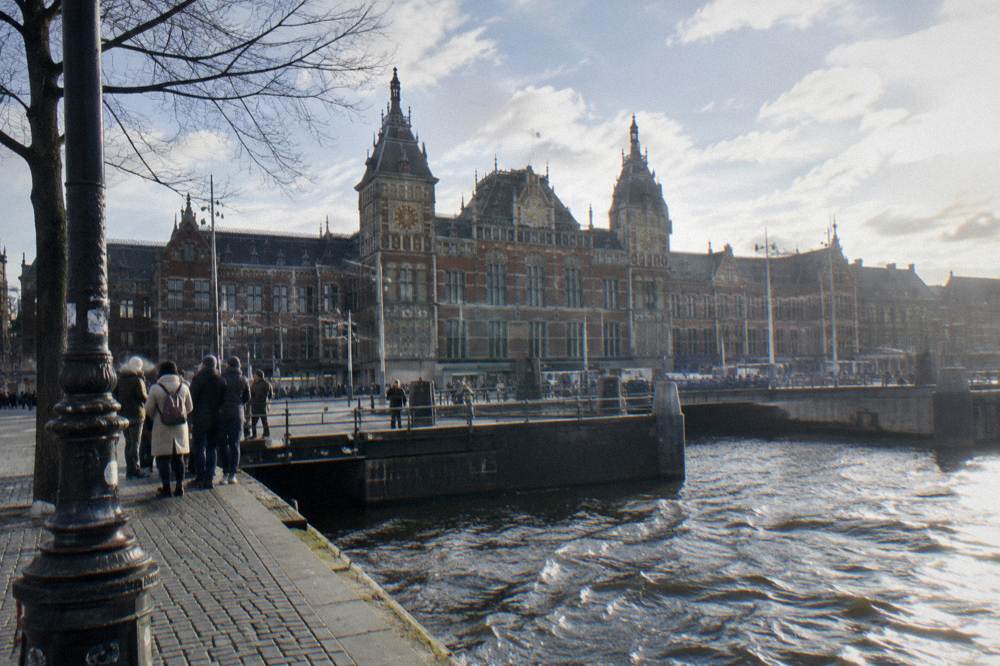
The duo works because the old centre and De Pijp are separate halves of a day: a morning walk from the Dam or Beursplein, then the market street in the afternoon. The Medieval City Walls Walk, rated 4.82 out of 5 across 78 GuruWalk reviews, meets at Amsterdam Centraal Station on the city side and traces the old town's edge in 1 hour 30 minutes, which pairs naturally with a market afternoon on the way south.
Between the market and the canal ring, De Pijp also gives you free pavement and park space. The Sarphatipark, a free public park a few streets south of the market, makes a natural end point for a market walk. None of this needs a ticket, a card or a booking; the only money you might spend at the Albert Cuyp is on the stalls themselves.
Is The Bloemenmarkt A Tourist Trap?
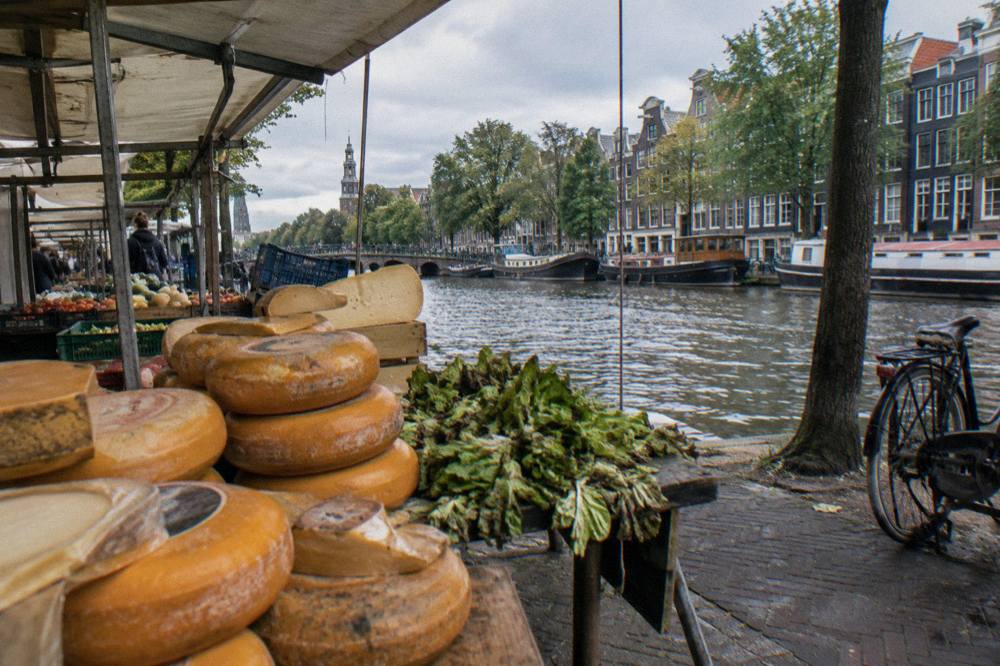
The Bloemenmarkt is free to enter and free to browse, and no part of it charges admission, but it is unambiguously aimed at visitors. The stalls sit on the Singel canal in the canal ring, selling cut flowers, tulip bulbs and tulip-themed souvenirs, and the market is free to visit and browse. Whether it feels like a trap depends on expectation: it is a souvenir market on a beautiful canal, not a local flower wholesale.
The honest framing is this: nothing about it costs money to see, and the setting, a row of floating flower stalls against canal houses, is genuinely photogenic. The criticism visitors level at it is about the goods, which skew heavily toward tulip mugs, clogs and bulbs packaged for travel. If you want a photograph of flowers against a canal, it is free. If you want a locals' market, the Albert Cuyp or Dappermarkt is the better fit.
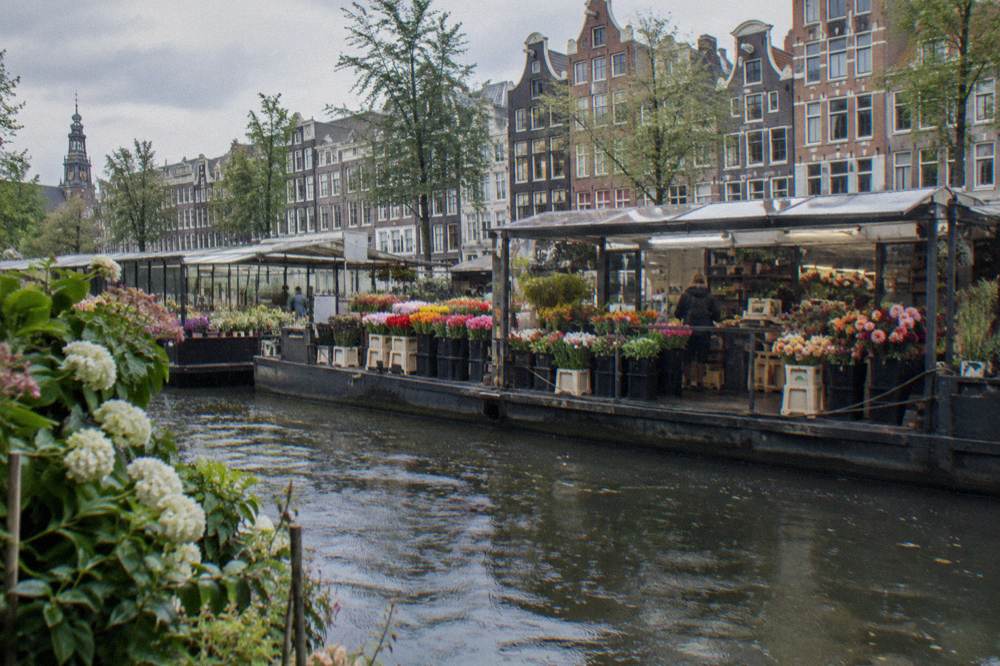
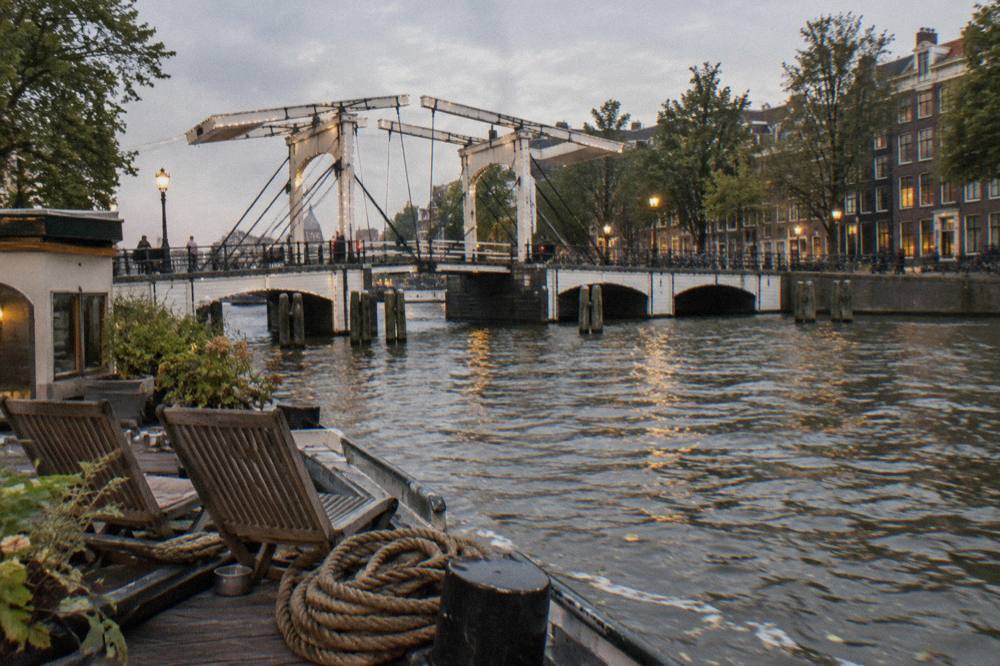
The Bloemenmarkt's location is its real value for a free day. It sits in the canal ring, the UNESCO-listed Grachtengordel, where simply walking the streets and bridges costs nothing. The Nine Streets shopping quarter and the Reguliersgracht bridges viewpoint are both free, recorded public-space attractions in the same belt. A canal-side walk that strings the Bloemenmarkt, the Nine Streets and the Magere Brug (Skinny Bridge) together costs nothing at any point.
The canal ring is also the ground of a free guided option. The Trilingual Golden Age Walk, run on GuruWalk in English, French and Russian, meets at the obelisk on Dam Square, runs 1 hour 45 minutes, and is rated 4.38 out of 5 across 21 GuruWalk reviews. You can read more on the Trilingual Golden Age Walk page. Like every walk on this site, it is free, pay what you want, and reserved through the guide's GuruWalk page.
For winter visitors, one dated fact belongs here: the Amsterdam Light Festival's free element, the 4.5 km walking route of light artworks, runs 26 November 2026 to 17 January 2027, with lights on 16:30 to 23:00 daily and until 21:00 on 31 December, per the festival's official site. The route's artworks stand in and around the canal ring and the centre, so a Bloemenmarkt and canal walk after dark in that window doubles as free light-art viewing. Boat cruises from about EUR 29.75 and the app audio walks are the paid parts.
When Does The Noordermarkt Set Up?
No fixed stall day can be given here: the Noordermarkt's exact days shift with the season, and the market's own channels carry the current schedule. What is certain is the setting, with the Noordermarkt setting up on its square in the Jordaan and the free Lindengracht market running alongside on the neighbouring canal.
The Jordaan is the densest free-sight district in the city. The Noorderkerk church is free to enter in limited hours, the Westerkerk church interior is free Monday to Friday 11:00 to 15:00 from September to June with a donation suggested, and the Westerkerk tower is closed to visits during its restoration. All of it is covered in detail in the free churches in Amsterdam guide. The market square sits right in the middle of it.
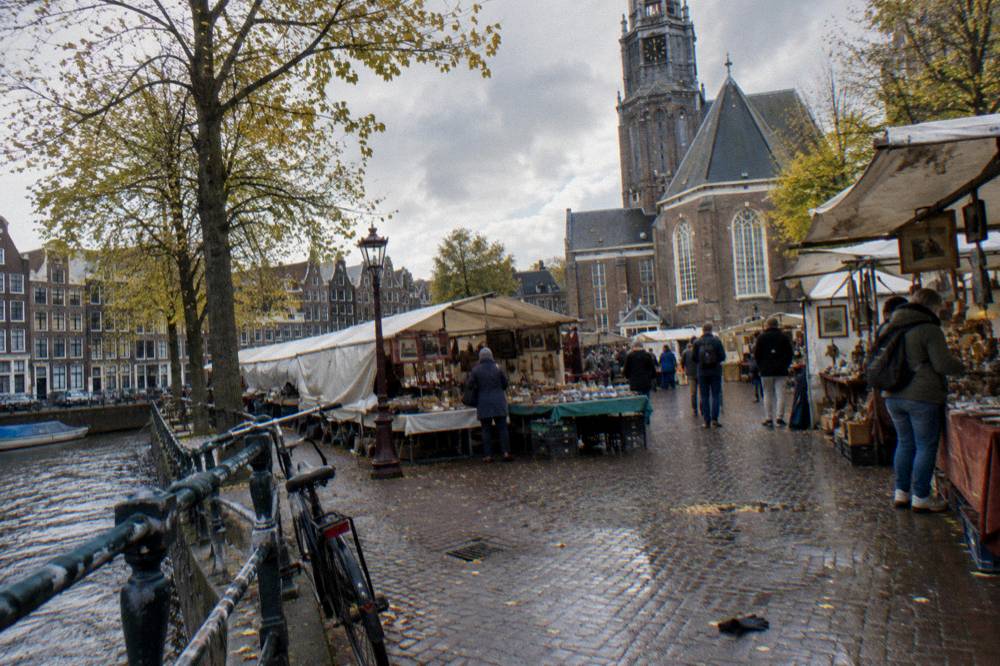
What the combined Noordermarkt and Lindengracht market sells depends on the day: the square hosts a farmers-style market with bread, cheese and organic produce on its produce days, and a second-hand and goods market on others. The Lindengracht stretch adds general stalls along the canal. Because the two run together, a Jordaan market morning is really one long free browse across a square and a canal.
The mistake to avoid is treating the tower as part of the free visit. The Westerkerk tower cannot be climbed right now, the church itself is the free part, and that split is the single most common confusion in this neighbourhood. The is the Westerkerk tower open post covers it in full.
A free walk fits this corner naturally. The Side Walks Orientation Walk, rated 4.86 out of 5 across 231 GuruWalk reviews, meets at the Homomonument at Westermarkt, on the edge of the Jordaan, and runs 2 hours in Spanish. For English speakers, the FreeDam Anne Frank WWII Walk, rated 4.94 out of 5 across 176 GuruWalk reviews, meets at the Hollandsche Schouwburg on Plantage Middenlaan and runs 2 hours 30 minutes, connecting the Plantage to the wartime history of this district.
What Do You Find At Waterlooplein?
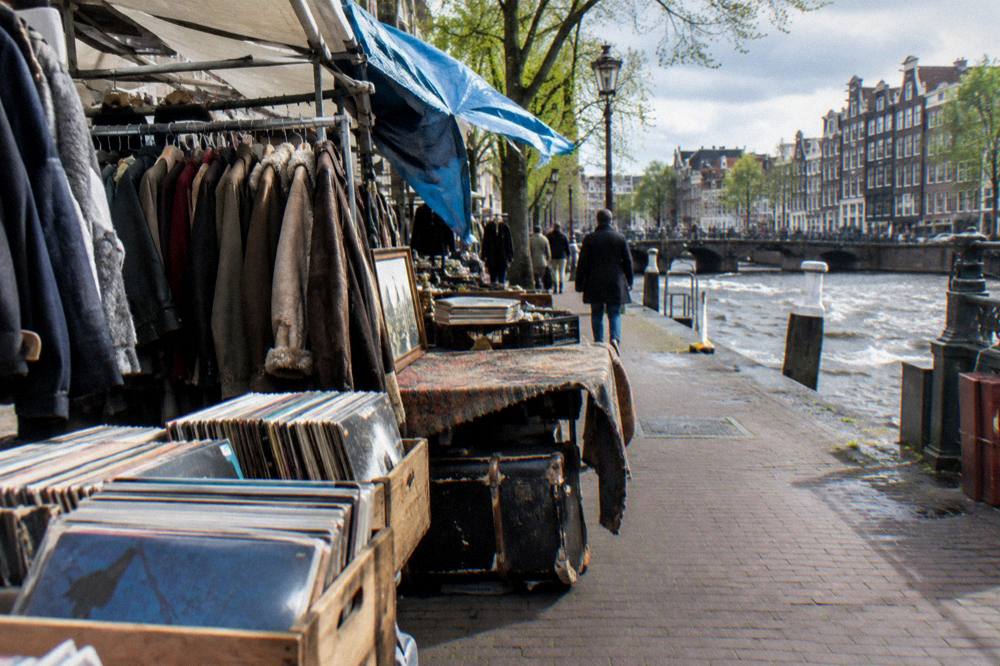
Waterlooplein is Amsterdam's flea market, free to browse, selling second-hand clothing, vintage goods, vinyl records, books and bric-a-brac from open-air stalls. It's free to enter, and there's nothing to pay. The square sits at the seam between the old centre and the Plantage, which makes it the natural free anchor for a walk through the Jewish Quarter's memorials, several of which are also free.
This is the market for people who want rummage rather than produce. Stalls are individually run, stock changes constantly, and prices are set stall by stall, so nothing specific can be promised about goods or costs beyond the categories. The browsing itself, like every market in this guide, costs nothing. This stop sits on a free walking route, Jewish Quarter Walk, 2 Hours.
The reason Waterlooplein earns its place in a free-things itinerary is the neighbourhood around it. The Hollandsche Schouwburg, a memorial site with free entry and no ticket, open almost every day 10:00 to 17:00, is a short walk into the Plantage, per the official memorial site. The National Holocaust Names Memorial is free to visit within its stated conditions. Both are covered in the Jewish Quarter and Plantage free memorials guide. A flea-market browse plus two free memorials is a half-day that costs nothing unless you buy something at a stall.
For a guided version of this ground, the Jewish Quarter Walk, 2 Hours by Friendly Tours Amsterdam, rated 4.9 out of 5 across 1,384 GuruWalk reviews, meets at Zwanenburgwal 15, and the FreeDam Anne Frank WWII Walk covers the same district from the Hollandsche Schouwburg. Both are free, pay what you want, reserved on GuruWalk, and neither is suggested for a schedule puzzle: they are simply the walks whose meeting points sit in this quarter.
A second free angle here is the water. The Magere Brug (Skinny Bridge) is a free public crossing east and south of this district, and the Eastern Docklands islands, KNSM, Java and Borneo, are free to explore. None of it needs a ticket; the ferry network that serves Amsterdam Noord is covered separately in the free ferries in Amsterdam guide.
Why Do Locals Shop At Dappermarkt And Ten Katemarkt?
The Dappermarkt and Ten Katemarkt are the two markets where Amsterdammers actually do the weekly shop, and both are free to browse like all the others. The Dappermarkt sits in the Oost (East) district near the Oosterpark, and the Ten Katemarkt sits in Oud-West near the Kinkerstraat. They are free to browse, with food, clothing and household goods rather than souvenirs. That is the whole reason locals use them: prices and goods are aimed at residents, not visitors.
The Dappermarkt's setting is the Oosterpark, a free public park recorded with high confidence, which makes the pairing easy: a market street and a park green in one visit, all free. The Dappermarkt sells food, clothing and household goods, the same everyday categories as the Albert Cuyp but in a district most visitors never reach.

The Ten Katemarkt is the compact one. It serves Oud-West, sits near the Foodhallen, which is itself free to enter with food and drink paid, and covers the same everyday range: cheese, flowers, food stalls. Its size is the point. You can browse it fully in a short visit and be on to the Vondelpark, which is free, recorded with high confidence, and covered in the free parks in Amsterdam guide.
What neither market offers is theatre for cameras, and that is a fair trade. If your day is built around photographs, the Bloemenmarkt and the Jordaan win. If your day is built around how the city actually eats, these two are the honest answer, and they cost the same as everything else in this guide: nothing to enter.
The free walk that fits an east-and-west day like this is the Dominika English History Walk, rated 4.88 out of 5 across 146 GuruWalk reviews, which meets at the main entrance of Amsterdam Centraal Station and runs 2 hours. The station sits between the eastern and western halves of the city, so the walk slots in before you head either way. The Aldo Origins Walk, rated 4.78 out of 5 across 261 GuruWalk reviews, meets at the National Monument on Dam Square and runs 1 hour 45 minutes, a shorter old-centre option on the same free, pay what you want basis.
Which Day Of The Week Suits Which Market?
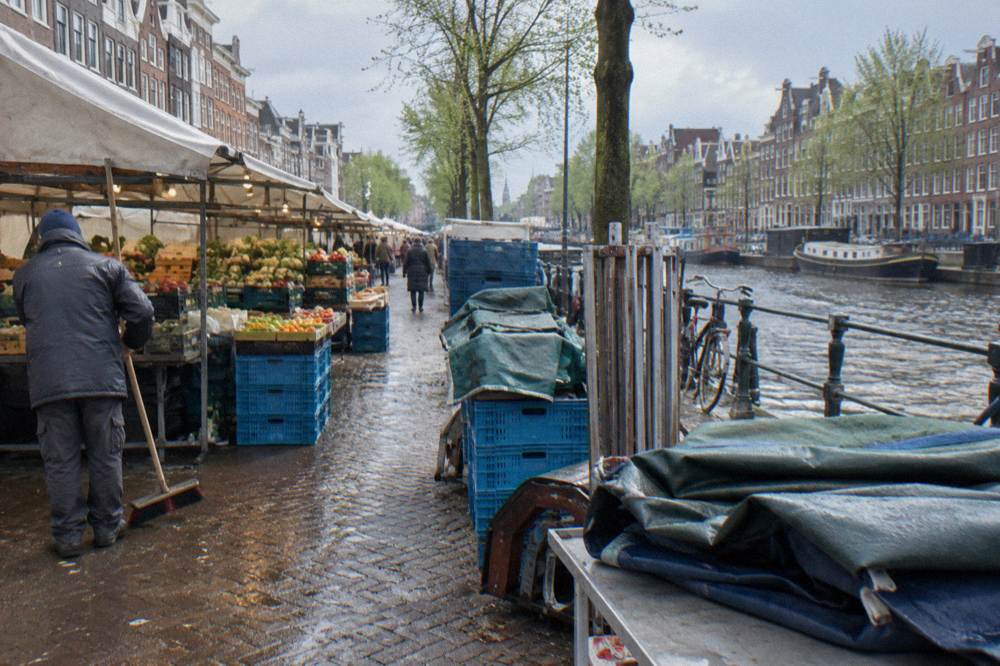
No single day of the week suits all six markets, since each runs its own stall schedule, so the dependable approach is to match market to district rather than day to day. The canal-ring and Jordaan markets pair naturally with the old centre, while Dappermarkt and Ten Katemarkt anchor the east and west, and each market's own channels carry its current stall days.
That last point matters more than it sounds. Plenty of outdated pages print confident day-by-day schedules for Amsterdam markets, and stall days genuinely shift between seasons. Rather than repeat a day that could be wrong by the time you read this, the honest structure is the one this guide already gives you: choose the district you want to walk, take the market that lives there, and confirm the current stall days on the market's own page before you commit a morning.
| Market | District | Pairs best with | Free guided walk that meets nearby |
|---|---|---|---|
| Albert Cuyp Market | De Pijp | Sarphatipark, canal walk south | Absolutely Amsterdam by FreeDam, Beursplein |
| Bloemenmarkt | Canal ring, Singel | Nine Streets, canal ring, Light Festival route in winter | Trilingual Golden Age Walk, Dam Square obelisk |
| Noordermarkt and Lindengracht | Jordaan | Westerkerk interior, Noorderkerk, Anne Frank area | FreeDam Anne Frank WWII Walk, Plantage Middenlaan |
| Waterlooplein Flea Market | Old centre east, Plantage edge | Hollandsche Schouwburg, Holocaust Names Memorial | Jewish Quarter Walk, Zwanenburgwal 15 |
| Dappermarkt | Oost | Oosterpark | Dominika English History Walk, Centraal Station |
| Ten Katemarkt | Oud-West | Foodhallen, Vondelpark | Dominika English History Walk, Centraal Station |
Every walk named in that table is free, pay what you want, booked through GuruWalk, and none of them carries a price: the tip you choose to leave at the end is the whole payment model, and no amount is suggested here because none is on record. Durations and meeting points above come straight from each walk's listing.
A second structural point for winter readers: markets are open-air, so a wet Saturday is a real possibility between November and March. The free things to do in Amsterdam on a rainy day guide covers the indoor free options, including the Stadsarchief's free Schatkamer exhibition and the OBA Central Library building, whose rooftop terrace is closed November to March even though the building itself is free to enter.
Why Do Visitors Turn Up For A Market That Is Not Running?
Visitors turn up because they assume Amsterdam's six classic markets all run every day, so they build an itinerary around a market that is not setting up that morning; stall schedules differ market to market and shift with the seasons, and no page can pin them permanently, which is why that assumption fails so often.
Both mistakes cost a morning. The first is avoidable in one step: before you commit a day, check the current stall schedule on the market's own page, because schedule data is exactly the thing that changes and exactly the thing outdated listicles get wrong. The second is avoidable by knowing the free-versus-paid split of whatever sits next to your market.
| Nearby sight | Free part | Paid or closed part |
|---|---|---|
| Westerkerk, Jordaan | Church interior, Mon to Fri 11:00 to 15:00, Sep to Jun | Tower closed for restoration |
| Stadsarchief, centre | Schatkamer exhibition, free | Meesterwerk exhibition, ticketed |
| NEMO, centre east | Rooftop Square | Museum inside, ticketed |
| Eye Filmmuseum, Noord side | Foyer, bar, waterfront terrace | Films and exhibitions |
| Royal Palace, Dam Square | Exterior from the square | Interior, EUR 13.50 |
| Foodhallen, Oud-West | Entering the hall | All food and drink |
The pattern in that table repeats across the city: the building or the view is often free while the show inside is paid. A market day that respects the pattern costs almost nothing, and Free Things To Do In Amsterdam exists to keep that split straight, market by market and sight by sight. The 28 walks listed here are free, pay what you want, every one of them reserved on GuruWalk: free is the price.
Common Questions About Amsterdam Markets
Which Amsterdam Markets Cost Nothing To Browse?
All six classics, the Albert Cuyp, the Bloemenmarkt, Noordermarkt and Lindengracht, Waterlooplein, Dappermarkt and Ten Katemarkt, are free to browse with no gate or ticket. You only pay for goods you choose to buy from a stall. Browsing, walking and photographing the public street or square costs nothing at any of them.
Is The Bloemenmarkt A Tourist Trap?
It is free to enter and free to browse, but its goods are aimed squarely at visitors: tulip bulbs, cut flowers and tulip-themed souvenirs on the Singel canal. Calling it a trap overstates it, since nothing costs money to see and the canal setting is genuine. For a locals' market, the Albert Cuyp or Dappermarkt fits better.
When Does The Noordermarkt Set Up?
The Noordermarkt sets up on its square in the Jordaan, with the Lindengracht market running alongside on the canal, and both are free to browse. Exact stall days shift with the season, so the market's own channels carry the current schedule. The Noorderkerk and Westerkerk interiors nearby are free within their stated hours.
What Do You Find At Waterlooplein?
Waterlooplein is Amsterdam's flea market: second-hand clothing, vintage goods, vinyl, books and bric-a-brac from open-air stalls, free to browse. Prices are set stall by stall and stock changes constantly. The square sits at the edge of the Jewish Quarter and the Plantage, whose memorials include free sites.
Which Day Of The Week Suits Which Market?
There is no single universal market day: the six markets run different stall schedules that shift by season, and no reliable permanent day table exists. Match the market to the district you want to walk, then confirm current stall days on the market's own page. Every one of the six is free to browse whenever it runs.
Can You Combine A Market With A Free Walking Tour?
Yes. Every walk listed here is free, pay what you want, reserved on GuruWalk, and several meet near a market district: the Trilingual Golden Age Walk at the Dam Square obelisk for the canal ring, the FreeDam Anne Frank WWII Walk at the Hollandsche Schouwburg for the Plantage, and the Dominika English History Walk at Centraal Station for east or west.