Is The Anne Frank House Free?
No, the Anne Frank House charges admission: EUR 16.50 for adults, EUR 7 for ages 10 to 17, EUR 1 for ages 0 to 9, and every ticket is a timed online ticket. Here is what that buys, what is free nearby, and the free walks that tell the story.
In Short
No. The Anne Frank House is a paid museum: adults EUR 16.50, ages 10 to 17 EUR 7, and ages 0 to 9 EUR 1. Every ticket is a timed ticket sold online only, so there is no counter at the door and no free day. What is free is the neighbourhood: the Westerkerk church interior next door, the Homomonument at Westermarkt, and the free, pay what you want GuruWalk walks that tell the Anne Frank story on foot.
This question sits inside the Jordaan, Westerkerk and Anne Frank area guide.
Is The Anne Frank House Free?
No, the Anne Frank House is not free. Admission is EUR 16.50 for adults, EUR 7 for visitors aged 10 to 17, and EUR 1 for children aged 0 to 9. Every ticket is a timed ticket and tickets are sold online only, so there is no counter at the museum where you can buy entry on the day. Unlike the Rijksmuseum or the Van Gogh Museum, no under-18 free tier applies here: children pay too, just less.
That price list comes straight from the museum's own tickets page, which also states the online-only rule. It is worth pausing on what that means in practice, because the Anne Frank House works differently from almost every other big museum in the city. There is no physical box office queue you can join and no same-day window. Entry happens in timed slots, and a slot is a specific date and a specific time, printed on your ticket.
The reason the museum can run this way is simple capacity. The building on the Prinsengracht is a real canal house with a real staircase, narrow corridors and the concealed rooms at the back that visitors come to see. A timed-slot system is the only way a building of that size admits anyone at all in an orderly fashion. That constraint also explains the next section of this article, the ticket mechanics, and it is why planning a visit around the Anne Frank House usually means planning the whole Amsterdam trip around it.
What the ticket buys is the historical portion of the house: the Secret Annex where the Frank family hid, reached through the movable bookcase, presented unfurnished as it was left after the war, together with the exhibition spaces in the front house. The museum's own page is the honest authority on what is included, and the price table below restates the age bands exactly as the museum lists them.
If the entry price is more than you want to spend, or the slots you wanted are gone, the rest of this article is for you. The museum is one paid building on a street full of free things, and the Anne Frank story itself is told at length, for free, by walking guides whose listings sit on GuruWalk. For the wider picture of what costs nothing in this city, the Free Things To Do In Amsterdam site this page belongs to exists to answer exactly that.
How Do You Buy A Ticket?
Tickets are sold online only, from the museum's own ticketing page, and every ticket carries a fixed date and time slot. There is no walk-up desk on the Prinsengracht and no phone reservation. Adult tickets are EUR 16.50, ages 10 to 17 pay EUR 7, and ages 0 to 9 pay EUR 1, paid at the time of booking for the slot you choose.
The single most important practical detail is that the museum publishes the rule plainly: timed tickets are sold online only. That has a consequence people miss. You cannot decide on the morning of your visit, standing in the Jordaan, that you would like to go in this afternoon. The decision point is the day you book, not the day you stand outside.
Book as early in your planning as you can manage. Slots for the most convenient times go first, and once a date is sold out the museum does not hold tickets back for the door, because there is no door sale to hold them for. Treat the Anne Frank House ticket the way you would treat a theatre seat: choose your date, accept the time you can get, and build the rest of that day around it rather than the reverse.
| Visitor | Price | Notes |
|---|---|---|
| Adult | EUR 16.50 | Timed online ticket only |
| Ages 10 to 17 | EUR 7 | Reduced rate, timed online ticket |
| Ages 0 to 9 | EUR 1 | Timed online ticket still required |
One point of comparison that trips people up: at the Rijksmuseum and the Van Gogh Museum, visitors aged 18 and under enter free. At the Anne Frank House that rule does not exist. Every age band pays something, and the table above is the complete price list. There is no free evening, no free Sunday, and no free museum day of any kind here; none exists at Amsterdam's big museums, and this one is no exception.
Paid cards do not change this either. A Museumkaart, which costs EUR 75 for adults, and the I amsterdam City Card, which is also a paid product, do not make the Anne Frank House free, and neither one replaces the timed slot. If a card you are considering lists the Anne Frank House as included, read the card's own terms before buying it, because the timed online ticket remains the gate. The question of whether those cards pay off at all is covered in the Museumkaart and City Card comparison guide.
Why Do Tickets Sell Out?
Tickets sell out because supply is fixed and entry is slot-only. The building is a canal house, capacity per slot is small, and every visitor must hold a pre-booked time, with no on-site sales absorbing overflow. Demand concentrates on weekends, school holidays and summer, and a sold-out date simply has no secondary channel: no door queue, no standby list, no free window.
The structural reason is the building itself. The Secret Annex is reached through the original house, on the original footprint, and the museum cannot widen a staircase or add a floor. Whatever the slot capacity is, it is capped by brick and by the preservation of the space, which is the whole point of visiting it. Online-only sales then make the sell-out visible and total: when the last slot of a day is booked, that day is closed, full stop.
The timing of your trip matters more here than at any other Amsterdam attraction. If your dates are flexible, avoid the obvious pressure points: Dutch school holidays, the summer months, and any weekend you can move to a weekday instead. Booking for two people is easier than booking for six, so larger groups should expect to compromise on time slots before they compromise on the museum itself.
What you should not do is improvise a workaround. There is no legitimate free entrance, no discount window and no on-the-day release that turns a paid museum into a free one. Resellers exist, but buying from anyone other than the museum's own page means paying someone else's margin for a timed ticket you could have bought at face value earlier. The museum's ticketing page is the only source worth trusting, and it is the only one this site will point you to.
If the dates of your trip are already locked and the slots have gone, the honest answer is to shift the Anne Frank story outdoors. The paid building is one chapter. The neighbourhood, the Westerkerk beside it, and the free walking tours later in this article carry the same history without a ticket, and the rest of this page tells you exactly what that looks like.
What Can You See Outside Without Entering?
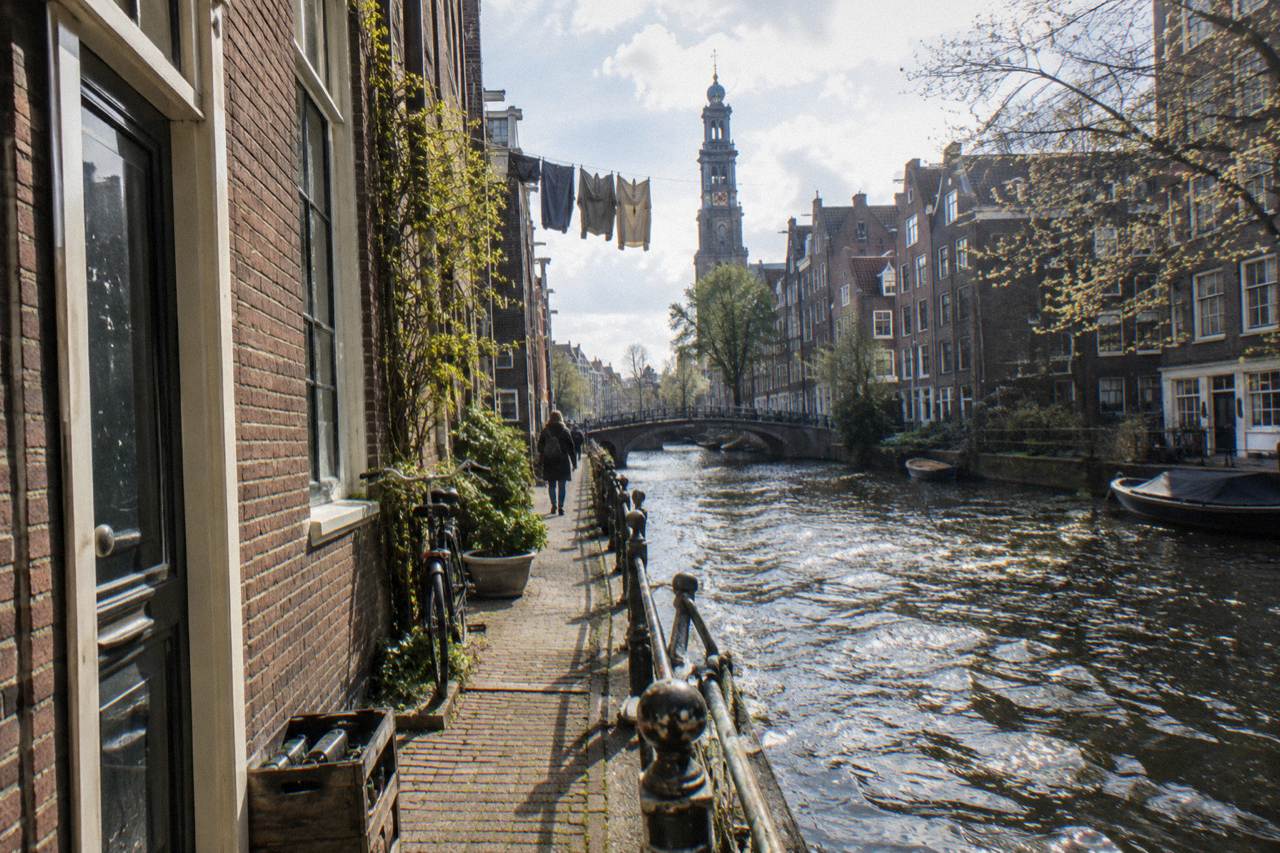
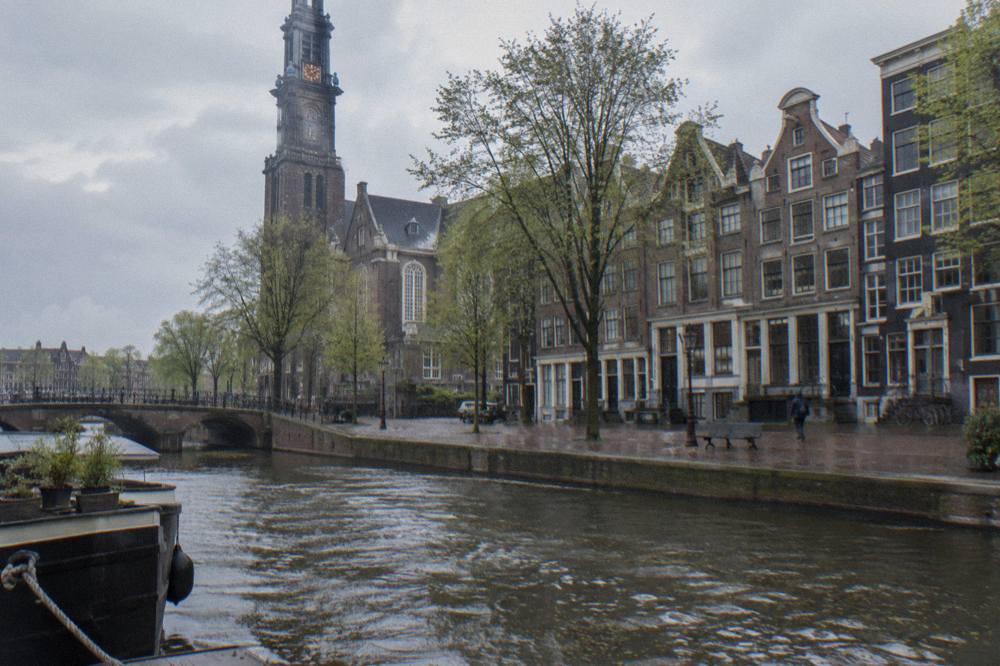
Outside the museum, everything is free: the canal house facades on the Prinsengracht, the Westerkerk church interior next door, which is free to enter Monday to Friday from 11:00 to 15:00 between September and June, and the Homomonument at Westermarkt. The Westerkerk tower, however, is closed to visitors entirely right now because of restoration, so it cannot be climbed.
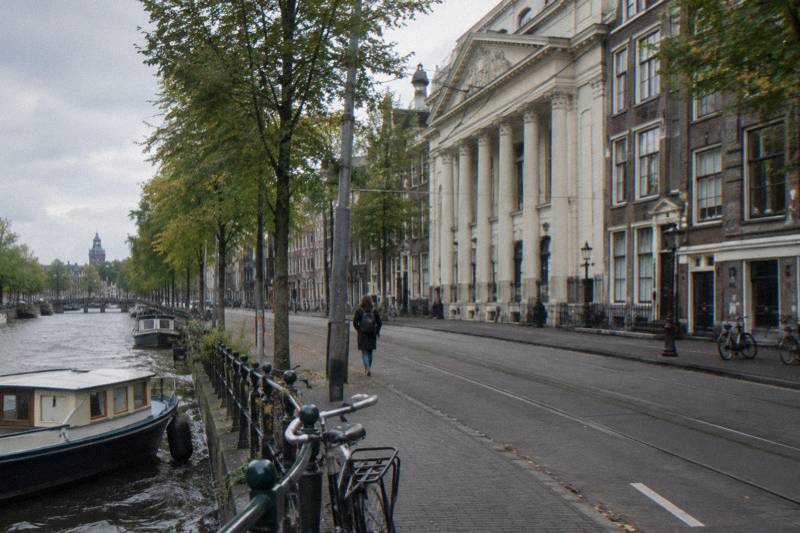
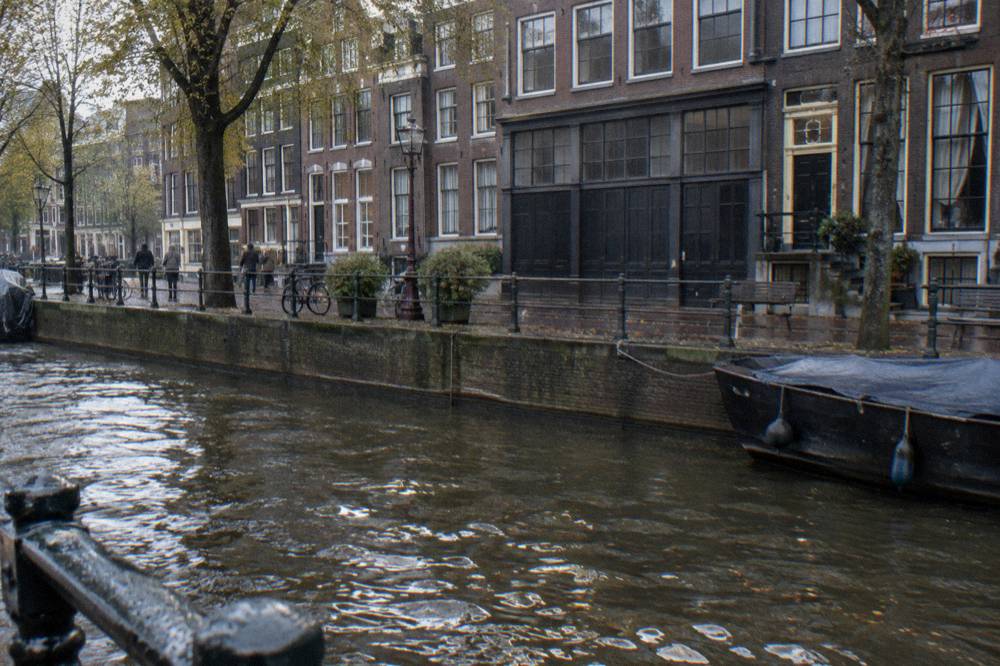
The building itself you can look at from the street and from across the canal at no cost. The canal frontage of the museum is an ordinary row of gabled houses, and seeing it in its real setting, squeezed between its neighbours on a working canal, costs nothing. The Westermarkt square beside it is public space. No part of standing outside and looking requires a ticket.
The church next door is the practical free stop. The Westerkerk church interior is free to enter, with a donation suggested, Monday to Friday from 11:00 to 15:00, September to June. The tower is a separate matter: the church's own site states plainly that it is not possible to visit the tower at this moment, owing to restoration, and no amount of planning will change that this season. The current state of the tower has its own write-up in the post Is The Westerkerk Tower Open?.
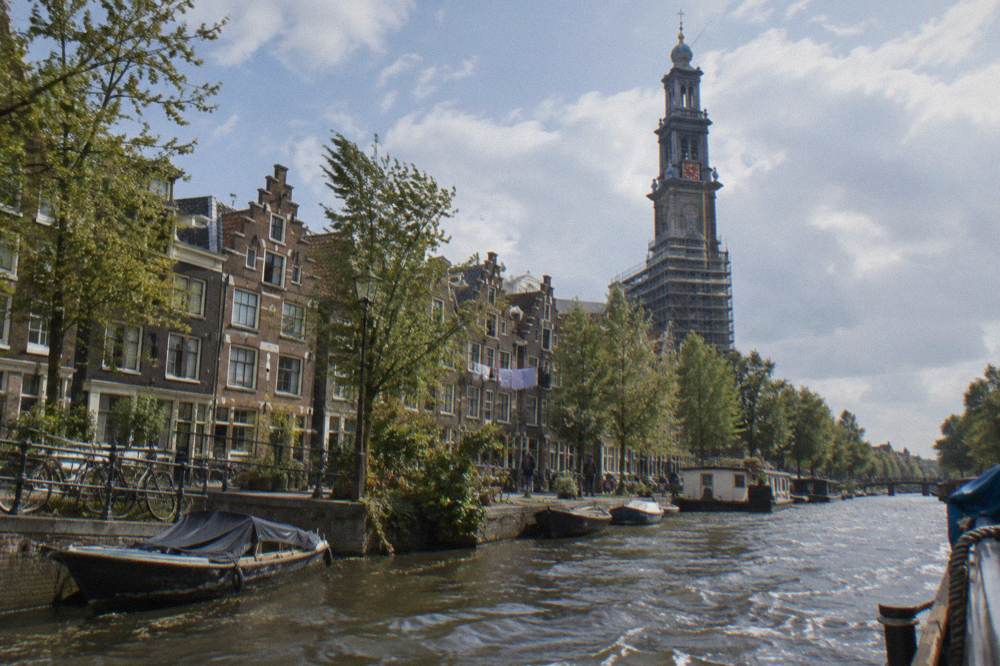
A short walk along the canals widens the free list considerably. The Jordaan neighbourhood, the canal ring with its UNESCO listing, the Nine Streets shopping lanes and the Magere Brug are all public space, free to walk, and all covered in the guide to free attractions across the city. None of them mentions Anne Frank by name, but the landscape they preserve, the canal belt the family could see only through a window, is the same one.
Two practical notes round this out. First, the Homomonument at Westermarkt is a memorial and public space, free to visit and worth a quiet minute. Second, if you want the history rather than the view, the paid museum is not the only storyteller on offer. The walks in the next section tell the Anne Frank story on foot, free, and one of them is run by the same operator as one of the city's largest walking tours.
Which Free Walks Tell The Anne Frank Story?
Yes, free walks cover the Anne Frank story, and two English-language GuruWalk tours do it directly: the FreeDam Anne Frank WWII Walk, rated 4.94 out of 5 across 176 GuruWalk reviews, meeting at the Hollandsche Schouwburg, and the Jewish Quarter Walk, 2 Hours by Friendly Tours Amsterdam, rated 4.9 out of 5 across 1,384 GuruWalk reviews, meeting at Zwanenburgwal 15. Both are free, pay what you want, and neither requires a museum ticket.
The FreeDam Anne Frank WWII Walk is a 2 hour 30 minute English-language walk run by FreeDam Tours, the same operator behind the Absolutely Amsterdam walk, which is rated 4.82 out of 5 across 9,929 GuruWalk reviews. The Anne Frank walk meets at the Hollandsche Schouwburg on Plantage Middenlaan, a site that is itself free to enter, open almost every day from 10:00 to 17:00 with no ticket, and it runs free, pay what you want, reserved through its GuruWalk listing. This site is independent of GuruWalk and earns a referral fee when you reserve through its links. The walk is run by an independent local guide.
The second English option is the Jewish Quarter Walk, 2 Hours, run by Friendly Tours Amsterdam: 2 hours, meeting at Zwanenburgwal 15, rated 4.9 out of 5 across 1,384 GuruWalk reviews, also free, pay what you want on GuruWalk. A Spanish-language alternative exists in the Spanish WWII Walk, 1 Hour 45 by Side Walks, rated 4.89 out of 5 across 2,049 GuruWalk reviews, meeting at the National Holocaust Names Monument; it is adults only, so it is not one to suggest for a family trip.
One boundary worth stating plainly, because this site holds itself to it: no route beyond the meeting point and neighbourhood is published for any of these walks, so this article will not claim which landmarks any walk passes. What the listings state is the meeting point, the duration, the language and the rating, and those are the facts you should plan on. The full list of walks in the city, including every Spanish-language option, is in the free walking tours guide.
Why pair a paid museum with a free walk? Because they do different jobs. The museum puts you inside the rooms. The walks put the rooms in their setting: the occupation, the raids, the neighbourhoods, the memorials that are free to visit on foot, such as the National Holocaust Names Memorial. Visitors with a timed slot often do both, the walk on one day and the museum on another. Visitors without a slot still get the story, told at street level, for whatever they choose to pay.
Why Do People Turn Up At The Door Without A Ticket?
People turn up without a ticket because they assume a museum of this fame must sell entry on site, the way most attractions do. The Anne Frank House does not. There is no counter, no cash desk and no same-day sale of any kind, so an unbooked visitor on the Prinsengracht is a visitor who cannot enter, whatever they are willing to pay or however far they have travelled.
The mistake is understandable rather than careless. Almost everything else in Amsterdam tourism still has a door. Paid attractions like the A'DAM Lookout sell on site, free sights like the Begijnhof simply open, and even the big museums that sell timed tickets online still operate a desk. The Anne Frank House is the strict case: online only, timed only, and no exceptions published anywhere on its own pages.
The second version of the mistake is subtler: assuming a card or a child's age changes the channel. A Museumkaart does not create a door sale. An under-18 does not skip the ticket, because the reduced EUR 7 and EUR 1 bands are still online tickets with slots. Free-entry rules that apply elsewhere in the city do not travel to this building, and the earlier price table in this article is the complete picture of who pays what.
The fix is boring and effective: book the ticket on the day you book your travel, not the week you fly. If the slots for your dates are gone before you look, do not spend the trip circling a closed channel. Book the free walk instead, walk the Jordaan and the canal ring, enter the Westerkerk in its open hours, and put the museum on the list for a return trip when you can book ahead. The story is in the city as well as in the house.
Common Questions About The Anne Frank House
Is The Anne Frank House Free?
No. Admission is EUR 16.50 for adults, EUR 7 for ages 10 to 17, and EUR 1 for ages 0 to 9, and every ticket is a timed ticket sold online only. There is no free day, no free evening and no free age band. The free parts of the story are outside: the street, the Westerkerk interior and the free walking tours.
Can You Buy Anne Frank House Tickets At The Door?
No. The museum sells timed tickets online only, from its own ticketing page, and there is no counter, cash desk or phone reservation on the Prinsengracht. If your date is sold out online, it is sold out completely. Book when you book your travel, not when you arrive.
Do Children Enter The Anne Frank House Free?
No. Unlike the Rijksmuseum and the Van Gogh Museum, where ages 18 and under enter free, the Anne Frank House charges every age band: EUR 7 for ages 10 to 17 and EUR 1 for ages 0 to 9. Each child still needs a timed online ticket, so book slots for the whole party.
Is The Westerkerk Next Door Free?
The church interior is free to enter, with a donation suggested, Monday to Friday from 11:00 to 15:00 between September and June. The tower is a different matter: it is closed to visits while restoration work runs, so it cannot be climbed, and no booking changes that this season.
Are There Free Walking Tours About Anne Frank?
Yes. The FreeDam Anne Frank WWII Walk, 2 hours 30 minutes in English, rated 4.94 out of 5 across 176 GuruWalk reviews, and the Jewish Quarter Walk, 2 Hours, rated 4.9 out of 5 across 1,384 GuruWalk reviews, are both free, pay what you want. Both are reserved on GuruWalk and need no museum ticket.
Does The Museumkaart Get You Into The Anne Frank House?
No. The Museumkaart is a paid card, EUR 75 for adults, and it does not cover the Anne Frank House or replace the timed online ticket. The I amsterdam City Card does not make this museum free either. The only way in is a timed ticket bought online at the listed price.