Can You Take Photos In The Red Light District?
Photography in De Wallen is legal in public space, but the windows are a different matter. What the rules actually say, what guides tell walkers, and how to avoid a EUR 100 fine.
In Short
Yes, photography is legal in public space in the Red Light District. A December 2023 council letter confirmed the city found no enforceable photo ban, so the signs you see are discouragement, not law. The real lines are different: never photograph the people in the windows, keep your phone down on guided walks, and know that cannabis smoking and street drinking in the centre carry fines of EUR 100 or more.
This question sits inside the Red Light District free sights, rules and tours guide.
Can You Take Photos In The Red Light District?
Yes, in public space, photography is legal, and the city itself has said so. A council letter from December 2023 recorded that Amsterdam found no enforceable photo ban in public space in De Wallen, which means the signs and campaigns you see are discouragement rather than law. The practical rule is narrower than the legal one: photograph streets, bridges and buildings freely, and never raise a lens toward the windows.
That distinction, legal permissiveness against local expectation, is what trips most visitors up. Someone who reads "no photo ban" as "cameras welcome everywhere" will get a hostile reaction within a few doorways, and someone who assumes every sign carries the force of law will leave their phone in their pocket for the entire neighbourhood. Both readings are wrong in the same way: they flatten a layered situation into a single rule.
The layered situation is this. De Wallen is a residential and working neighbourhood that happens to sit inside one of the most photographed canal landscapes in the world. The public streets, the Oude Kerk's exterior, the Zeedijk, the Waag and the canal bridges are ordinary public space, and photographing ordinary public space is not an offence in the Netherlands. The windows with red-lit curtains are workplaces. The people behind the glass are working, they are identifiable, and images of them have been used in ways that caused real harm, which is why the discouragement campaigns exist and why the local tolerance for window photography is effectively zero.
If you want the neighbourhood explained rather than just walked through, free guided walks exist here too. Free walking tours are not banned in the old centre; the city regulates them instead, with groups of up to 15 participants, a permit exemption needed for groups of more than 4, operating hours of 8:00 to 22:00, and a hard rule that tours must not pass the sex workers' windows. Those municipal rules come from the city's own tour rules page, and they shape what a walk through De Wallen looks like: guides keep groups to the wider streets and talk about the district's history from a respectful distance.
Those three history walks all sit outside De Wallen itself, in the old centre and the wider city, which is worth knowing if your interest in the district is mainly historical. The Aldo Origins Walk, 1 hour 45 minutes, meets at the National Monument on Dam Square. The Dominika English History Walk, 2 hours, meets at the main entrance of Amsterdam Centraal Station. The Niels Origins Walk, also 2 hours, meets at the National Monument as well. Every one of them is a free, pay what you want listing on GuruWalk, and each is described only by its platform, guide, meeting point and neighbourhood, because a walk's route is its guide's own to tell.
For the district itself, the English-language option among the featured walks is the RoamWorld English Red Light Walk, a free, pay what you want GuruWalk listing rated 4.77 out of 5 across 161 reviews, meeting at the Prins Hendrik Hotel on Prins Hendrikkade in the Red Light District and De Wallen category. If your question about cameras is really a question about whether you can walk this neighbourhood comfortably with a phone in your hand, a guided walk answers it in the first five minutes, because the guide sets the tone before the group reaches anything sensitive.
Why Is Photography A Problem Here?
Because the district is a workplace, and the people in the windows are identifiable in every frame. Images taken from the street have been shared, cropped and sold without consent, and that history is why the city runs discouragement campaigns even while confirming no enforceable ban exists. A photo of a canal is a photo of a canal; a photo that includes a window can be a record of someone's face at work.
The campaigns matter because they tell you where the local line sits, which is lower than the legal line. The city's position, set out in that December 2023 council letter, is that a ban could not be enforced in public space, so the approach shifted to signage and public campaigns asking visitors not to photograph the windows. Ask, not forbid. That is a deliberate choice, and reading the signs as if they were statutes misunderstands the arrangement: the law declines to punish you, and the neighbourhood asks you not to do it anyway.
There is also a privacy dimension that Dutch law does take seriously even where a photo ban does not reach. Photographing individuals in a way that harms them can raise issues under privacy rules, entirely separate from any photo-ban ordinance. Nobody should read "no enforceable ban" as "no consequences"; it just means the consequences come through different doors than a fine for pressing the shutter on a public street.
The last layer is simple behaviour. De Wallen is narrow, busy in the evening and full of people living their lives between the tourist flows. A walker staring at a phone screen, framing shots while standing in a doorway, is a nuisance regardless of what the camera captures. Putting the phone away changes how you move through the district, and it changes how the district moves around you.
What Can You Legally Photograph?
Streets, canals, bridges, building exteriors and skylines: all fair game in public space. The windows: never, not because a photo-ban statute says so but because the people behind the glass have not consented and the neighbourhood will react. The clean division is subject-based rather than place-based; the same street is photographable with the camera pointed at the architecture and not photographable with it pointed at a doorway.
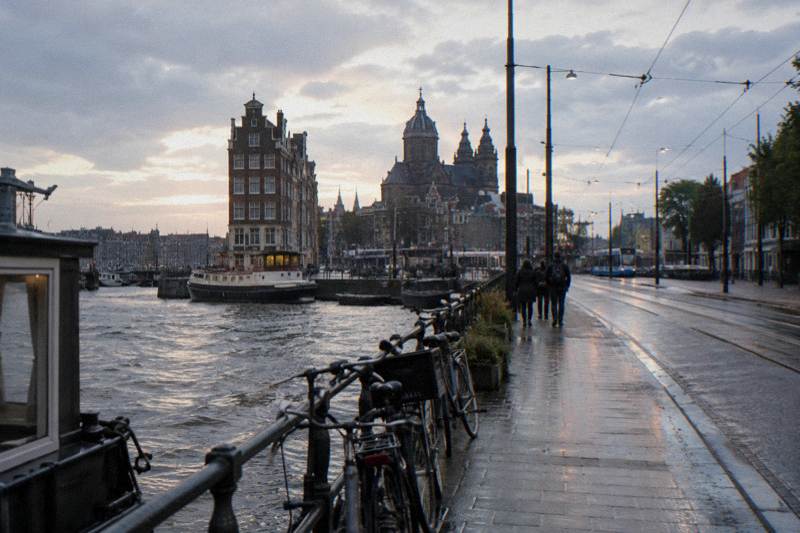
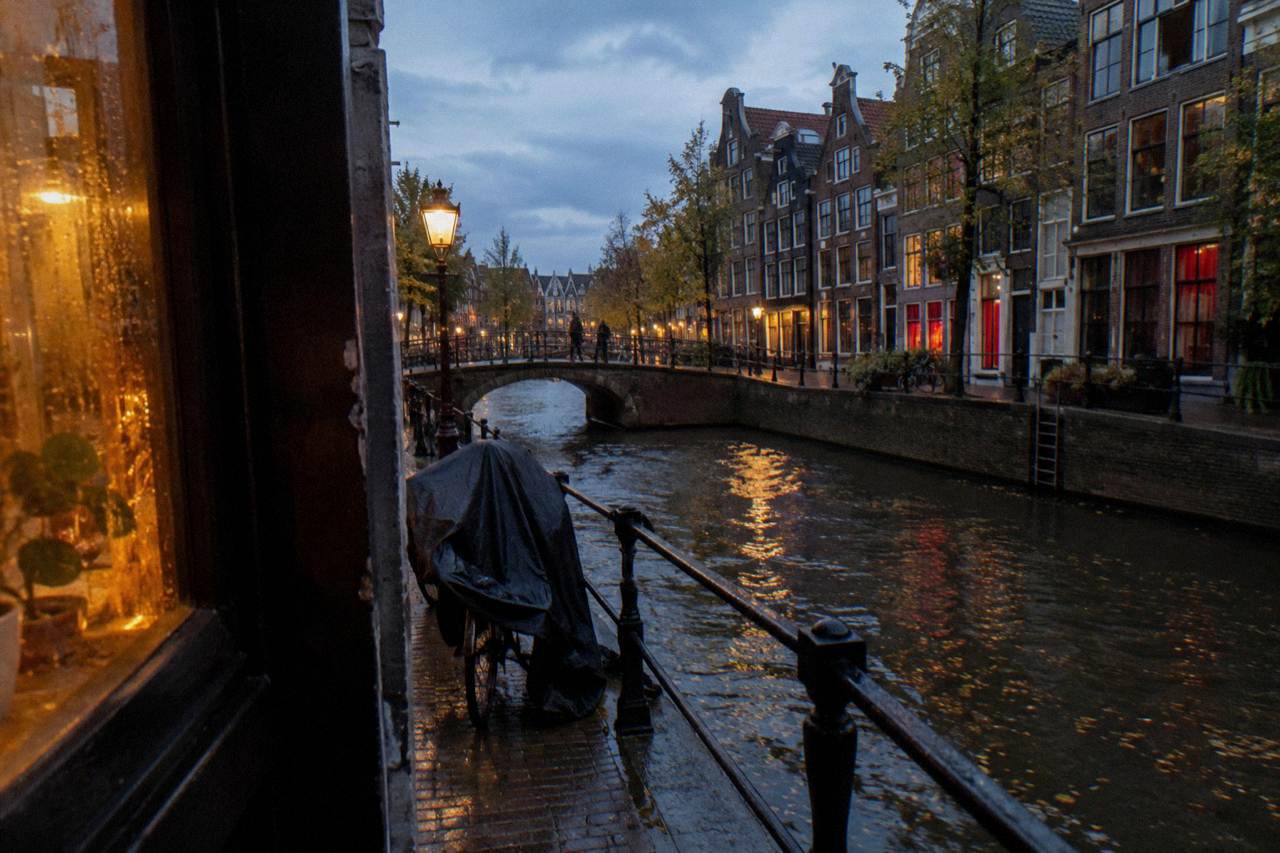
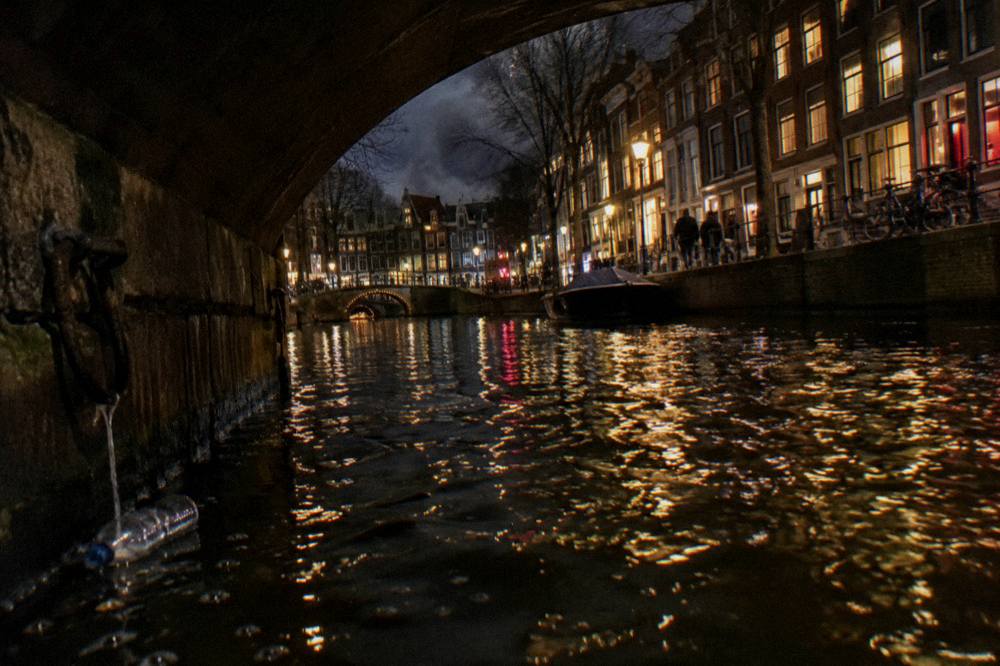
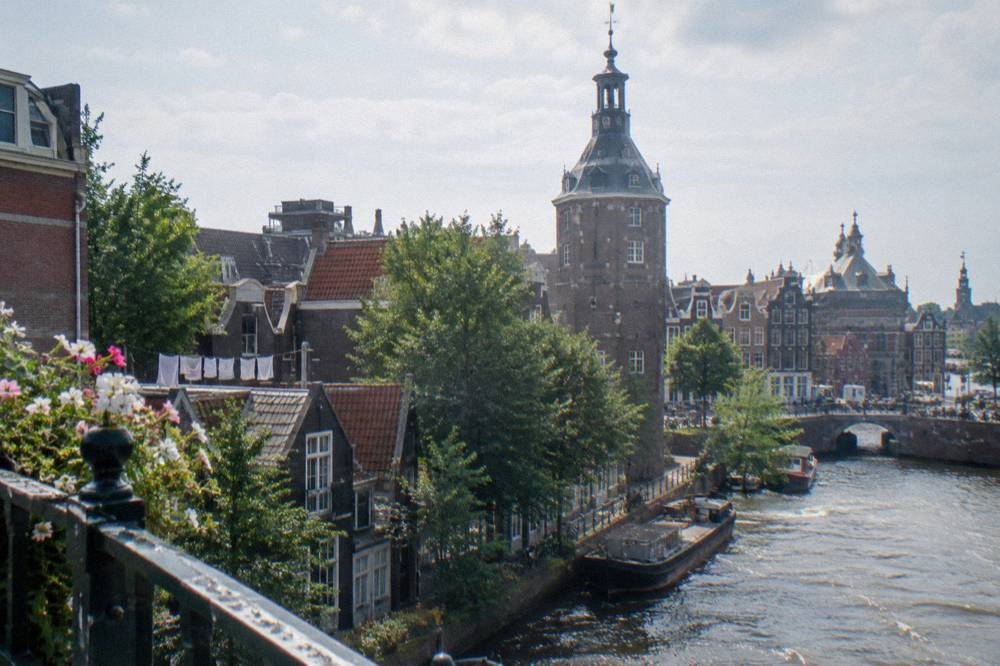
In practice most visitors want a small number of pictures: a canal at dusk, the Oude Kerk rising over the old streets, the WAAG at Nieuwmarkt, the Montelbaanstoren at the water. All of that is ordinary public-space photography. The Zeedijk, Schreierstoren and the canal ring around the district are among the most photographed views in the city and nobody objects to them.
| Subject | Photograph it? | Why |
|---|---|---|
| Canals, bridges, gabled facades | Yes | Ordinary public space, no identifiable person at work |
| Oude Kerk, Waag, towers, street scenes | Yes | Architecture in public space |
| General crowds on a wide street | Use judgement | Faces of passers-by deserve the same respect as anywhere |
| The windows, under any light | No | The people behind the glass are working and identifiable; campaigns ask you not to |
| People in the windows, even partially | Never | No enforceable ban, but privacy harm and immediate local hostility |
| Inside cafes, shops, venues | Ask first | Private premises, house rules apply |
One thing that helps is deciding your pictures before you enter the district. The canal shots most people want from De Wallen are taken from the bridges looking along the water, with the red lights as a wash of colour rather than a subject. Compose those, take them, and put the phone away for the narrower streets. That is what experienced photographers here do, and it is also, not coincidentally, what the discouragement campaigns are asking for.
The other practical point concerns timing and behaviour rather than subject. Standing still for long periods with a raised camera in a narrow street blocks the pavement and draws attention. A single considered shot taken while walking beats a dozen attempts taken while planted in front of a doorway. If a guide is present, follow the guide's lead entirely; the group rules already keep tours away from the windows, and a walker who lags behind a group to take a picture puts the guide in a difficult position under rules the guide did not write and cannot change. The full background on those municipal rules sits in the city's own pages on visiting the old centre.
What Do Guides Tell You About Phones?
Guides on the district's free walks tell walkers to keep phones pocketed through the windowed streets and to save photography for the canal views and wider squares. That instruction is not etiquette decoration; the tours themselves operate under municipal rules that keep groups away from the windows, so a phone raised at the wrong moment works against the very conditions that let the walk happen.
The English-language option is the RoamWorld English Red Light Walk by RoamWorldTours, a free, pay what you want GuruWalk listing, rated 4.77 out of 5 across 161 GuruWalk reviews, 1 hour 30 minutes long, meeting at the Prins Hendrik Hotel on Prins Hendrikkade. It is one of the Red Light District and De Wallen walks listed here: a free, pay-what-you-want walk on GuruWalk, and its guide and meeting point appear on the walk's own GuruWalk page.
The bilingual option is the Bilingual Red Light District Walk by Friendly Tours Amsterdam, run in English and Spanish, rated 4.86 out of 5 across 1,194 GuruWalk reviews, 1 hour 30 minutes long, meeting at the Barbizon Hotel on Prins Hendrikkade, also in the Red Light District and De Wallen category. It is likewise a free, pay what you want listing on GuruWalk.
What both have in common, beyond the neighbourhood, is that they operate inside the same regulatory frame: up to 15 participants, an exemption needed above 4, hours of 8:00 to 22:00, and no passing the windows. When a guide says phones down, that instruction sits on top of rules the municipality already imposes. A walker who ignores it is not just being rude; they are giving the district a reason to pressure the tours themselves.
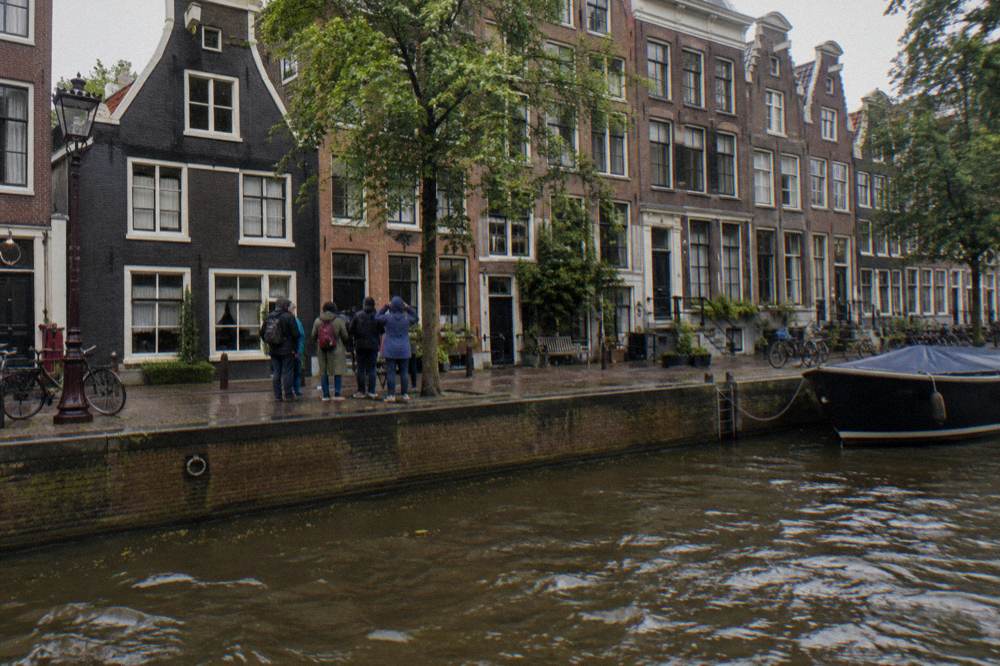
For anyone weighing a guided walk against going alone, the phone question is actually a decent proxy for the wider decision. Alone, you carry the full burden of reading the district's unwritten lines yourself. With a guide, the line is announced once, clearly, and the group moves through the sensitive streets as a single body with its phones away. The mechanics of how these free walks work at all are covered in the companion piece the full answer on how free walking tours in Amsterdam work, which explains the pay what you want model without any of the folklore that surrounds it.
What Happens If Someone Objects?
In the windowed streets, the reaction comes from people, not police: someone may confront you, demand deletion, or make it plain you should leave. Legally, an officer has no photo-ban statute to enforce in public space, but the same streets carry separate rules with real fines, so a confrontation over a camera can turn into a EUR 100 cannabis or drinking fine if either is in the picture. Handle it by deleting, apologising and moving on.
The deletion request is the standard local response and the correct response to it is to comply, immediately and without argument. Whatever your rights over an image taken in public space, exercising them against a person standing in front of you who feels photographed at their workplace is a poor use of a holiday. There is no version of that argument that ends well, and there is no photograph worth having that was taken over someone's objection.
The police dimension is narrower than people assume. Since the city confirmed no enforceable photo ban in public space, an officer cannot fine you simply for having taken a street photograph. What officers can act on is the surrounding behaviour: intoxication, noise, urination and street drinking in the centre carry on-the-spot fines of EUR 100 to 150, and smoking cannabis in the old centre, De Wallen included, carries a possible EUR 100 fine. A evening that starts with a camera and ends with a fine almost always runs through one of those, not through the photograph itself.
There is one more consequence worth naming, and it is collective. Every lens pointed at a window strengthens the case of those who want the tours themselves squeezed further. The municipal rules that let free walking tours operate in the old centre at all are a negotiated settlement, and the behaviour of individual visitors is one of the pressures on it. A considerate walker is, in a small way, part of why the neighbourhood still admits groups at all. That, more than any sign, is the argument for keeping the phone in your pocket.
Why Do People Mistake The Window Signs For Law?
Because a sign that says not to photograph reads like a rule, and most visitors never learn that the December 2023 council letter found no enforceable ban to hang it on. The mistake runs both directions: some people obey the signs as law and photograph nothing, others hear "no ban" and photograph everything. The sign is a request backed by the neighbourhood's patience, and the patience is the part that runs out.
Treating discouraged as banned costs you a few canal pictures you were perfectly entitled to take. Treating it as permitted costs the district something it did not agree to give. Neither mistake is punished by statute, which is exactly why both are common: there is no fine at the moment of decision, only the reaction afterward, and by then the frame exists or it does not.
The same confusion shows up around the tour signs. Visitors see that groups are capped and that tours avoid certain streets, and they assume photography must be banned too, when in fact the tour rules and the photo question were settled by two different processes. The tour rules are municipal and enforceable, with fines of EUR 190 per guide and EUR 950 per company. The photo rules are a campaign, with nothing behind them but social pressure. Knowing which is which tells you exactly where you stand at any moment in the district: on a bridge at dusk, free; in front of a window, asked not to.
So the working answer, the one to carry in your head as you walk in, is three lines long. Public space, yes. Windows, never. Signs, requests. Everything else on this page is detail hanging off those three, and if you remember nothing but those, you will photograph De Wallen about as well as anyone does. This article is one piece of a wider site, and the place-level detail, the sights, the rules and the walks of the whole district, sits in the parent guide on Free Things To Do In Amsterdam.
Common Questions About Photography In De Wallen
Can You Take Photos In The Red Light District?
Yes, in public space. The city confirmed in December 2023 that no enforceable photo ban exists, so street, canal and architecture photography is legal. Photographing the windows is strongly discouraged and should never be done, and on guided walks you follow the guide's instruction to keep phones away.
Is It Illegal To Photograph The Windows In De Wallen?
No enforceable ban on public-space photography exists, so it is not illegal in the way a sign implies. It is discouraged by city campaigns and the neighbourhood reacts badly to it, and images of identifiable people at work can raise separate privacy issues. Treat the windows as a hard no.
Can A Guide Or Resident Make Me Delete A Photo?
They can ask, and the right response is to delete the picture and move on. There is no photo-ban statute an officer can enforce in public space, but arguing about an image with someone who feels photographed at their workplace will not go your way, and surrounding rules on drinking and cannabis carry fines of EUR 100 or more.
Where Is It Safe To Take Pictures In De Wallen?
The canal views from the bridges, the Oude Kerk's exterior, the Waag at Nieuwmarkt and the towers along the water are all ordinary public-space subjects. Point the camera along the water or up at the architecture rather than at doorways, take the shot, and pocket the phone for the narrow streets.
Do Free Walking Tours Allow Phones?
The free, pay what you want GuruWalk walks in this category operate under municipal rules that keep groups away from the windows, and guides ask walkers to keep phones down through those streets. Photography on the wider canal views is normally fine; the guide sets the line at the start.
What Are The Fines To Worry About In De Wallen?
The fines that actually bite are not about cameras: EUR 100 for smoking cannabis in the old centre, and EUR 100 to 150 on the spot for street drinking, intoxication, noise or urination. Guided tours face EUR 190 per guide and EUR 950 per company for breaking the group rules. Photography alone carries no fine.