Is Amsterdam Expensive?
Is Amsterdam expensive? An honest breakdown of what the big museums, transport and cards actually cost in EUR, and how much of the city stays free, from ferries to walking tours.
In Short
No, and yes. The big museums charge real money: the Rijksmuseum and the Van Gogh Museum each cost EUR 25 per adult, the Anne Frank House EUR 16.50. A GVB day ticket is EUR 10, and hotels add a 12.5 percent tourist tax. But the canal ring, the parks, the IJ ferries and every walking tour on this site cost nothing to enter or run on pay what you want, so a day in Amsterdam can cost EUR 0 in sights.
This question sits inside the Amsterdam On A Budget guide.
Is Amsterdam Expensive?
Amsterdam is expensive at the ticket desk and cheap almost everywhere else. The Rijksmuseum and the Van Gogh Museum both charge adults EUR 25, the Anne Frank House EUR 16.50, and the city adds a 12.5 percent tourist tax on overnight stays excluding VAT. Yet the canal ring, the parks, the IJ ferries and 28 free pay-what-you-want walking tours cost nothing. Your daily total depends almost entirely on how many ticket doors you walk through.
The honest way to answer this is to split the city into its paid layer and its free layer, then look at where people actually spend. The paid layer is concentrated and well defined: the big museums, the canal cruises, the Heineken Experience, the A'DAM Lookout at about EUR 16.50, and the Oude Kerk at EUR 14.50. Those prices are real and they add up fast. A visitor who buys three museum tickets and a cruise in one day has spent a serious amount before lunch, more than a typical European city break day.
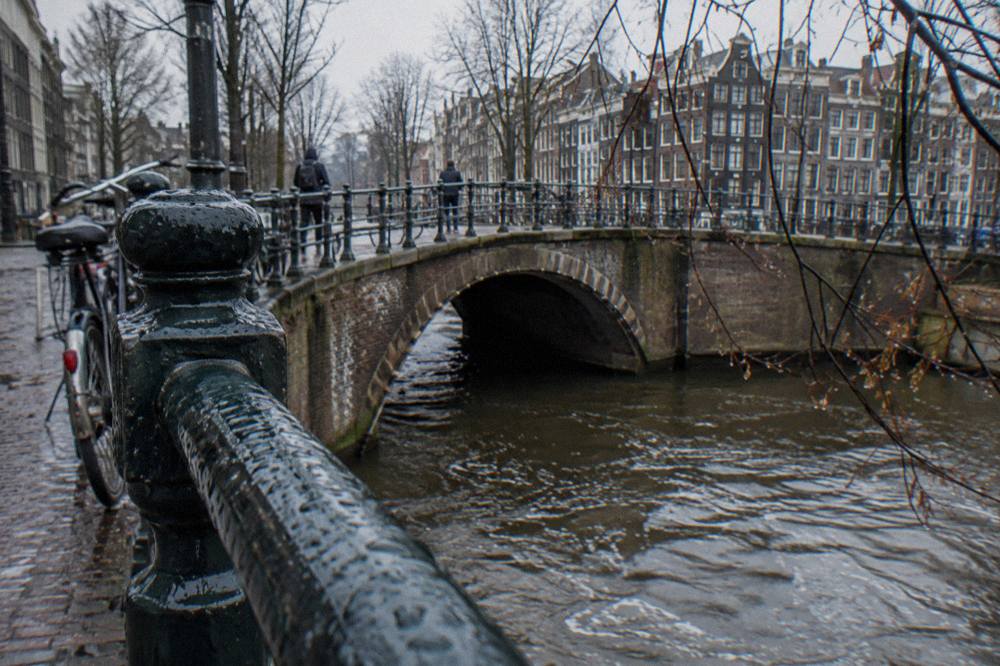
The free layer is larger than most first-time visitors expect. The Grachtengordel canal ring, a UNESCO site, is a public street system: you walk it for nothing. The Vondelpark, Westerpark, Oosterpark, Sarphatipark and the Amsterdamse Bos are all free public parks. The GVB IJ ferries F1 to F7 are free for pedestrians and cyclists, and the F3 runs 24 hours. The Albert Cuyp Market, the Bloemenmarkt and the Waterlooplein flea market cost nothing to wander. And the Westerkerk church interior is free to enter during its posted hours, September to June, Monday to Friday 11:00 to 15:00, with a donation suggested.
Every walking tour covered on this site is free, pay what you want, reserved on GuruWalk. That is not a discount scheme or a coupon trick: free, pay what you want is the actual price of the walk. The Absolutely Amsterdam by FreeDam walk, for example, rated 4.82 out of 5 across 9,929 GuruWalk reviews, meets at Beursplein in front of the Stock Exchange and runs 2 hours 30 minutes in English, and the price of it is nothing up front. That single fact reframes the whole "expensive city" question, because the guided experience, usually the priciest line item in a travel budget, is the one thing here that costs zero.
The arithmetic therefore depends on you. A museum-heavy two days with a cruise and a Lookout ticket is a genuinely expensive trip. A city built around the canals, the parks, the markets, the ferries and a free guided walk is one of the cheaper major-city visits in Europe. The rest of this article runs the numbers on both sides so you can see exactly where the money goes and where it does not.
What Costs The Most?
Three lines dominate an Amsterdam budget: accommodation with its 12.5 percent tourist tax, big-museum tickets at EUR 25 per adult per museum, and paid attractions such as the A'DAM Lookout at about EUR 16.50 and the Heineken Experience. The Anne Frank House charges EUR 16.50 per adult, and the Oude Kerk EUR 14.50. Nothing else in the city comes close to these numbers, and all of them are avoidable or reducible.
Accommodation is the structural cost. The city levies a tourist tax of 12.5 percent of the overnight price excluding VAT in 2026, on top of whatever the room itself costs, so the room rate you see is never the room rate you pay. A 2027 rise has been discussed but is not in force, so plan on 12.5 percent. Cruise passengers are charged EUR 15 per person as a day tax instead. This cost is invisible at booking and real at checkout.
Museum tickets are the second structural cost, and the pattern is remarkably uniform. The Rijksmuseum charges adults EUR 25, EUR 26.50 from 2027, and is open daily 9:00 to 17:00 including public holidays; ages 18 and under enter free. The Van Gogh Museum charges adults EUR 25, about EUR 26 from 2027, free under 18 and with a Museumkaart, but timed tickets are required even with a pass. The Anne Frank House charges EUR 16.50 per adult, EUR 7 for ages 10 to 17 and EUR 1 for ages 0 to 9, with timed tickets sold online only. The Stedelijk, the Moco, the H'ART, the Rembrandt House and the Scheepvaartmuseum are all paid too.
| Cost item | Adult price | Cheaper route |
|---|---|---|
| Rijksmuseum | EUR 25 (EUR 26.50 from 2027) | Free for 18 and under; Museumkaart holders |
| Van Gogh Museum | EUR 25 (about EUR 26 from 2027) | Free under 18 and with Museumkaart, timed slot still required |
| Anne Frank House | EUR 16.50 | EUR 7 ages 10 to 17, EUR 1 ages 0 to 9, online only |
| Oude Kerk | EUR 14.50 | Westerkerk interior is free, donation suggested |
| A'DAM Lookout | about EUR 16.50 | The F3 ferry ride itself is free |
| Tourist tax | 12.5 percent of nightly price excl. VAT | Applies to all overnight stays in 2026 |
| GVB day ticket | EUR 10 | IJ ferries free for pedestrians and cyclists |
Paid attractions stack on top. The Heineken Experience is ticketed, the NEMO museum interior is ticketed, canal cruises are paid, and the Light Festival boat cruises run from about EUR 29.75, with the paid app walks on top. None of these are traps; they are simply the premium layer. The trap is assuming they are the city. The NEMO's Rooftop Square, for contrast, is free while the museum below it is ticketed, and the Eye Filmmuseum's foyer, bar and waterfront terrace are free while its films and exhibitions are ticketed.
The third cost is transport, and it is the smallest of the three. A GVB day ticket is EUR 10 in 2026 and contactless card payment works with no registration. If you stay central and walk, and Amsterdam rewards walking, the transport line can approach zero, helped by the free IJ ferries. The Is The Ferry To Amsterdam Noord Free? post covers that piece in detail.
The Absolutely Amsterdam by FreeDam walk is the practical counterweight to every number in the table above: a 2 hour 30 minute guided walk in English through the old centre, rated 4.82 out of 5 across 9,929 GuruWalk reviews, free to reserve and pay what you want at the end. It meets at Beursplein, in front of the Stock Exchange. For a fuller picture of what the city's headline sights cost versus what sits around them free, the Rijksmuseum And Museumplein What Is Free guide breaks that square down piece by piece.
What Can You Do For Nothing?
A full day in Amsterdam can cost EUR 0 in sights. Walk the UNESCO canal ring, the Jordaan and the Nine Streets, cross the IJ on a free ferry, enter the Westerkerk during its free hours, visit the Hollandsche Schouwburg memorial, free, open almost every day 10:00 to 17:00, and finish on a free pay-what-you-want walking tour. Parks, markets, squares and the Magere Brug are all free public space.
Start with the streets, because they are the main sight and they are public. The canal ring, the Jordaan, the Zeedijk with the Schreierstoren and the Waag, Dam Square, the Rembrandtplein and the Leidseplein are all open public space with no gate and no ticket. The Nine Streets shopping quarter and the Reguliersgracht bridges viewpoint cost nothing to walk. If your image of Amsterdam is the postcard canal view, that view is free.
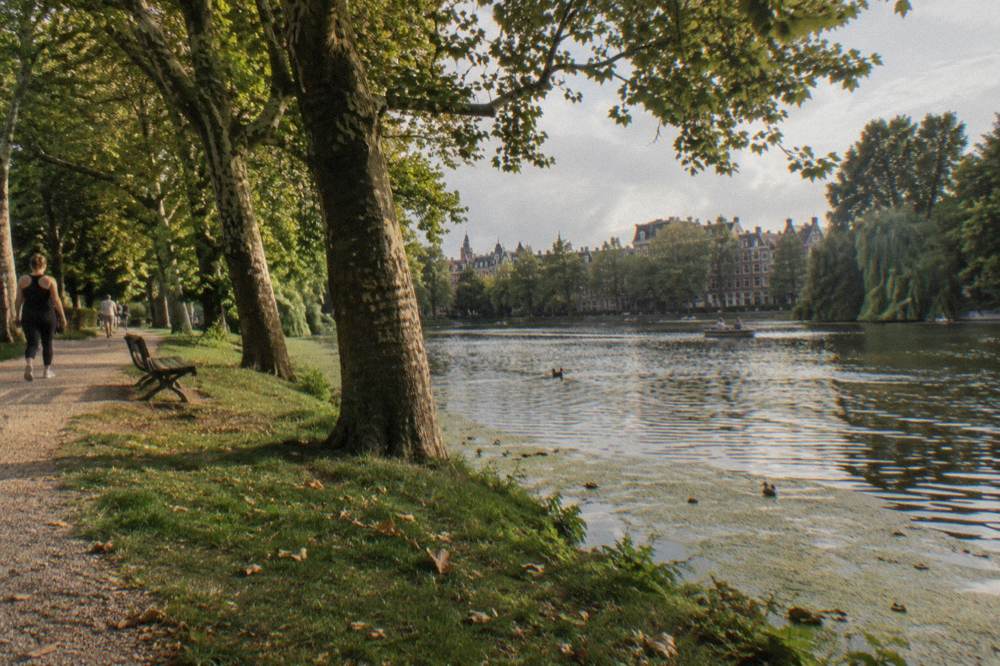
The free buildings are more numerous than the paid ones suggest. The Westerkerk interior is free, Monday to Friday 11:00 to 15:00 from September to June, donation suggested, though its tower is closed for restoration and cannot be climbed right now. The Hollandsche Schouwburg, now a memorial, is free with no ticket and open almost every day 10:00 to 17:00. The Stadsarchief's Schatkamer van Amsterdam is a permanent free exhibition. The Begijnhof courtyard is free to enter about 10:00 to 18:00, a residential courtyard where quiet is the price of admission. The Basilica of Saint Nicholas, the Noorderkerk and the Krijtberg are free in limited hours. And the Royal Palace is free to see from Dam Square, with only the interior at EUR 13.50.
Music and events add a seasonal layer. The Concertgebouw's lunchtime concerts run every week at 12:30 except July and August, free ticket required, ordered online up to a week ahead, two per person, per its own concertgebouw.nl page. The Amsterdam Light Festival's 4.5 km walking route is free from 26 November 2026 to 17 January 2027, lights on 16:30 to 23:00 daily and until 21:00 on 31 December, while the boat cruises from about EUR 29.75 and the app walks are paid. Watching the Museumplein ice rink, 24 October 2026 to 16 January 2027, is free; skating is ticketed.
The Essential Walk, Adults Only, an English walk rated 4.94 out of 5 across 2,591 GuruWalk reviews, is one of the free options in the old centre, meeting at In De Waag on the Nieuwmarkt and running 1 hour 30 minutes. Adults only means exactly that: it is not suggested to families or children.
The deeper point is that the free layer is not a consolation prize. The canal ring is the UNESCO object itself. The ferry ride across the IJ is one of the better views in the city. The Concertgebouw is a world-class hall. The free walks are led by guides who run real listings on GuruWalk and choose the pay-what-you-want model deliberately. An expensive day in Amsterdam is a choice, not a condition.
How Do Free Days And Paid Days Balance?
There are no free museum days or free evenings at the big Amsterdam museums, so the balance has to be planned, not stumbled into. The reliable free levers are under-18 entry at the big museums, the free buildings, the free events and the free walks. Pair one paid anchor per day, Rijksmuseum or Van Gogh, EUR 25, with a free walking tour and the public city, and a three-day trip needs only two or three paid tickets total.
The single most common planning mistake is assuming a free Sunday or a free last hour exists somewhere. It does not. No free Sunday or evening window was confirmed at any of the big museums, and writing one into a plan means arriving at a closed door. The Rijksmuseum is open daily 9:00 to 17:00 including public holidays, and every day of that week costs adults EUR 25. Timed tickets are the norm: the Van Gogh Museum requires a timed slot even for pass holders, and the Anne Frank House sells timed tickets online only, per its own annefrank.org tickets page.
| Day shape | Paid items | Free items | Ticket spend per adult |
|---|---|---|---|
| Museum day | Rijksmuseum EUR 25 | Museumplein, free walk | EUR 25 |
| History day | Anne Frank House EUR 16.50 | Hollandsche Schouwburg, Jewish Quarter walk | EUR 16.50 |
| Zero day | none | Canals, ferry, Westerkerk, market, free walk | EUR 0 |
| Family day | Two adult museum tickets | Under-18s free at the big museums | EUR 25 per adult |
The under-18 rule helps families: the Rijksmuseum (ages 18 and under), the Van Gogh Museum (under 18) and the Stedelic (under 19) are free for children, and the Anne Frank House is not (EUR 1 ages 0 to 9, EUR 7 ages 10 to 17). A family of four entering the Rijksmuseum pays for two adults rather than four tickets. The Museumkaart, covered below, extends this logic to repeat visitors. Other pages covering the same trip are gathered on Free Things To Do In Amsterdam.
Events fill the calendar's free side. The Sinterklaas arrival on Sunday 15 November 2026 is free along the route, with the boat arriving about 11:30 by the Scheepvaartmuseum and a land parade through the afternoon. The Funky Xmas Market at Westerpark on 20 December 2026 has free entrance. The ice rink at Museumplein is free to watch. Chinese New Year on 6 February 2027 is listed on the city calendar. None of these replaces a museum, but each replaces an evening that would otherwise be a paid show.
Balance, in practice, means anchoring. One paid anchor a day, chosen deliberately, with the free city wrapped around it, produces a trip that feels rich rather than rationed. The walks make this concrete: every walk on this site is free, pay what you want, so the guided layer of each day costs nothing fixed, and the money goes only where you decide it matters.
Which Cards Save Money?
The Museumkaart, EUR 75 for adults, pays for itself once you visit enough paid museums; at EUR 25 a ticket, the break-even sits at three visits. The I amsterdam City Card, roughly EUR 67 to EUR 140 depending on length, bundles transport and attractions but never makes a museum free in the sense of walking in: every big museum still needs a timed slot, and neither card covers the Anne Frank House.
The Museumkaart costs EUR 75 for adults and EUR 39 up to age 18. Against EUR 25 tickets at the Rijksmuseum and the Van Gogh Museum, three adult museum visits in a trip roughly covers the card, and anything beyond that is savings. The catch is operational, not financial: the Van Gogh Museum requires a timed ticket even with a Museumkaart, so the card buys entry, not queue-jumping or spontaneity.
The I amsterdam City Card, about EUR 67 to EUR 140, bundles GVB transport with a set of attractions. It is a paid product like any other, and the same rule applies: it never removes the timed-slot requirement at the big museums. If your plan is three museums plus heavy tram use, the arithmetic can work; if your plan is the free city plus one museum, the card is more expensive than just buying the one ticket.
Two smaller print items matter. NEMO opens on selected Mondays only, listed on its page, so a card-driven Monday plan can misfire. And the Museumkaart does not cover everything: the Anne Frank House is sold on its own timed system, online only, and no card changes that.
The honest summary of the card question is on the site already: the Museumkaart And I Amsterdam City Card Do You Need Them guide runs both products against real itineraries. For a two-day first visit built around the free layer described above, the answer is usually no card at all. For a museum-dense week, the Museumkaart wins.
Which Free Walks Cut The Cost Of A First Visit?
Every one of the 28 walks listed here is free, pay what you want, reserved on GuruWalk, so the entire guided layer of a first visit can cost nothing fixed. English options include Absolutely Amsterdam by FreeDam, 2 hours 30 minutes, rated 4.82 out of 5 across 9,929 GuruWalk reviews, the Jewish Quarter Walk, 2 hours, and history walks from the Dam Square meeting points. Walks differ by language, duration and meeting point, not by price.
The walks cluster around meeting points, which makes them easy to fold into a day. In the old centre, Absolutely Amsterdam by FreeDam meets at Beursplein in front of the Stock Exchange; Aldo Origins Walk, 1 Hour 45, rated 4.78 out of 5 across 261 GuruWalk reviews, and Niels Origins Walk, 2 Hours, rated 4.81 out of 5 across 116 GuruWalk reviews, both meet at the National Monument on Dam Square; Dominika English History Walk, rated 4.88 out of 5 across 146 GuruWalk reviews, meets at the main entrance of Amsterdam Centraal Station. In the Jewish Quarter, the Jewish Quarter Walk, 2 Hours by Friendly Tours Amsterdam, rated 4.9 out of 5 across 1,384 GuruWalk reviews, meets at Zwanenburgwal 15, and the FreeDam Anne Frank WWII Walk, rated 4.94 out of 5 across 176 GuruWalk reviews, meets at the Hollandsche Schouwburg on Plantage Middenlaan.
Every walk listed here is a real GuruWalk listing, run by an independent local guide; this site is independent of GuruWalk and earns a referral fee when you reserve through its links. The one mechanic that matters: free, pay what you want is the price, you reserve on the walk's own GuruWalk page, and nothing is charged up front. Do not look for, or expect, a different pricing structure.
The saving is easiest to see against the paid alternatives. A paid guided tour in a major European city routinely costs far more than nothing, while every walk here costs nothing fixed. Two travelers taking a free walk on each of three days, paying what they judge each walk worth, control that entire line of the budget themselves. The Free Walking Tours In Amsterdam guide lists the walks by neighbourhood and language.
One rule from the data side of the house: never judge a walk by price, since they are all the same price. Judge it by review count and scale together. A 4.82 across 9,929 reviews and a 4.81 across 116 reviews are both real ratings, but they describe very different pools, and walks with fewer than 20 reviews carry no printed rating at all on this site, only the count.
Why Do Visitors Pay For The Rijksmuseum Garden In Winter?
Some visitors assume the Rijksmuseum's gardens are a free year-round stroll and plan a winter visit around them, but the museum's own prices page states the green gardens are only open during summer, 9:00 to 18:00, and they are closed in winter. The mistake is treating a seasonal free space as permanent. The same trap catches the OBA rooftop terrace, closed November to March, and the Oude Kerk tower, open only April to October.
Seasonal closure is the quiet budget-breaker in Amsterdam. The Rijksmuseum itself is open daily and costs EUR 25, per its own rijksmuseum.nl prices page, but the garden around it, the part people plan as the free half of the visit, is a summer-only space. Arriving in December expecting a free garden walk means either skipping it or paying the museum ticket with nothing outdoors to soften it. The Is The Rijksmuseum Garden Free? post exists entirely because this one assumption trips so many plans.
The pattern repeats across the city. The OBA Central Library's rooftop terrace closes November to March, so the free view is a summer product. The Westerkerk tower is closed for restoration and cannot be climbed at all right now, though the church interior stays free in its hours. The Oude Kerk tower runs April to October only. Planning a winter trip as if the summer free layer exists produces gaps, and gaps get filled with paid tickets.
The fix is to plan by season, not by headline. In winter, the free anchors are the canal streets, the churches in their hours, the Hollandsche Schouwburg, the Stadsarchief Schatkamer, the Concertgebouw's 12:30 lunchtime concerts outside July and August, and the Light Festival walking route from late November. In summer, add the Rijksmuseum garden, the OBA terrace and the park terraces. The paid layer does not change with the seasons, but the free layer does, and knowing which is which is the difference between a cheap day and an accidental expensive one.
Common Questions About Amsterdam Prices
Is Amsterdam Expensive Compared To Other European Cities?
Amsterdam is expensive at museum ticket desks, EUR 25 at the Rijksmuseum and the Van Gogh Museum, and on accommodation with a 12.5 percent tourist tax excluding VAT. But the canal ring, parks, markets, IJ ferries and all 28 walks on this site are free or pay what you want, so the total depends on your ticket choices more than the city itself.
How Much Does A Day In Amsterdam Cost?
A zero-sight-cost day is realistic: canals, Vondelpark, a free ferry, the Westerkerk in its free hours and a pay-what-you-want walk. A museum day costs about EUR 25 per adult at one big museum. Add a GVB day ticket at EUR 10 if you use trams and buses beyond walking.
Are Museums In Amsterdam Free On Any Day?
No. No free museum days or free evening windows exist at the big Amsterdam museums, and every big museum needs a timed ticket. The reliable free entries are under-18 admission at the big museums, free buildings like the Westerkerk interior and the Hollandsche Schouwburg, and the free Schatkamer at the Stadsarchief.
Is The Museumkaart Worth Buying?
At EUR 75 for adults, against EUR 25 tickets, the break-even is roughly three paid museum visits. The Van Gogh Museum still requires a timed slot even with the card, and the Anne Frank House is not covered by it. For museum-dense trips it pays; for one or two museums it does not.
Are The Free Walking Tours Really Free?
Yes. Every walk listed on this site is free, pay what you want, reserved on its own GuruWalk page, and nothing is charged up front. Each walk is run by an independent local guide; this site is independent of GuruWalk and earns a referral fee when you reserve through its links. Overnight visitors pay 12.5 percent of the room price excluding VAT in 2026. Cruise passengers pay EUR 15 per person as a day tax. A 2027 rise has been discussed but is not in force, so budget on the 12.5 percent figure.What Is The Tourist Tax In Amsterdam?