Is The Ferry To Amsterdam Noord Free?
Yes, the IJ ferries to Amsterdam Noord are free for pedestrians and cyclists. Which lines run, who rides free, where each one lands, and what to do on the north bank.
In Short
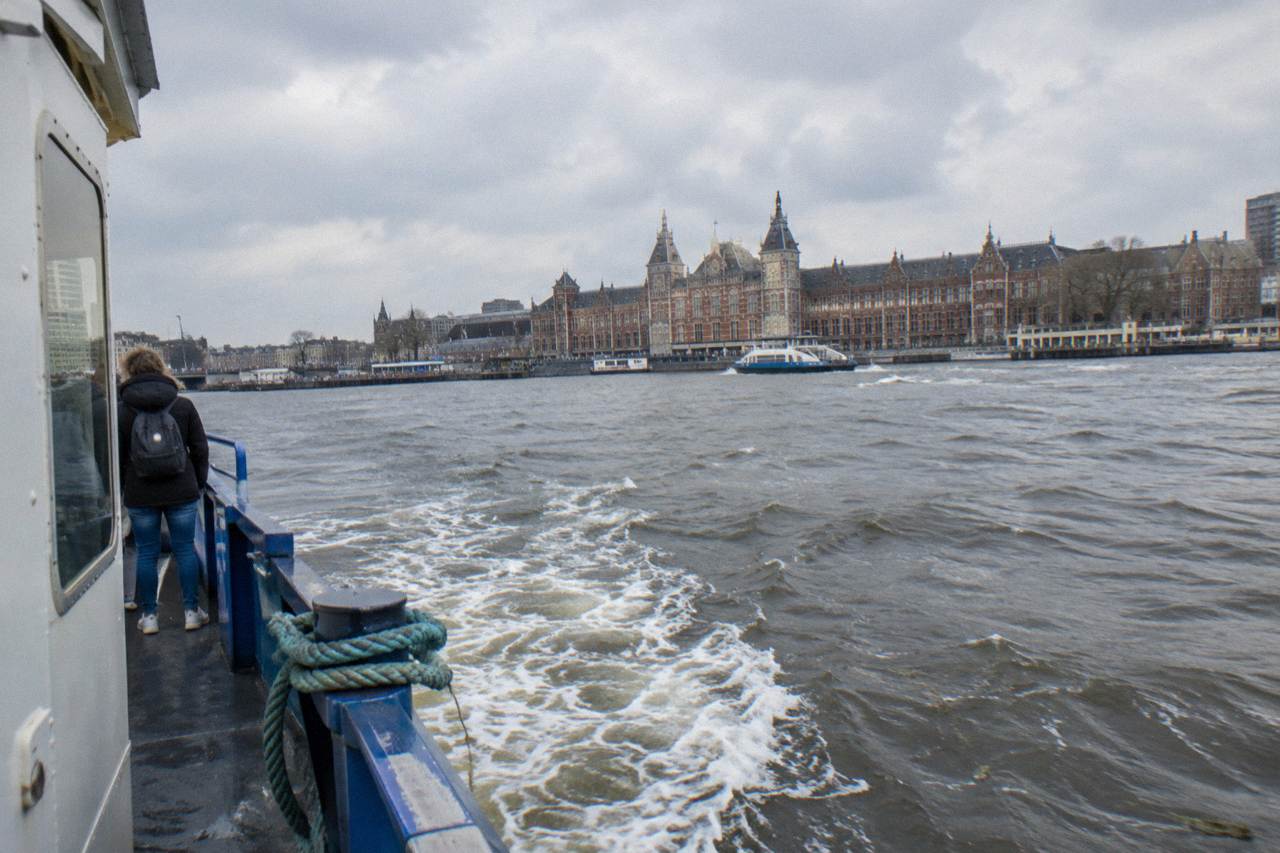
Yes, the ferry to Amsterdam Noord is free. The GVB IJ ferries, lines F1 to F7, carry pedestrians and cyclists across the water at no charge, no ticket and no transit pass. The F3 to Buiksloterweg runs 24 hours a day, day and night. The crossing is run by the city transport operator and the free ride is the normal service, not a promotion.
This question sits inside the Free Ferries In Amsterdam guide.
Is The Ferry To Amsterdam Noord Free?
Yes, the ferry to Amsterdam Noord is completely free for pedestrians and cyclists, with no ticket, card scan or fare gate of any kind. GVB, the city transport operator, runs lines F1 to F7 across the IJ behind Centraal Station, and none of them charges a fare or checks anything. You simply walk or roll on, cross, and step off on the north bank.
The reason is geography and planning. Amsterdam Noord sits across the IJ from the historic centre, and the ferries are treated as the basic pedestrian connection between the two halves of the city, the way a bridge would be anywhere else. GVB lists the IJ ferries as free for pedestrians and cyclists, and that status held through the 2026 fare round without change. The free ride is not a tourist perk. It is how thousands of residents commute to work every working day of the year.
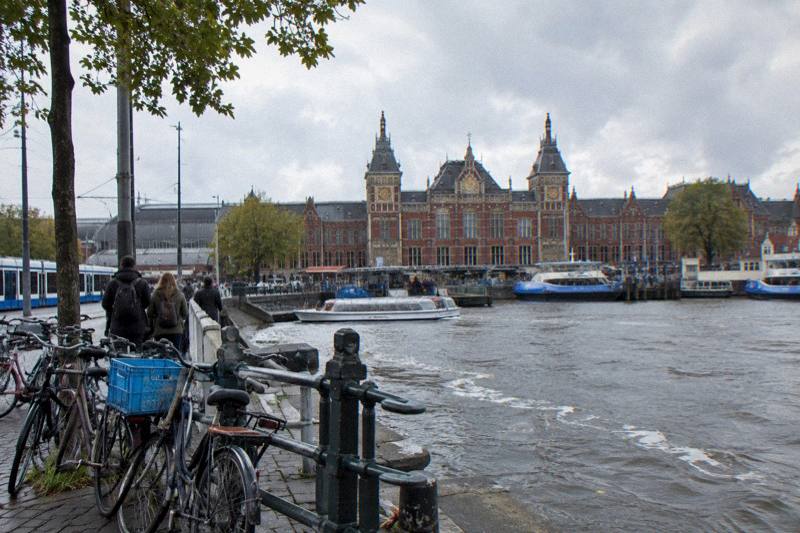
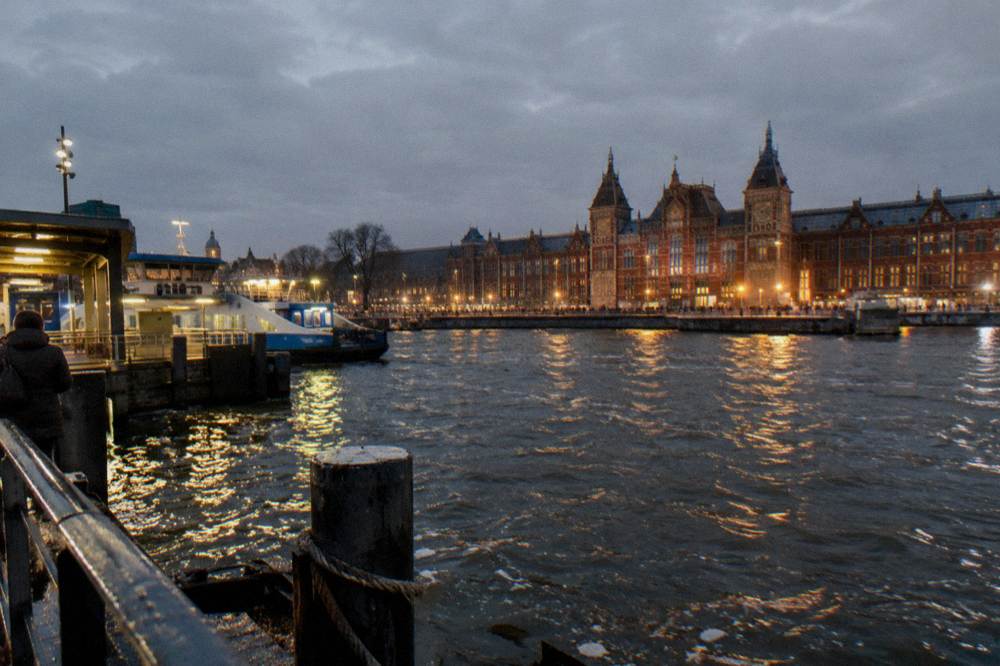
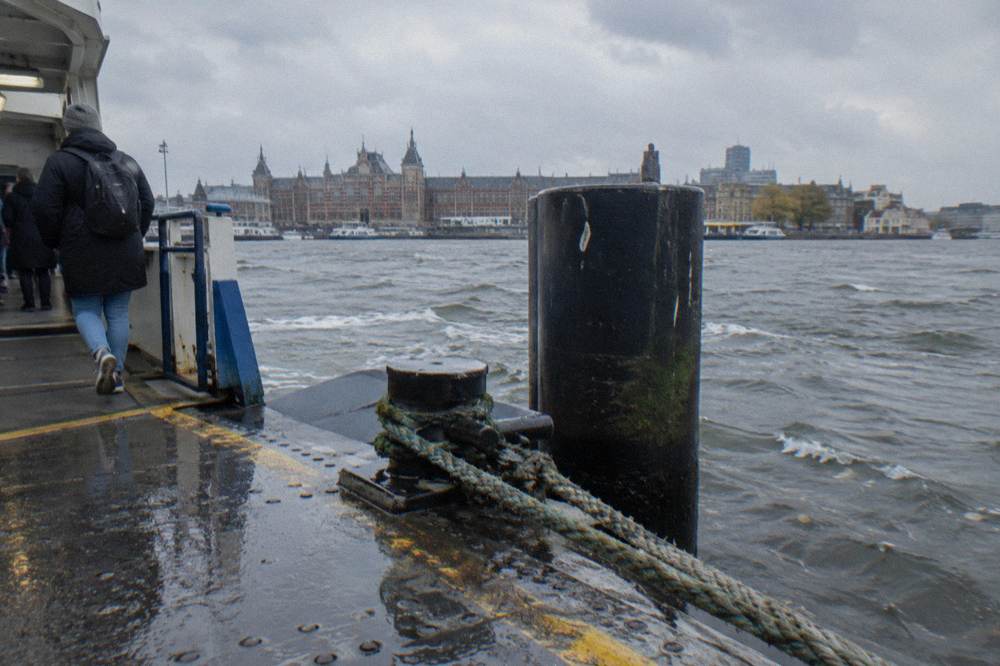
Visitors sometimes hesitate at the pontoon because nothing about the setup signals "free". There is no ticket machine dedicated to the ferry, no barrier and no price display. The boats dock directly behind Centraal Station on the north side of the station complex, and boarding is simply a matter of waiting for the gangway to lower. Cyclists board in their own lane, pedestrians in another, and the two streams separate on deck.
Two things are worth separating clearly, because they get confused. First, the ferry ride itself is free for everyone, whether you hold a transit pass or not. Second, everything on the far bank is a separate question: the A'DAM Lookout costs about EUR 16.50, while the NDSM wharf, the Noord parks and the ferry-side terraces cost nothing to wander. The free crossing does not make the north bank free, and the paid attractions on the north bank do not make the crossing paid.
If you are building a day around it, the crossing pairs naturally with a guided walk before or after. The history walks that meet at Centraal and the old centre are free, pay what you want, reserved on GuruWalk, and this site's ferry guide covers the full line-by-line picture of the IJ crossings.
Which Ferry Runs All Night?
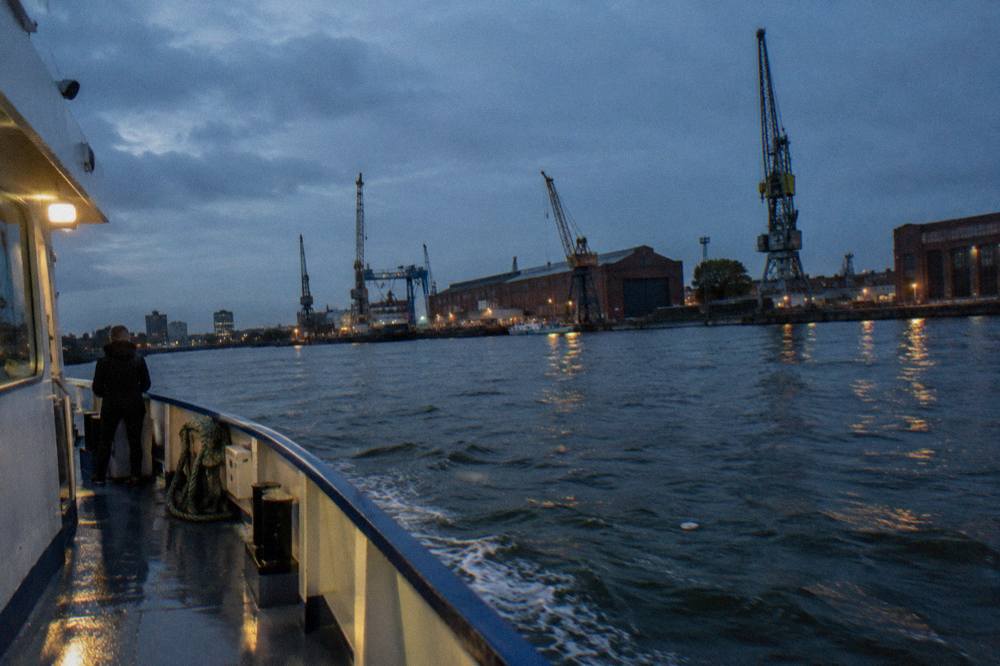
The F3 to Buiksloterweg is the ferry that runs all night, 24 hours a day, and it is the line most visitors want. It links the north side of Centraal Station with Buiksloterweg in Amsterdam Noord, it carries pedestrians and cyclists, and it is free. The other IJ ferry lines have their own timetables, so if you are crossing late at night or very early in the morning, the F3 is the line that is guaranteed to be running.
The F3's round-the-clock schedule is confirmed on the Eye Filmmuseum's own visitor page, which tells filmgoers that the free F3 ferry runs day and night, and on GVB's service information. Day and night means exactly that: the same line, the same free boarding and the same two banks, whether you cross at noon or at three in the morning. That matters for a night out in Noord, since the district's venues sit on the far side of the water from most visitor accommodation.
The Eye Filmmuseum itself is the clearest example of how the free crossing feeds a split visit. The building's foyer, bar and waterfront terrace are free to enter, while the films and exhibitions inside are ticketed. So you can ride the free F3 across, walk into the foyer without paying anything, and decide there whether a ticket is worth it. The museum's own page explains the ferry connection precisely because so many of its visitors arrive that way.
For daytime crossings, the F3 is not the only option. The F4 serves the NDSM wharf, the former shipyard turned cultural ground on the north bank, and it is free on the same terms. GVB's fare pages confirm that contactless bank card payment works on the regular network with no registration, but none of that applies to the ferries: no card, no pass, no app. The ferries are the one part of the GVB system where you simply board.
A note on fares in general, because the subject sits next to the ferry question: a GVB day ticket is a paid product, and from 1 January 2027 children aged 4 to 11 travel free nationwide on the regular network when accompanied by a paying adult, per GVB's own announcement. None of that changes the ferry, which was already free for every rider. The 2027 child concession is about trams, buses and metros, not the IJ boats.
If your ferry plan is part of a wider first day in the centre, several history walks start from points on this same stretch of waterfront and Dam Square, all free and pay what you want. The three above are bookable on GuruWalk, each run by an independent local guide, and each reserved rather than just shown up to. The full lineup, including Spanish-language departures, is in the site's guide to the free walking tours.
Who Rides Free And Who Does Not?
Everyone rides the IJ ferries free, with no exceptions for age, residency or nationality: pedestrians, cyclists with their bikes, children, tourists and locals all board without paying, and the ferry has no fare category at all. The only people who do not ride free are those who choose paid transport across or along the water, meaning canal cruise passengers and anyone taking a bus or metro that uses the fare system instead of the ferry.
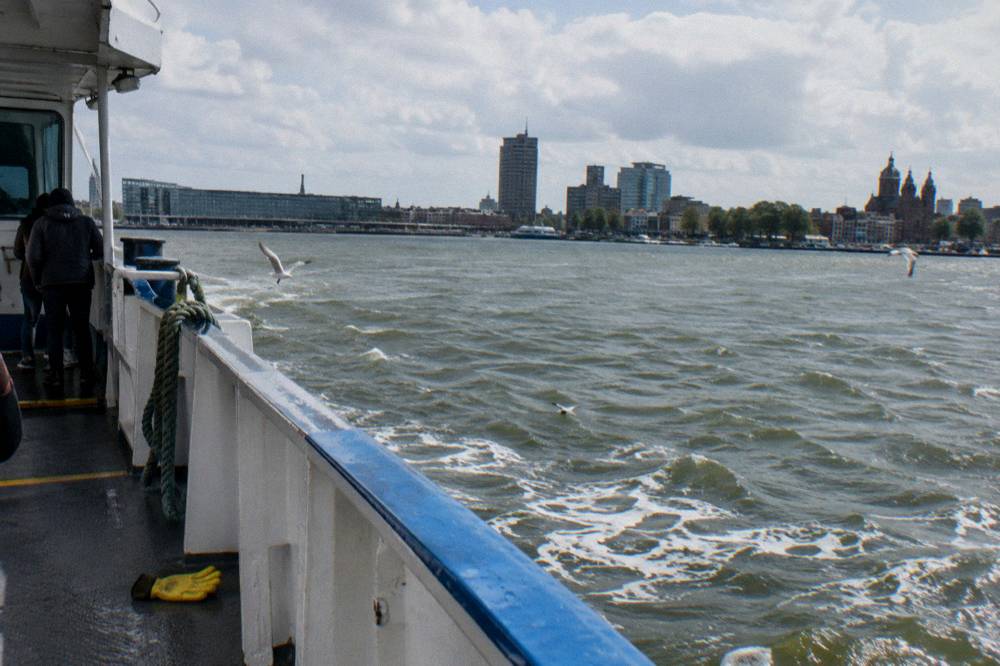
The distinction that trips people up is not who boards, but what the ferry is. The IJ ferries are part of the GVB network in the sense that GVB operates them, but they sit outside the fare system entirely. You do not need a day ticket, a contactless card or the GVB app to cross. If a seller or a listing implies you need a transit product to reach Amsterdam Noord by water, that is a signal to stop and re-read what is actually being sold, because the crossing itself is never it.
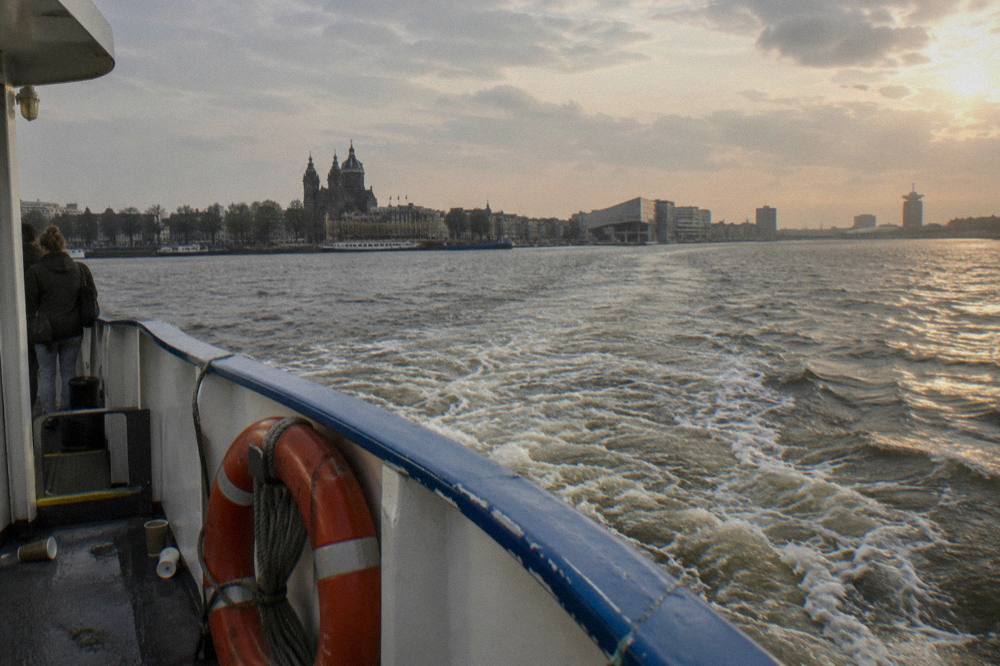
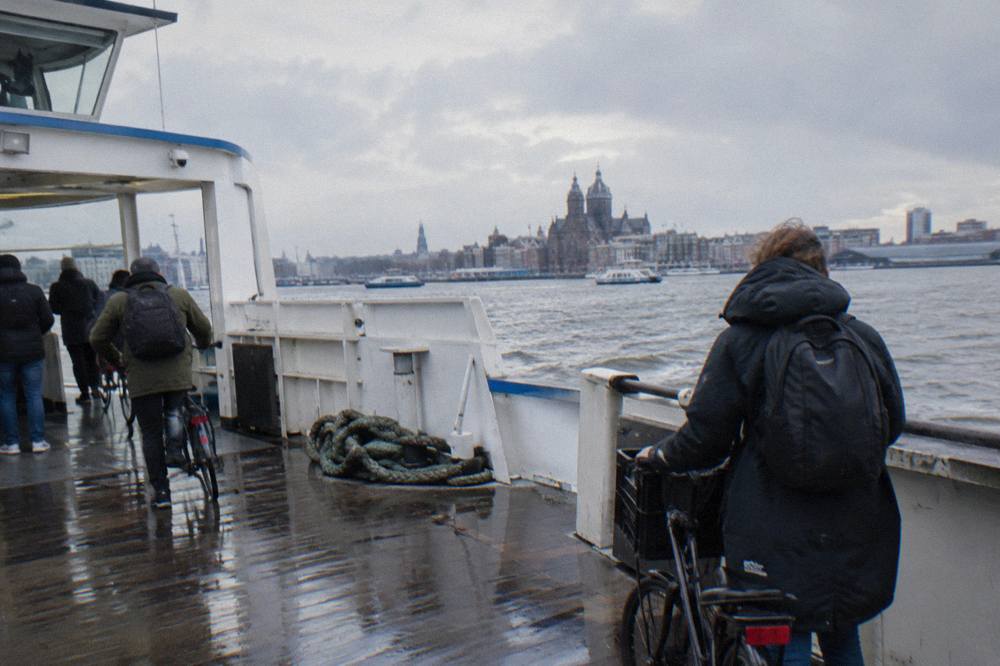
The two groups with genuine questions are cyclists and families. Cyclists board with their bicycles at no charge, in the marked cycle lane on the gangway and deck. Families need nothing for the children either: since the ferry has no fare, there is no child fare to waive. That is different from the paid network, where the 2027 nationwide child concession applies to buses, trams and metros, and different from the paid attractions across the water, where the A'DAM Lookout's roughly EUR 16.50 entry stands regardless of how you arrived.
For contrast, here is how the free ride sits against the paid options around the same crossing:
| Option across or along the IJ | Cost | Notes |
|---|---|---|
| GVB IJ ferry, any line F1 to F7 | Free | Pedestrians and cyclists, no ticket needed |
| F3 ferry to Buiksloterweg | Free | Runs 24 hours a day |
| F4 ferry to NDSM wharf | Free | Serves the former shipyard area |
| A'DAM Lookout, at Buiksloterweg | About EUR 16.50 | Paid attraction on the north bank |
| Eye Filmmuseum foyer, bar and terrace | Free | Films and exhibitions inside are ticketed |
| Canal cruise on the IJ | Paid | Cruises are commercial boat products |
The table shows the pattern that runs through this whole article: the water crossing is free, the buildings on the far side sort into free parts and paid parts, and the paid boat products are a different experience from the utility ferry. A canal cruise is not a ferry with a price, it is a sightseeing product, and the free ferry is not a budget cruise, it is commuter transport that happens to give every passenger the same view of the IJ.
One group deserves a direct word: visitors planning a paid day out on the north bank. The A'DAM Lookout, the Eye's exhibitions and other ticketed stops are worth budgeting for, and nothing about the free crossing discounts them. Conversely, if your plan is only to wander NDSM, the Noord parks and the waterfront, you can cross and return without spending anything on transport at all, in both directions, on every line, at any hour on the F3.
The Dominika English History Walk pairs neatly with a ferry day, and not only because it is free, pay what you want like every walk on this site. It meets at the main entrance of Amsterdam Centraal Station, rated 4.88 out of 5 across 146 GuruWalk reviews, in the same building the ferries leave from, so the walk and the crossing share a doorstep. Reserving a place happens on the guide's GuruWalk page.
Where Does Each Ferry Land?
The F3 lands at Buiksloterweg, directly opposite Centraal Station, and that is the landing most visitors want for the A'DAM Lookout and the Eye Filmmuseum. The F4 lands at the NDSM wharf, the cultural district built into the old shipyards. Both are free, both carry pedestrians and cyclists, and the choice between them is really a choice of which part of Amsterdam Noord you are visiting, not which price you prefer.
Buiksloterweg is the workhorse landing. The F3's 24-hour service means this is the crossing that runs when nothing else does, and the north bank pontoon puts you within the Noord waterfront where the Eye sits and where the paid tower of the A'DAM Lookout stands. The Eye's foyer is the free foothold there: walk in, use the bar and terrace, and the building itself costs nothing, a fact stated on the museum's own access page alongside its ferry directions.
The NDSM wharf is the second landing, served by the F4. NDSM is a free-to-wander former shipyard, listed in this site's attractions directory as a free record with high confidence. Street art, creative workshops and festival grounds sit on the old industrial footprint, and there is no gate, no entrance charge and no ticket for the wharf itself. Paid food and events exist there, but the ground is public and free.
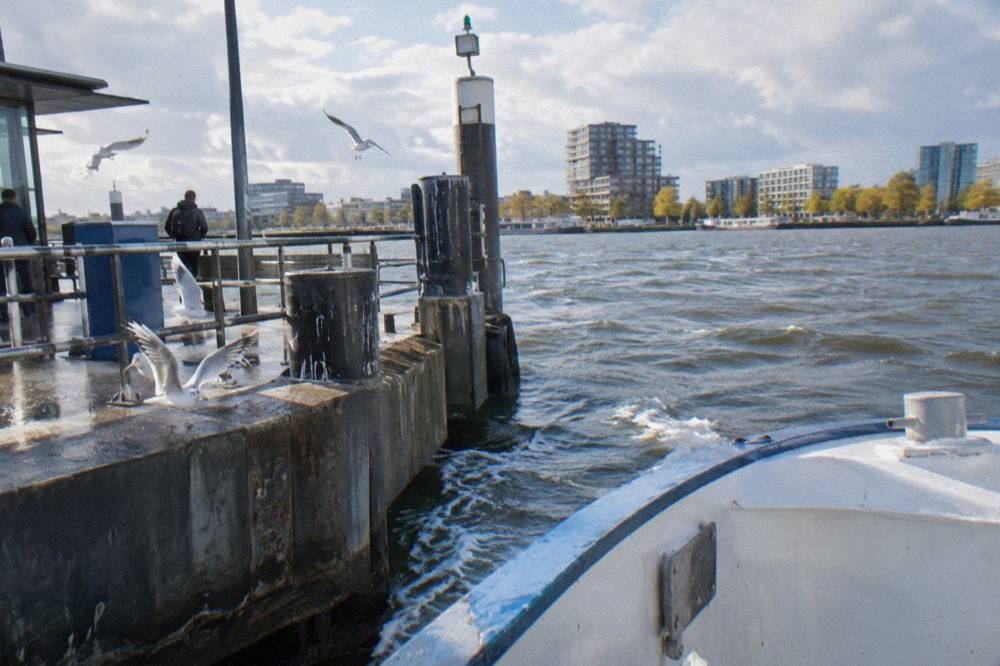
For completeness, the ferry family runs beyond these two. Lines F1 to F7 serve various north bank destinations for pedestrians and cyclists, all free, and the full line-by-line detail, including the longer crossings to the eastern landings, is in the site's Free Ferries In Amsterdam guide. For a first visit, F3 and F4 cover the two destinations almost everyone has in mind. The remaining lines matter mostly to residents and cyclists heading for districts further east.
Choosing between the two main landings is simple once you know what each side of Noord offers. The table below lines them up:
| Ferry | Landing | Runs | Free highlights at the landing | Paid parts at the landing |
|---|---|---|---|---|
| F3 | Buiksloterweg | 24 hours | Eye foyer, bar and terrace; the IJ waterfront | A'DAM Lookout, about EUR 16.50; Eye films and exhibitions |
| F4 | NDSM wharf | Timetabled service | The wharf itself, street art and grounds | Events, food and drink vendors |
A practical note about coming back: the return crossing is free on exactly the same terms, from either landing. There is no outbound-only rule, no day limit and no stamp. Plenty of visitors cross on the F3, spend the afternoon at NDSM, and return from the F4 pontoon, and that loop costs nothing in transport. The only planning that matters is the clock on the lines that are not the F3, since the 24-hour guarantee belongs to Buiksloterweg alone.
What Do You Do After You Cross?
After you cross, the free options on the north bank are substantial: the NDSM wharf's open grounds, the Eye Filmmuseum's free foyer, bar and terrace, the Noord parks and the waterfront itself. The paid options cluster around the A'DAM Lookout at about EUR 16.50 and the Eye's ticketed films and exhibitions. Many visitors combine a free crossing, a free wander and one paid anchor, then ride back for free.
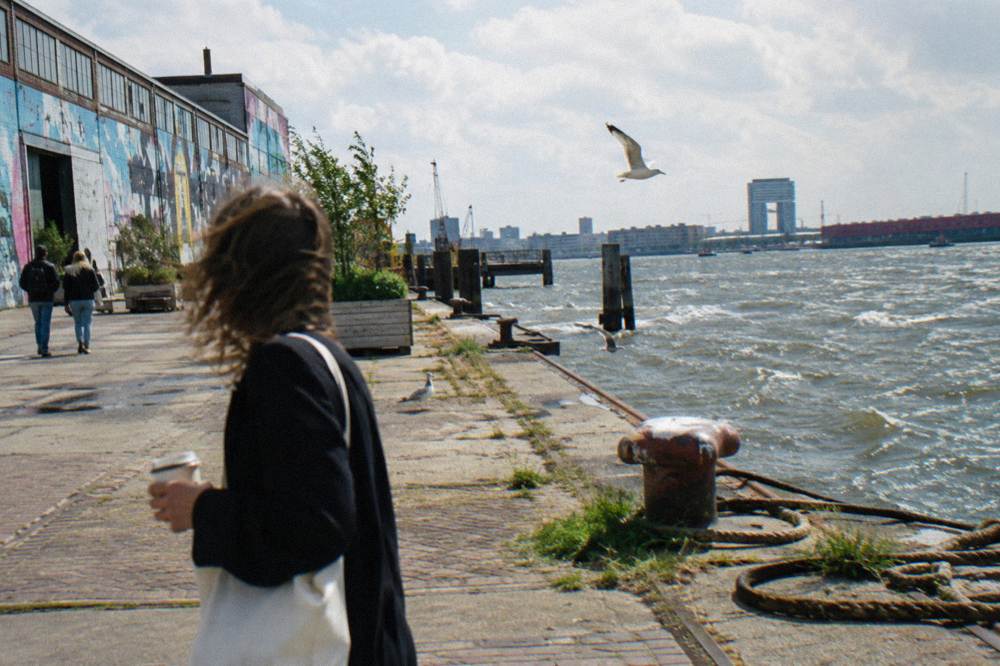
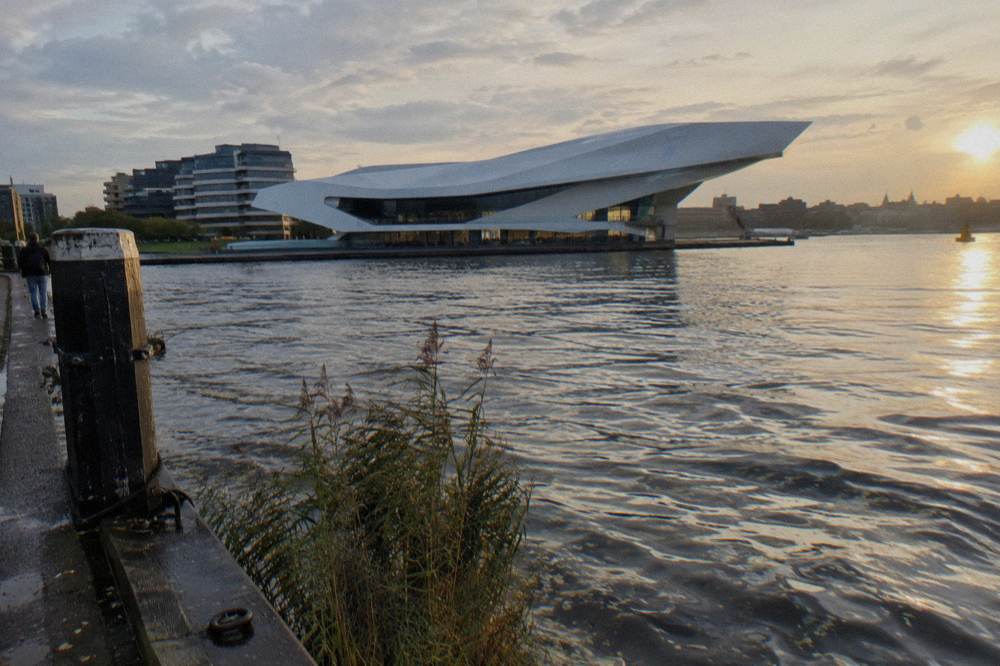
Start with the Eye if you land at Buiksloterweg, because it is the clearest free-versus-paid split on the whole bank. The building is a destination in its own form: the foyer, the bar and the waterfront terrace are free to enter, per the museum's own page, while the cinemas and exhibition spaces inside are ticketed. Arriving by the free F3, walking into a free foyer and then deciding on a ticket is a completely legitimate visit, and it is how many locals use the building.
NDSM rewards the opposite approach: everything visible is free, and the paid layer is optional. The wharf's record in this site's directory is a free attraction, high confidence, and its industrial landscape is best understood as an open cultural site rather than a museum with a desk. Seasonal events run there, and the Funky Xmas Market at nearby Westerpark on 20 December 2026 has free entrance, a reminder that the free layer of Amsterdam's cultural calendar is thickest in the festive weeks.
The OBA Centrale Bibliotheek, the central library close to Centraal on the south side, belongs to this conversation only as a caution: the building is free to enter, but its rooftop terrace is closed from November to March, so do not build a winter evening around that view. On the north bank, no such caution applies to the Eye terrace or the wharf grounds, which are simply free in the ways described above.
If the crossing leaves you wanting the city's story rather than its waterfront, the history walks around Centraal are the natural next step. The Dominika English History Walk, free and pay what you want, meets at the station's main entrance, rated 4.88 out of 5 across 146 GuruWalk reviews.
For a walk that covers the old centre itself rather than Noord, the Absolutely Amsterdam walk by FreeDam Tours is the heavyweight: 2 hours 30 minutes in English, meeting at Beursplein in front of the Stock Exchange, rated 4.82 out of 5 across 9,929 GuruWalk reviews. It is free, pay what you want, reserved on GuruWalk, and it sits in the old centre that the ferries face across the water.
Why Do People Pay For The Lookout Before Riding The Free Ferry?
The common mistake is buying the A'DAM Lookout ticket, about EUR 16.50, on the assumption that it is the only way to get the north bank's view, when the free ferry crossing itself, the Eye's free terrace and the NDSM wharf grounds already deliver the waterfront for nothing. The Lookout is a paid attraction with its own swing and observation deck, and it stands beside a free crossing, not instead of one.
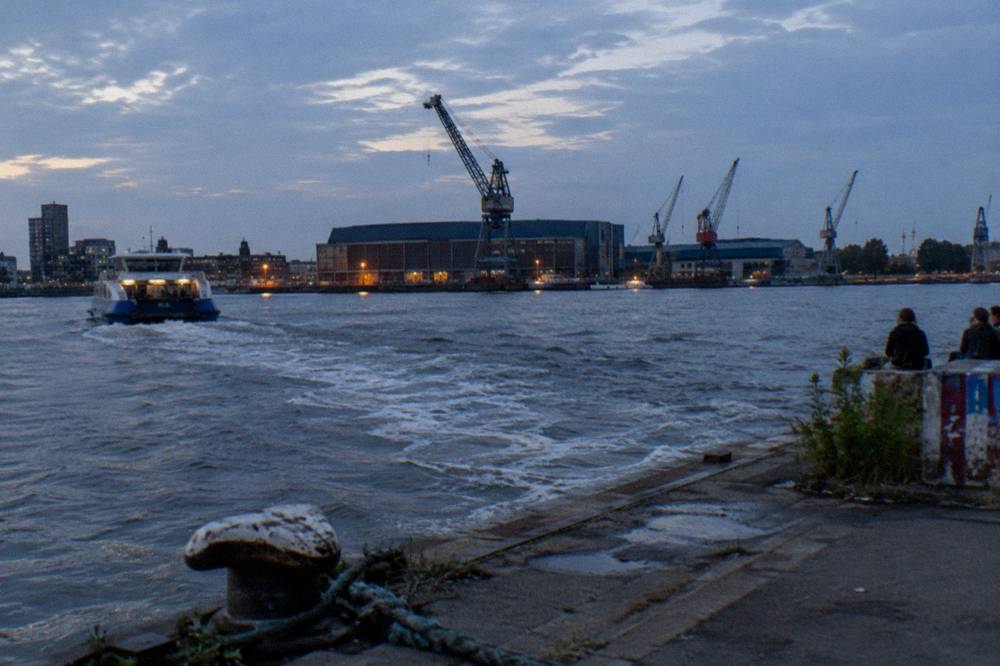
The confusion has a structure, and it is worth naming. Visitors read that Amsterdam Noord has "a viewing platform", and the paid tower is the one with the marketing. The free assets around it are quieter: a ferry ride across the IJ that every passenger gets, a museum foyer and terrace that cost nothing, and a shipyard district with open ground. Nobody sells those, so they do not headline. The result is that people budget for the paid deck and never learn the crossing was the free part.
The second version of the mistake is seasonal. The OBA library's rooftop terrace, a genuinely free viewpoint near Centraal, closes from November to March, and winter visitors who planned around it find it shut. The fix is to check which free vantage points are seasonal before building an itinerary, exactly the distinction this site's free viewpoints guide tracks. The ferry view, by contrast, has no season: the F3 runs 24 hours regardless of weather or month.
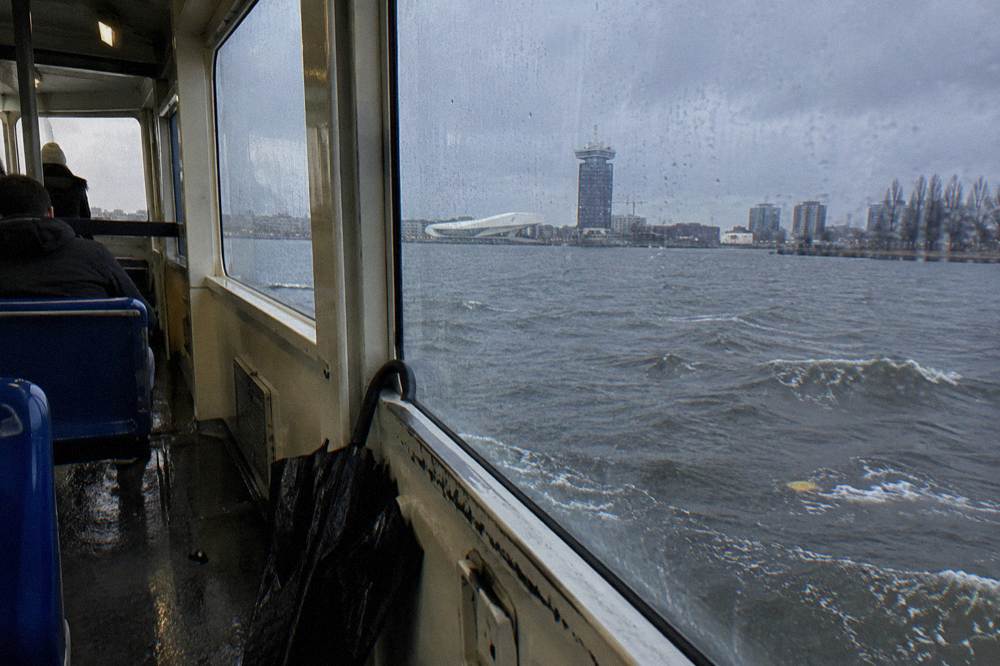
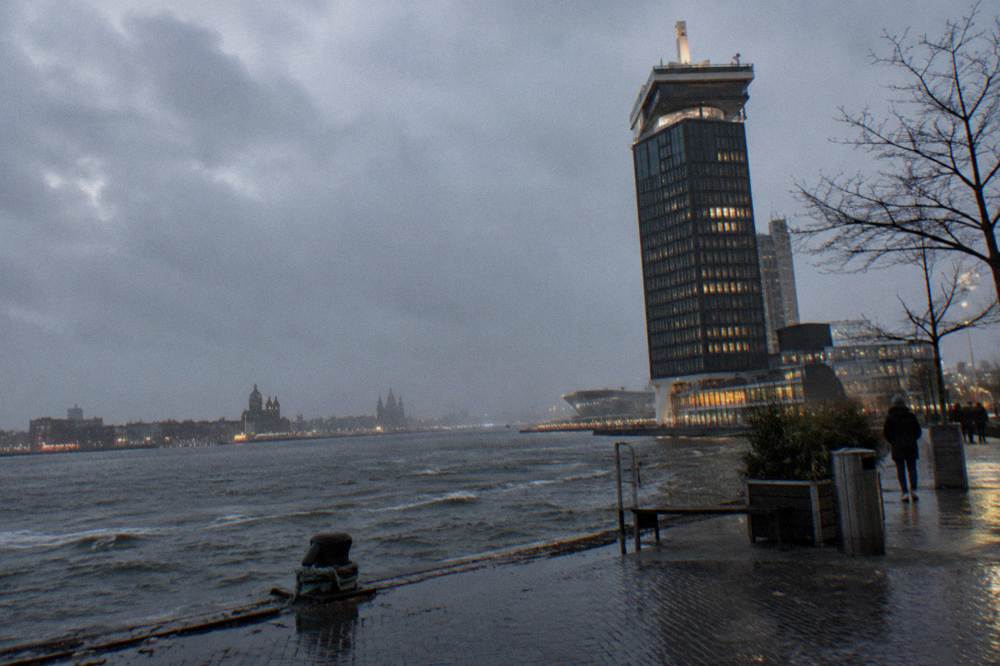
The honest framing for a budget is this: the ferry costs nothing, the wharf costs nothing, the Eye's foyer costs nothing, and the Lookout costs about EUR 16.50. Deciding to pay for the deck is a legitimate choice. Paying for it because you assumed the north bank had no free layer is the mistake, and it is an expensive one to make twice, since families multiply it. Read the split, then decide.
For the full picture of what the city gives away, from churches to parks to memorials, the site's parent collection at Free Things To Do In Amsterdam is the hub, and the Noord-specific detail continues in the guide to free things in Amsterdam Noord.
Common Questions About The Noord Ferry
Is The Ferry To Amsterdam Noord Free?
Yes. All GVB IJ ferry lines, F1 to F7, are free for pedestrians and cyclists, with no ticket, pass or card needed. The F3 to Buiksloterweg runs 24 hours a day, and the crossing is free in both directions for everyone, resident or visitor, at any hour.
Which Ferry Runs All Night?
The F3, between the north side of Amsterdam Centraal Station and Buiksloterweg, runs 24 hours a day. The Eye Filmmuseum's own visitor page confirms the free F3 runs day and night, which is why it is the line night-time visitors to Noord rely on.
Do I Need A GVB Ticket Or Pass For The Ferry?
No. The IJ ferries sit outside the fare system entirely, so a day ticket, contactless card or transit app is never required to board. Those products apply to the paid bus, tram and metro network, not to the ferries.
Can I Take My Bicycle On The Ferry For Free?
Yes. Cyclists board the IJ ferries with their bicycles at no charge, using the marked cycle lane on the gangway and deck. The free carriage of bicycles is part of the same free service that applies to pedestrians on every line.
Is The A'DAM Lookout Free Once I Cross?
No. The Lookout at Buiksloterweg costs about EUR 16.50 to enter. The crossing to reach it is free, and the nearby Eye Filmmuseum foyer, bar and terrace are free, but the observation deck itself is a paid attraction.
Where Does The Ferry To NDSM Leave From?
The F4 ferry to the NDSM wharf leaves from the ferry pontoons on the north side of Amsterdam Centraal Station. The wharf itself is free to wander, while events and food vendors on the site are paid. The F4 is free on the same terms as every IJ ferry.