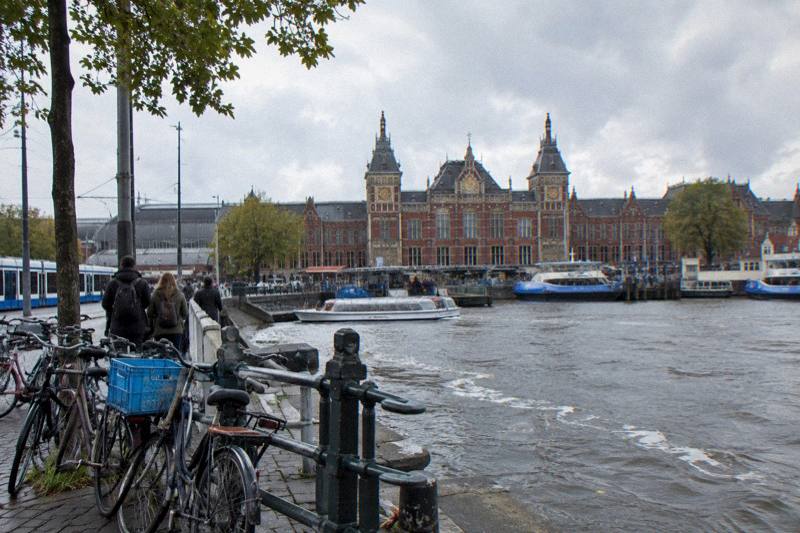
Amsterdam Free Ferry Crossings: Lines, Times And What Waits Across The IJ
The IJ ferries are the last genuinely free ride in Amsterdam: no ticket, no card tap, no gate. Here is which lines cost nothing, which one runs all night, and what is actually worth the crossing.
In Short
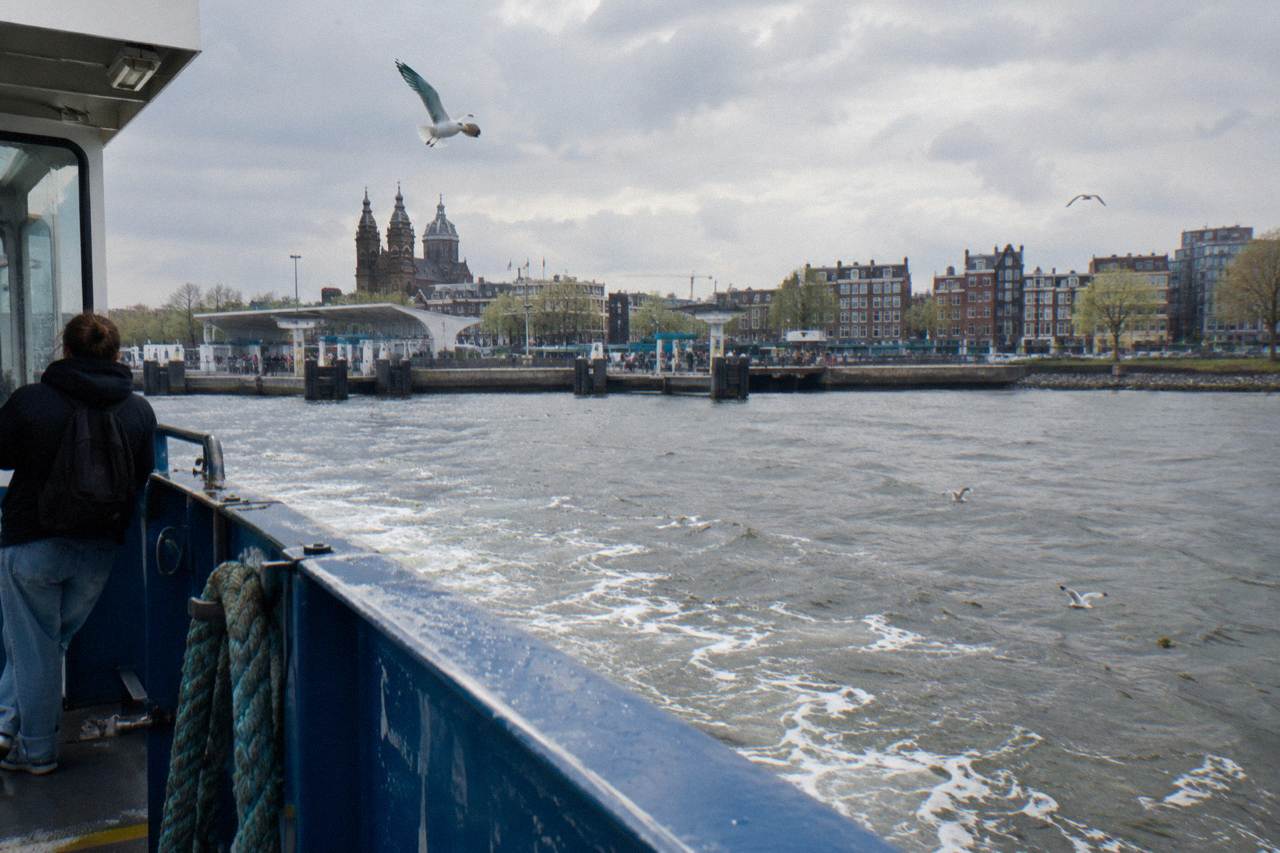
The GVB IJ ferries, lines F1 to F7, cost nothing for pedestrians and cyclists, with no ticket and no check-in. The F3 to Buiksloterweg runs 24 hours a day, every few minutes. Across the water the NDSM wharf is free to wander, the Eye Filmmuseum foyer and terrace are free, while the A'DAM Lookout charges about EUR 16.50.
Part of the Free Things To Do In Amsterdam guides.
Amsterdam runs one of the few public transport networks in Europe where a whole family of routes charges nothing at all. The IJ ferries, numbered F1 through F7, cross the water behind Centraal Station and carry pedestrians and cyclists without a ticket, without a card tap, and without a gate. The city's transit operator treats them as a permanent fixture of the waterfront, not a tourist service, which is why they survive every fare revision.
That matters for a visitor on a budget, because the water is exactly where the free and the paid split. South of the IJ you are inside the museum belt, where the Rijksmuseum charges adults EUR 25. North of the IJ sit some of the city's most generous free spaces, reachable by a boat that never asks for money. This guide walks through the lines, the hours, the bike rules and what each landing gives you once you step off.
Which Amsterdam Ferries Cost Nothing?
All of the IJ ferries, lines F1 through F7, are free for pedestrians and cyclists, and nothing about that is conditional on a pass, a card or a time of day. There is no fare box, no barrier and no registration. The F3, which serves Buiksloterweg on the north bank, runs 24 hours a day. The F4 serves the NDSM wharf. Both landings open onto free public ground the moment you step off.
The free status is not a quirk the operator has forgotten to close. The ferries are the standing connection between the city centre and Amsterdam Noord for people on foot and on bikes, and the operator lists them as free for pedestrians and cyclists as a matter of policy. Cyclists roll on with their bikes at no charge, which is not true of every ferry system in the world and is worth saying plainly here: the bike crosses free too.
Contrast that with everything else on the water. A standard canal cruise is a paid product, and the Amsterdam Light Festival's boat cruises run from about EUR 29.75 per person during the festival edition of 26 November 2026 to 17 January 2027. The ferries do not compete with those products on commentary or comfort, but they do cross the same harbour water, they do it day and night, and they do it for nothing.
One point of honesty for winter readers: the free crossing is unaffected by the season, but not everything on the far bank is. The rooftop terrace of the central library, the OBA Centrale Bibliotheek, is closed from November to March, so do not plan a winter itinerary around that view. The building itself is free to enter.
A ferry crossing also pairs naturally with a free walk back on the city side. The Dominika English History Walk, rated 4.88 out of 5 across 146 GuruWalk reviews, meets at Amsterdam Centraal Station's main entrance, which is the same waterfront where the ferry piers sit. It runs two hours in English and is free, pay what you want, reserved through the guide's GuruWalk page.
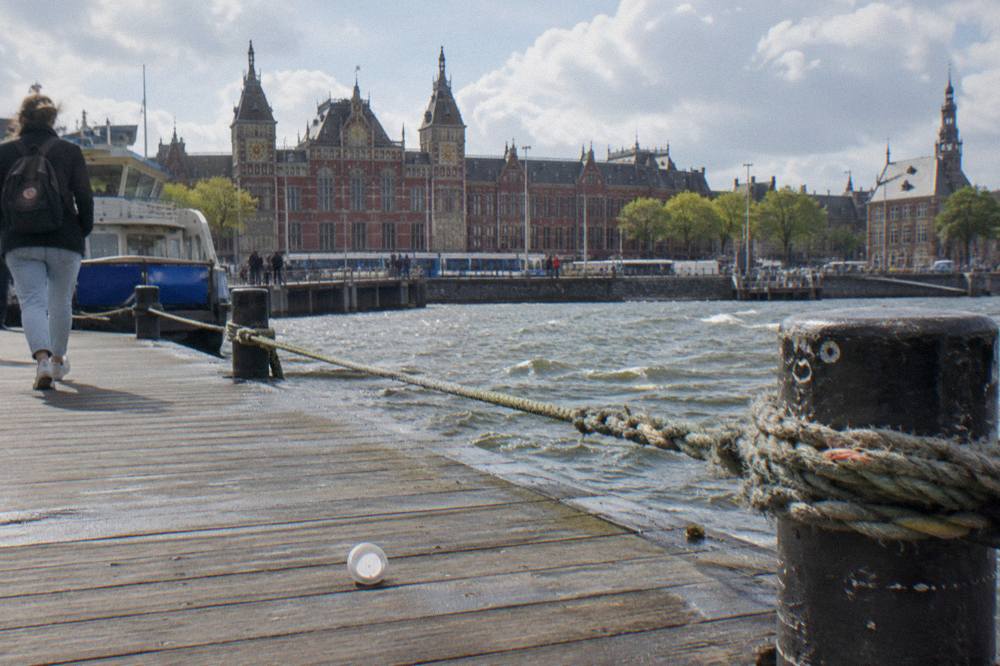
The practical takeaway for planning: budget nothing for the crossing itself, in either direction, at any hour. Every euro you might have set aside for getting across the IJ can go to a coffee on the north bank instead, and several of the best spots there are free to enter as well.
Where Do The F3 And F4 Ferries Leave From?
The F3 leaves from the ferry piers directly behind Amsterdam Centraal Station, on the IJ waterfront, and lands at Buiksloterweg in Amsterdam Noord. The F4 leaves from the same pier area and serves the NDSM wharf further east. No ticket desk exists at either pier. You walk on, the boat crosses, you walk off.
Centraal Station's rear face is the ferry hub, and the piers are numbered and signed along the waterfront. The station building itself is free to pass through, and the vaulted interior is one of the city's more overlooked free interiors. If you are coming from the old centre, the Dam Square walks and the Centraal walks both land you within reach of these piers: several history walks listed here meet at the National Monument on Dam Square or at Centraal's main entrance, and the walk to the water is flat and direct along the station forecourt.
The F3 is the workhorse line. It serves Buiksloterweg, the landing that puts you closest to the Eye Filmmuseum's free foyer and to the A'DAM Lookout's paid deck. The F4 is the line for the NDSM wharf, the former shipyard turned into free-to-wander public ground with street art, cafes and event spaces.
| Ferry | Direction | Landing on the north bank | Cost | Notes |
|---|---|---|---|---|
| F3 | Centraal Station to Buiksloterweg | Buiksloterweg | Free for pedestrians and cyclists | Runs 24 hours a day, departs every few minutes |
| F4 | Centraal Station to NDSM | NDSM wharf | Free for pedestrians and cyclists | Serves the former shipyard, now free public ground |
Do not look for a timetable board with departure minutes for the F3. The line is described by the operator and by the Eye Filmmuseum's own visitor page as running every few minutes, and that is the honest way to state it: the boat comes, you board, it crosses.
The broader lesson for this keyword is that the "amsterdam free ferry" question usually hides a second question, which is whether the north bank is worth the crossing at all. It is. Between the Eye's free foyer and terrace, the NDSM wharf's open ground and the free viewpoints along the water's edge, the far bank holds a half day of free sightseeing, and our free things to do in Amsterdam Noord guide breaks it down stop by stop.
If you want history rather than harbour, three English-language free walks in the history family pair well with a ferry morning, because all of them meet within the Centraal and Dam Square area. The table below gives the meeting points.
| Walk | Meets at | Neighbourhood | Duration |
|---|---|---|---|
| Aldo Origins Walk, 1 Hour 45 | National Monument, Dam Square | History and hidden Amsterdam | 1 hour 45 minutes |
| Niels Origins Walk, 2 Hours | National Monument, Dam Square | History and hidden Amsterdam | 2 hours |
| Medieval City Walls Walk | Amsterdam Centraal Station, city side | History and hidden Amsterdam | 1 hour 30 minutes |
When Does Each Ferry Run And Which Never Stops?
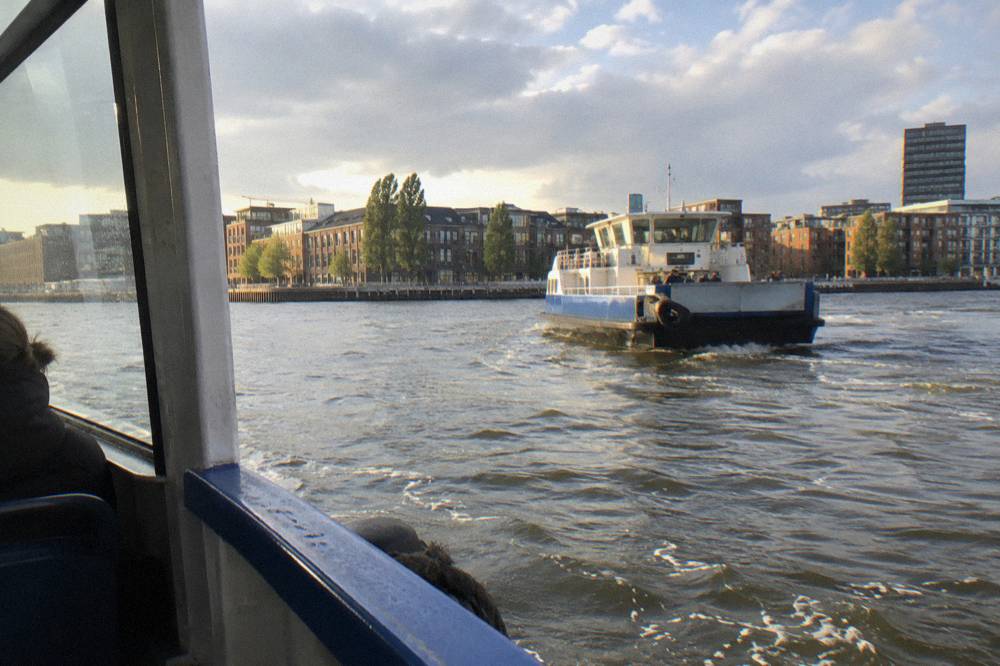
The F3 never stops: it runs 24 hours a day, in both directions, every few minutes. That is the line to remember if you are crossing late or early, because no other crossing in the city matches it. The F4 and the other IJ lines serve the same waterfront on their own schedules, so the safe rule is simple: for a guaranteed crossing at any hour, use the F3 to Buiksloterweg.
The 24-hour F3 is the piece of information most first-time visitors miss. Amsterdam's night transport picture is thin, but this ferry runs through it, which means a late evening in Amsterdam Noord does not strand you on the wrong bank. The Eye Filmmuseum states on its own visitor page that the ferry leaves every few minutes and runs around the clock, and that page is the authority worth reading before a late crossing. The Eye Filmmuseum's visitor information covers the ferry access it depends on.
Be disciplined about what each route actually covers. The verified facts state the F3 runs 24 hours and departs every few minutes; they give no departure minutes, so this guide prints none. Likewise, no transport duration for the crossing is stated anywhere in the data, so none appears here. Treat the crossing as short, but do not plan a connection to the minute around a ferry.
Winter does not change the free status. The IJ ferries, lines F1 to F7, stay free for pedestrians and cyclists, and the F3 runs day and night. The only seasonal trap on the north bank is the OBA library rooftop, closed from November to March, covered in a later section.

What Can You Reach From The Noord Landing?
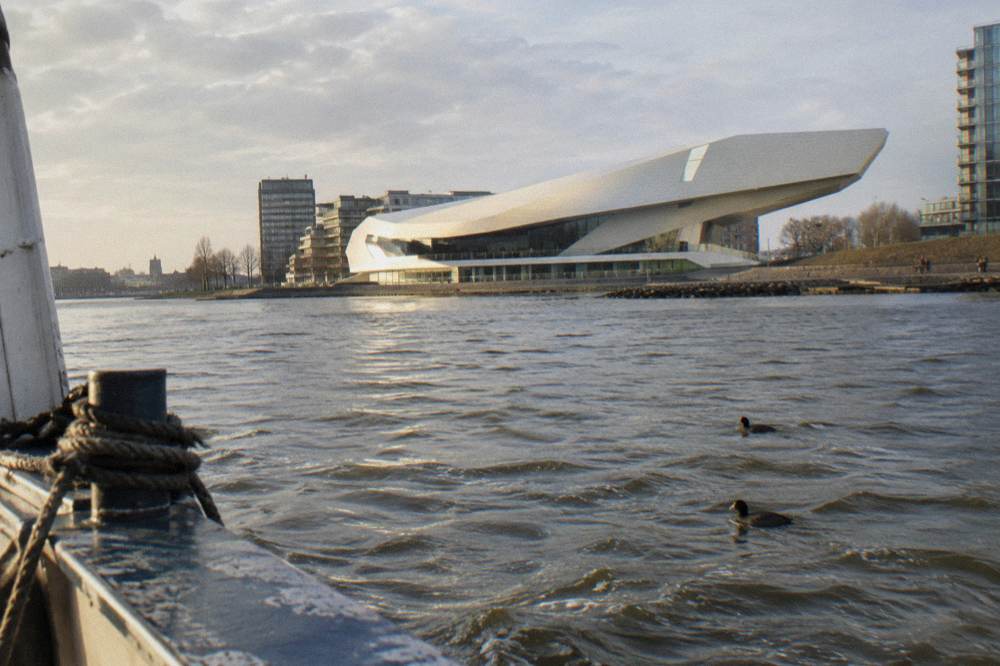
From the Buiksloterweg landing you reach the Eye Filmmuseum's free foyer, bar and waterfront terrace, and the A'DAM Lookout, whose deck is a paid attraction at about EUR 16.50. From the NDSM landing you reach the NDSM wharf, a former shipyard that is free public ground. Film screenings and exhibitions at Eye are ticketed, so the free part is the building and its terrace.
The free-versus-paid split on the north bank is clean and worth stating precisely. The Eye Filmmuseum costs nothing to enter for the foyer, the bar and the terrace overlooking the IJ, and that terrace is one of the better free vantage points on the water in the city. The films and the exhibitions inside are separate, ticketed products. The A'DAM Lookout is the opposite case: the viewing deck is a paid attraction at about EUR 16.50, and nothing about the tower is free. Our free viewpoints in Amsterdam guide covers where the no-cost views actually are.
| North bank sight | Free part | Paid part |
|---|---|---|
| Eye Filmmuseum | Foyer, bar and waterfront terrace | Film screenings and exhibitions |
| NDSM wharf | The whole site, free public ground | Food, drinks and ticketed events on site |
| A'DAM Lookout | Nothing | The viewing deck, about EUR 16.50 |
| OBA Centrale Bibliotheek | The building, free to enter | Rooftop terrace closed November to March |
The NDSM wharf is a former shipyard across the IJ, and a free ferry runs to it. It is a former shipyard, now free to walk, listed as a free attraction with high confidence. Street art, industrial structures and cafes fill the site, and no ticket is needed to wander it. Reaching it means the F4 rather than the F3, so decide before you board which north bank you actually want: Buiksloterweg for Eye and the Lookout, NDSM for the wharf.
For readers weighing a whole day: the crossing, the Eye terrace and the NDSM wharf together make a free half day with a paid option attached at each end. That is a rare structure in Amsterdam, where most clusters of sights charge at the door.
The blog companion to this question, is the ferry to Amsterdam Noord free, answers the narrow yes-or-no version if you want the short form.
Can You Take A Bike On Board?
Yes. The IJ ferries are free for cyclists as well as pedestrians, and the bike crosses at no charge on every line, including the 24-hour F3. There is no bike ticket, no supplement and no separate gate. You roll on with everyone else and roll off on the far bank, which is why the ferries function as a bike bridge across the IJ.
The cyclist provision is structural, not incidental. Amsterdam Noord's street network connects to the ferry landings by dedicated cycle paths, and the boats are built with open decks that take bikes, cargo bikes and pedestrians in the same space. Nothing in the operator's stated policy distinguishes a rider with a bike from a walker: both cross free.
Space for bikes, queues on deck and how full the boats run all vary from one sailing to the next, so treat none of it as fixed. Those are operational details no source here states, and inventing them would be the kind of unsourced colour this site refuses to print. The facts that matter for planning are stable: free crossing, bike included, every line, all day and night on the F3.
Renting a bike to ride the ferry is a reasonable plan, since the north bank rewards two wheels, but the edge is paid: bike rental itself is a commercial product, and Amsterdam has no free bike scheme. The ferry is free, the bike is not, and that distinction keeps expectations honest.
If you are walking rather than riding, the same pier etiquette applies as anywhere: board when the boat is loading, and the crew manages the rest. There is genuinely nothing to pay, tap or show, which remains the single most useful sentence in this guide.
Is The Ferry A Good Stand-In For A Harbour Cruise?
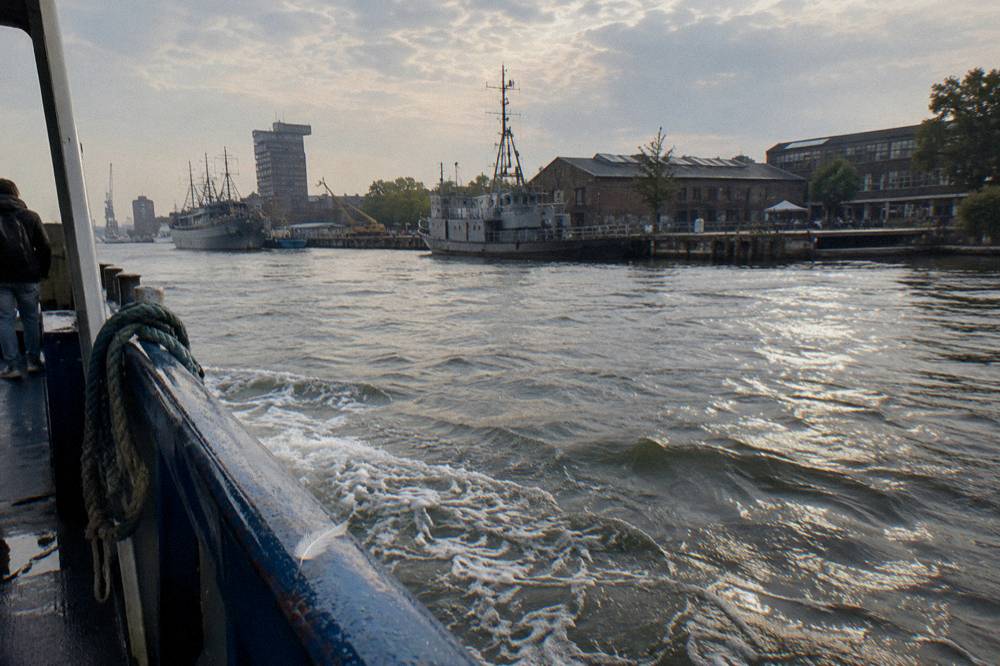
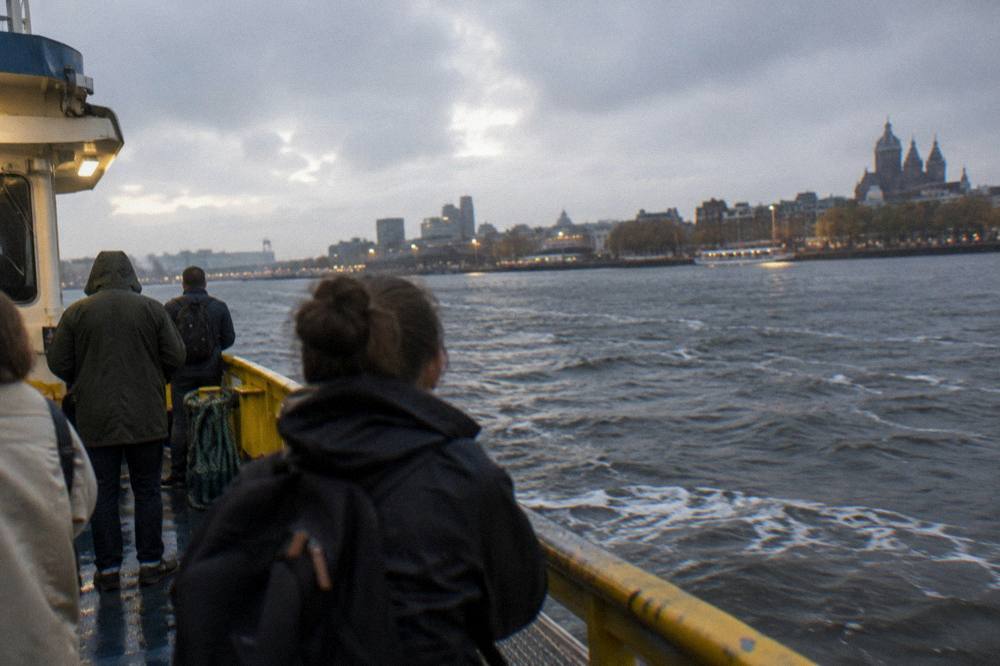
As a free alternative, yes, with limits. The F3 and F4 cross open harbour water, pass working docks and give you the IJ skyline from the deck, all for nothing, while a canal cruise is a paid product and a Light Festival boat runs from about EUR 29.75. What the ferry does not give you is commentary, a route through the canal ring or a guaranteed seat. It is transport, not theatre.
The honest comparison starts with what each product is. A canal cruise is a paid, narrated loop through the Grachtengordel and the harbour, sold by commercial operators. The ferry is a crossing: straight over the IJ, a few minutes of open water, the north bank's cranes and the Eye's building sliding past. For the specific question of harbour water and skyline, the ferry delivers the core of it, and during the Light Festival the free 4.5 km walking route, not a boat, is the no-cost way to see the artworks, with lights on from 16:30 to 23:00 daily between 26 November 2026 and 17 January 2027, until 21:00 on 31 December.
The economics are not close. A family that takes two ferry crossings, walks the NDSM wharf and stands on the Eye terrace spends nothing on the water. The same family on a cruise spends a three-figure sum. If the goal is being on the IJ and seeing the city from the water, the ferry is the free answer that already exists.
One pairing that works well: cross on the F3 first, then walk the old centre with a free guide afterwards. The Absolutely Amsterdam walk by FreeDam Tours, rated 4.82 out of 5 across 9,929 GuruWalk reviews, meets at Beursplein in front of the Stock Exchange in the Old Centre, runs 2 hours 30 minutes in English, and is free, pay what you want, reserved through the guide's GuruWalk listing. Every walk listed here is run by an independent local guide. This site is independent of GuruWalk and earns a referral fee when you reserve through its links.
So use the ferry as what it is: a free crossing with a free view attached. If you want the narrated cruise experience, that is a paid product and should be chosen as one. If you want the water, the skyline and the north bank, the ferry already gives you that.
What Should You Know Before Your First Crossing?
Three things carry most of the value: the F3 runs 24 hours so you cannot be stranded, the crossing is free for both pedestrians and cyclists with no ticket step at all, and the free sights sit on the north bank while the paid ones, like the A'DAM Lookout at about EUR 16.50, are separate decisions. Nothing about boarding requires a card, an app or a registration.
Start at the water, not the station hall. The piers are behind Centraal Station, signed along the waterfront, and the F3's Buiksloterweg service is the one that never stops running. Payment infrastructure does not exist on these boats for pedestrians and cyclists: no fare box, no tap, no gate. Contactless payment works on the wider GVB network, but none of it is needed on the IJ ferries, as the operator's own information pages confirm for the network generally.
Plan the north bank by landing, not by boat. Buiksloterweg gives you the Eye's free foyer and terrace and the paid Lookout. NDSM gives you the free wharf. Choose before you board, because the two landings are served by different ferry lines, F3 and F4 respectively, so it pays to know which line serves your destination before you set off.
For a first crossing with a guide attached, the old centre options are strong. The Essential Walk, Adults Only, rated 4.94 out of 5 across 2,591 GuruWalk reviews, meets at In De Waag on the Nieuwmarkt in the Old Centre, runs 1 hour 30 minutes in English, and is free, pay what you want, through the guide's GuruWalk page. As its name states, it is an adults-only walk, so it is not one to suggest for a family itinerary.
The last practical note is about expectations on the far bank. Free does not mean empty or quiet; it simply means the crossing costs nothing. Go, cross, and let the north bank be what it is: the part of Amsterdam where the water crossing, the wharf and the waterfront terrace all cost nothing.
Why Do People Count On The Library Rooftop In Winter?
Because they read about the OBA Centrale Bibliotheek's rooftop terrace in a summer article and assume the view is permanent. It is not. The terrace closes from November to March, and every winter a stream of visitors arrives at the north bank expecting a free panorama that is shut. The building itself stays free to enter, but the view is seasonal, and planning around it in winter is the single most common free-ferry mistake.
The fix is a winter-proof version of the north bank plan. Replace the library rooftop with the Eye Filmmuseum's foyer and waterfront terrace, which are free parts of the building regardless of the films being ticketed, and with the NDSM wharf's open ground. Both are free to visit, with no seasonal closure attached, and both sit on the same ferry lines you were taking anyway.
The second version of the mistake is paying for height you did not need. The A'DAM Lookout's deck costs about EUR 16.50, and no part of it is free to enter. If the goal was simply to see the city from the water's edge, the free ferry crossing itself, taken in daylight, delivers the IJ panorama from deck level, and the Free Things To Do In Amsterdam directory covers the other no-cost views.
| Winter expectation | Reality | Free alternative |
|---|---|---|
| OBA rooftop terrace open | Closed November to March | Eye Filmmuseum foyer and terrace, free |
| A'DAM Lookout as a free view | Paid deck, about EUR 16.50 | The ferry crossing's deck-level IJ view, free |
| Light Festival boat as the free option | Boats are paid, from about EUR 29.75 | The 4.5 km walking route, free |
The pattern behind all three rows is the same: a paid or seasonal part gets remembered as free and permanent. Checking the free scope before you plan, rather than after you arrive, is the whole discipline, and it is the reason this site splits every record into its free part and its paid part rather than calling a place free outright.
Common Questions About The Free Amsterdam Ferries
Is The Ferry To Amsterdam Noord Really Free?
Yes. All IJ ferry lines, F1 through F7, are free for pedestrians and cyclists, with no ticket, no card tap and no gate. The F3 to Buiksloterweg runs 24 hours a day. The free status is standing policy, not a promotion, and it applies in both directions at any hour.
Which Ferry Runs All Night In Amsterdam?
The F3, between Centraal Station's waterfront and Buiksloterweg, runs 24 hours a day and departs every few minutes. No departure minutes are published in the verified sources beyond that, and no transport duration is stated. For any late or early crossing, the F3 is the guaranteed line.
Can I Take My Bike On The IJ Ferries?
Yes, and the bike crosses free. The ferries are free for cyclists as well as pedestrians on every line, including the 24-hour F3, with no supplement or separate boarding step. The north bank connects to the landings by cycle infrastructure, which is why the boats function as a bike bridge.
What Is Free At The Eye Filmmuseum?
The foyer, the bar and the waterfront terrace are free to enter, and the terrace looks straight across the IJ. Film screenings and exhibitions inside are ticketed products. The museum sits by the Buiksloterweg landing served by the F3, and its own visitor page notes the ferry runs 24 hours.
How Do I Get To The NDSM Wharf For Free?
Take the F4 ferry from the Centraal Station waterfront to the NDSM landing. The crossing is free for pedestrians and cyclists, and the wharf itself is free public ground, a former shipyard with no entry charge. Food, drinks and ticketed events on site are the only paid parts.
Is The Ferry A Free Replacement For A Canal Cruise?
Partly. The ferry crosses open harbour water with the IJ skyline from the deck, for nothing, but it offers no commentary and no route through the canal ring. A canal cruise is a paid product, and Light Festival boats run from about EUR 29.75. For free festival sightseeing, the 4.5 km walking route is the no-cost option.