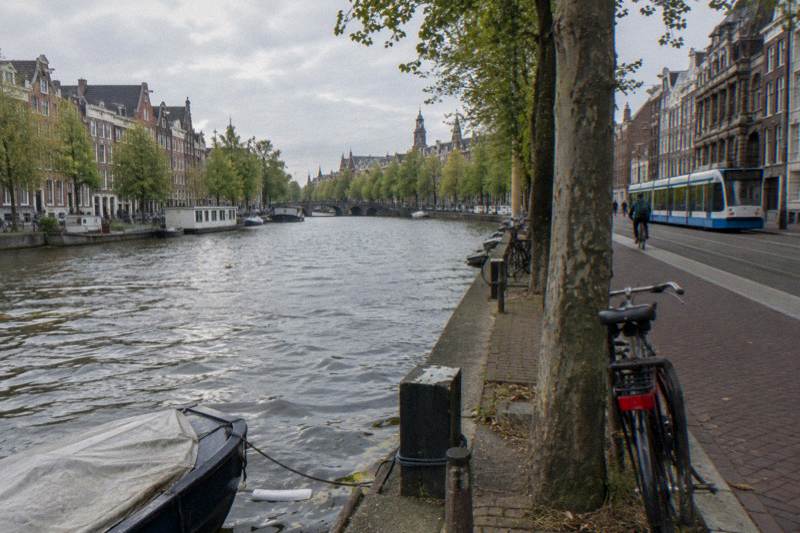
Amsterdam Beaches And Green Escapes You Can Enjoy For Free
Amsterdam has no seaside, but it has free city beaches, swimming lakes and forests within the city limits. Here is what is genuinely free, what is seasonal, and how the pieces fit together.
In Short
Yes, Amsterdam has free beaches and green escapes inside the city. Sloterplas, Blijburg beach on IJburg, the Amsterdamse Bos, Flevopark and Vondelpark are all free to enter. The beaches and swimming spots are seasonal, the parks and forests are open public green space, and the IJ ferries to the north are free for pedestrians and cyclists.
Amsterdam is not a seaside city, yet it packs free swimming lakes, a man-made beach and a large city forest inside its boundaries. The trick is knowing which of these is a park you can enter any day, and which is a beach that only exists as a beach in the warmer months. This guide separates the two, district by district, and pairs each green escape with the free walks that cover the neighbourhoods around them.
Part of the Free Things To Do In Amsterdam guides.
Where Can You Swim Or Sunbathe Free In Amsterdam?
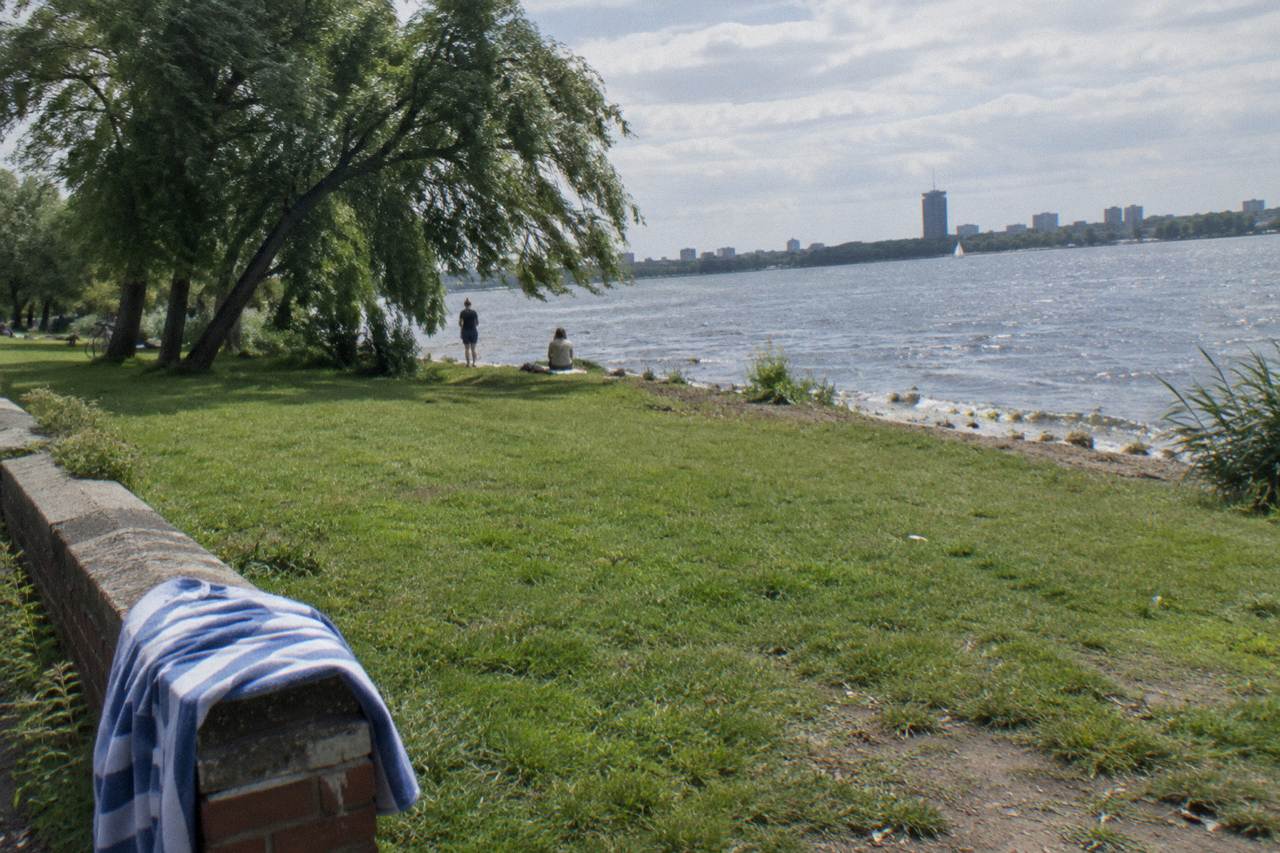
Amsterdam has two genuinely free swim-and-sunbathe options inside the city: Sloterplas, the lake and surrounding park in the west, and Blijburg, the city beach on the artificial island of IJburg in the east. Both are free to enter and free to use, with no gate, ticket or membership. The large parks, Vondelpark, Flevopark, Westerpark and the Amsterdamse Bos, are free green space where sunbathing on the grass is simply part of ordinary park use.
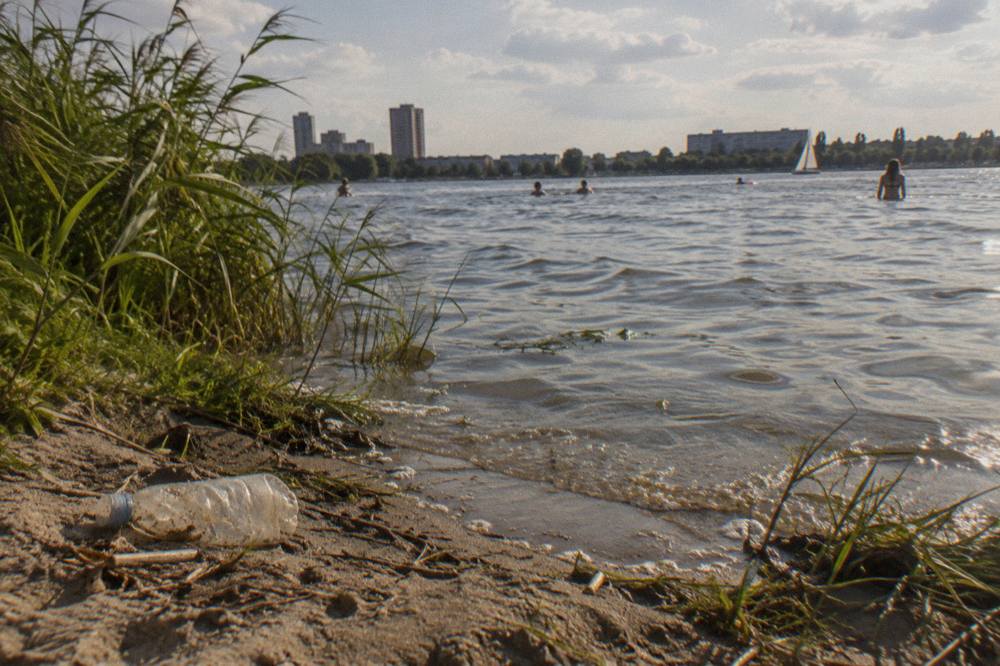
The swimmer's answer sits at the two ends of the city. In the west, Sloterplas is the lake at the centre of a park of the same name, a free public space with the water as its whole point. In the east, Blijburg is the beach attached to IJburg, the residential island district built on reclaimed land in the IJmeer. The fact is simple and worth repeating: Blijburg Beach and IJburg is free to enter. There is no entrance fee, no deckchair levy, no charge for standing on the sand.
Everything else on the free list is green space rather than beach. Vondelpark is the city's famous central park, free and open as public parkland. Flevopark in the east and the Amsterdamse Bos in the south are the same category: unfenced, free, open green space. Sunbathing on a picnic blanket in any of them costs nothing, because there is nothing to buy.
What you should not expect is a free coastal beach. The North Sea coast is outside Amsterdam, and this guide sticks to what is inside the city limits and verifiably free. If your mental image of "amsterdam beaches" is a North Sea strand, the honest answer is that the free city options are Sloterplas and Blijburg, and the sea itself is a separate, paid-transport trip.
| Free spot | Type | Where in the city | Cost to enter |
|---|---|---|---|
| Sloterplas | Lake and park | West, Slotervaart | Free |
| Blijburg beach, IJburg | City beach | East, IJburg islands | Free |
| Vondelpark | City park | Centre-south, Oud-Zuid | Free |
| Flevopark | Park | East, Indische Buurt | Free |
| Amsterdamse Bos | Forest and parkland | South, Amstelveen border | Free |
| Westerpark and Westergasfabriek | Park | West of the centre | Free |
For readers whose beach instinct is really a water-and-sky instinct, the free IJ ferries belong on the same list. The GVB ferries F1 to F7 cross the IJ to Amsterdam Noord free for pedestrians and cyclists, with the F3 running 24 hours a day. That is a free trip across open water, and there is a whole guide to Amsterdam's free ferries on this site if the water crossing appeals more than the sand.
What Is Sloterplas Like On A Summer Afternoon?
Sloterplas is a large lake with a ring of free parkland around it, in the Slotervaart district of western Amsterdam. It is free to enter, free to walk and free to sit by the water, and it is the city's most lake-like free space: the water is the reason people go, not a bonus. On paper it is a park; in practice it functions as the west side's answer to a beach day.
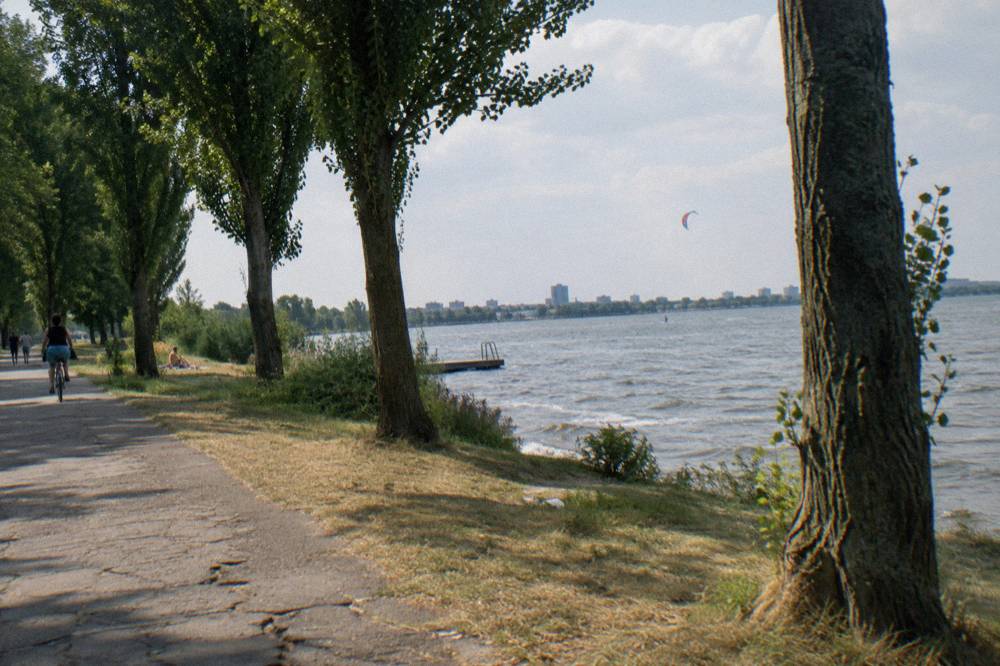
The honest way to describe Sloterplas is by what the facts state: it is a free park built around a lake, in the west of the city. The water is real, the surrounding green space is real, and both are free. Crowd levels, water temperature and the best hour to visit are not published for these beaches and green escapes. If you want a free afternoon beside open water without leaving Amsterdam, this is the western option.
Sloterplas earns its place in a beaches guide because it is the only free lake inside the city that is a destination in its own right rather than a feature of a larger forest. The Amsterdamse Bos has water too, but the Bos is woodland first. At Sloterplas the ratio runs the other way: lake first, park around it.
Because it sits in the west, Sloterplas pairs naturally with the western half of a city itinerary. Westerpark and the Westergasfabriek grounds are also free, and the guide to Amsterdam's free parks covers how the western green spaces connect. A day that starts in parkland and ends at a lakeshore costs nothing in entry fees anywhere along the way.
If you would rather put a story around the city before heading west, the free walks are the same price as the park. The Aldo Origins Walk, 1 Hour 45, run on GuruWalk, meets at the National Monument on Dam Square and covers the city's growth from its origins, rated 4.78 out of 5 across 261 GuruWalk reviews. It is free, pay what you want, reserved on GuruWalk, and it explains how a marsh turned into the city whose parks you are about to sit in.
For a broader first-day orientation before you scatter to the edges of the city, three history walks bracket the same old centre from different angles, all free and pay what you want.
Is Blijburg Beach Free To Enter?
Yes, Blijburg beach is free to enter. Blijburg is the city beach on IJburg, Amsterdam's island district in the east, and its access status is straightforward: free, no gate fee, no minimum spend. The beach itself costs nothing. What you choose to buy once there, food, drink or anything else, is separate and is not a condition of entry. Free, in this case, means the sand and the shoreline.
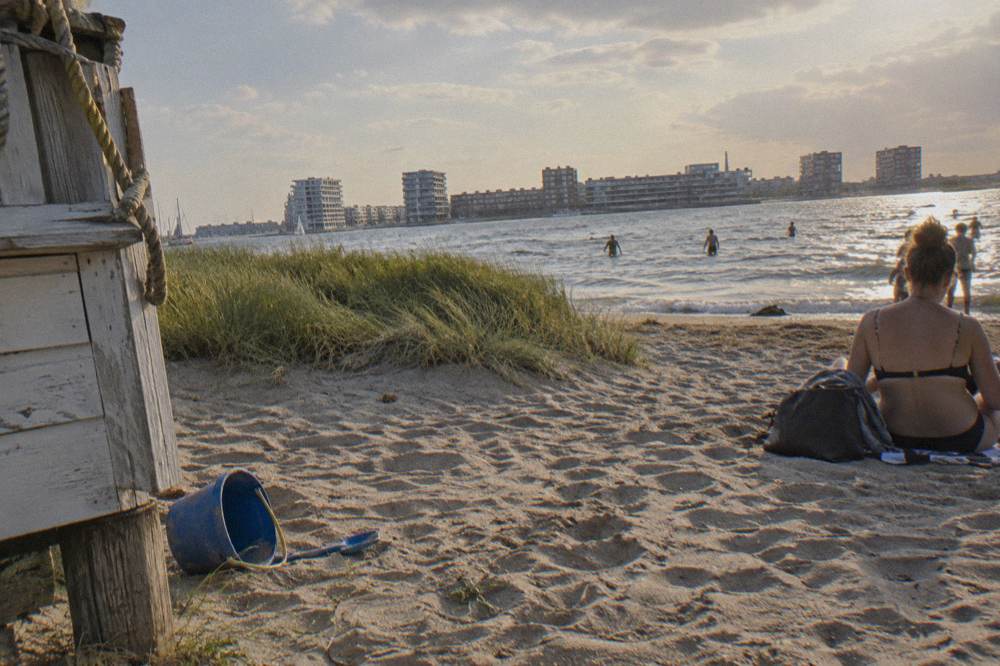
Blijburg is the closest thing Amsterdam has to a real beach inside the city, because it is a real beach: sand on the shore of the IJmeer, attached to IJburg, the district built on islands linked by bridges. Blijburg Beach and IJburg is free to visit, and no conditions are attached. You do not need a card, a booking or a wristband to stand on it.
The useful distinction is between the free part and the paid parts that can exist around any beach. Food and drink venues at a beach are businesses; the shoreline is public. Entering Blijburg costs nothing, and no ticket stands between you and the sand. The same free-for-the-ground, paid-for-the-extras pattern runs all over Amsterdam, from NEMO's free Rooftop Square above its ticketed museum to the Eye Filmmuseum's free foyer and terrace beside its ticketed screens.
Getting to IJburg is a transport question, and this guide will not quote fares or journey times, since no verified figure for that route is published here. The trip across town to the eastern islands is ordinary GVB transit, and children aged 4 to 11 travel free nationwide with a paying adult from 1 January 2027, per GVB's own service pages.
What Blijburg gives you is the beach-and-city combination that "amsterdam beaches" searches are really asking for. The islands around it, IJburg itself, are free to wander as public space, so a Blijburg day can stretch into an island walk without a second decision or a second ticket. In the other direction, the eastern district connects back through the Indische Buurt, where Flevopark continues the green theme for free.
How Do You Get Into The Amsterdamse Bos?
You simply go there: the Amsterdamse Bos is free, unfenced public parkland and there is no entrance gate, ticket or fee anywhere on its boundary. It is one of the largest wooded city parks in Europe, stretching across the south of Amsterdam along the Amstelveen border, and every path into it is free to use. Access is not seasonal and not conditional. The Bos is open public green space, the same legal category as Vondelpark.
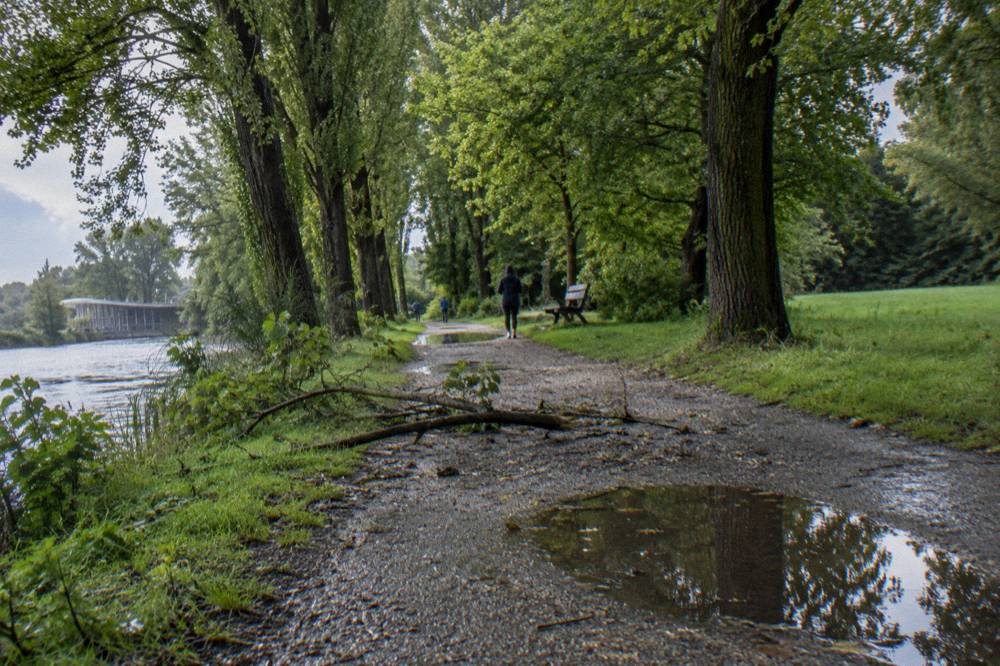
The Amsterdamse Bos, the Forest, is the heavyweight on this list. It is free to enter, a park of woodland, meadows and water in the city's south. Because it is public parkland rather than an attraction, there is nothing to buy and nothing to book. You enter the way you enter any park: by walking in.
The scale is the reason to make the trip. Where Vondelpark is a central park, the Bos is a forest with the ambitions of a nature reserve, and it spills over the municipal boundary into Amstelveen. For a visitor matching green escapes to days of the week, the Bos is the half-day option: it rewards time in a way a square or a canal-side lawn does not.
Within the Bos, the free baseline is the land itself. Any specific attraction inside or beside a park, a rowing boat rental, an organised activity or a museum carries its own price. The simple fact: entering the forest and walking its paths costs nothing.
The Bos also anchors the southern end of a free-green itinerary that runs Vondelpark, then south. Combined with the parks guide's coverage of the centre-south, it gives you a full day of green space with zero entry fees. If the weather turns, the rainy-day free things guide is the counterpart, since a forest in rain is an acquired taste.
Is Flevopark Quieter Than Vondelpark?
The honest answer is that no published source compares the two by visitor numbers, so no honest quietness ranking exists. What the facts do say: Flevopark is a free park in the Indische Buurt in the east, and Vondelpark is the free central park in Oud-Zuid. Both are unfenced public green space. The difference that matters for planning is position, one sits in a central residential district, the other in the east near IJburg and the water.
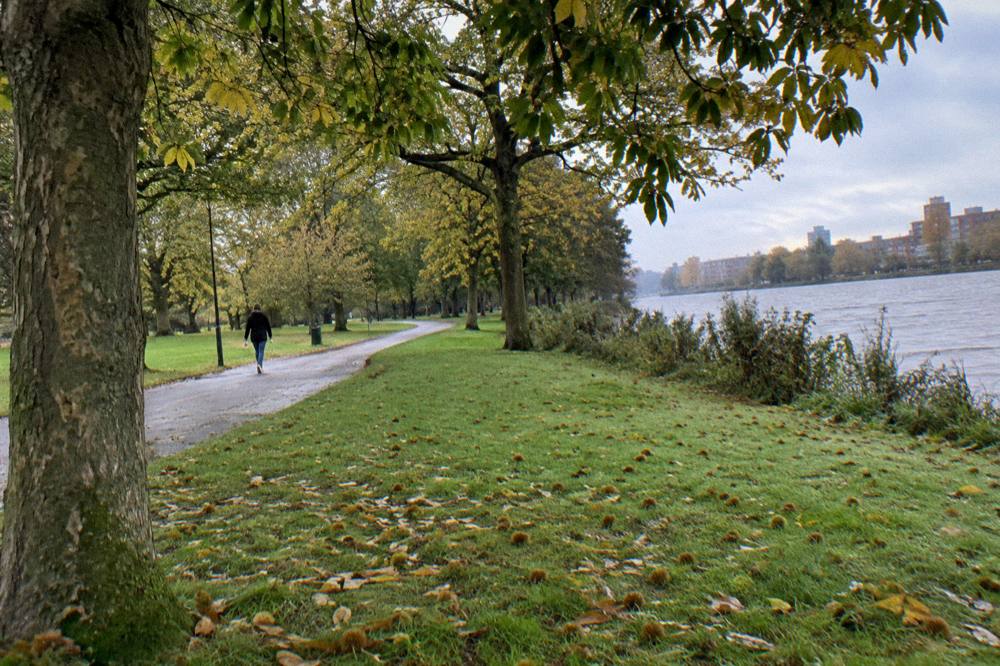
This question gets asked because Vondelpark is famous, and fame raises fair worries about space on the grass. But a guide that told you Flevopark is quieter would be inventing a crowd figure no source provides. Flevopark is free to enter, it lies in the east of the city in the Indische Buurt, and its green space is its whole purpose. Vondelpark is free, central, and the park most visitors have already heard of. The wider set of guides lives on Free Things To Do In Amsterdam.
The planning logic is geographic. If your day is already eastern, Blijburg beach in the morning and Flevopark in the afternoon is a coherent, entirely free route through the same side of the city. If your day is central, Vondelpark is the park that fits, sitting between the museum quarter and the Jordaan side of town, and the Vondelpark guide covers its free status in detail.
Flevopark's other selling point, from the data rather than from atmosphere, is adjacency. It sits in the district that connects the eastern islands to the rest of the city, which makes it the natural green stop on an IJburg day. The park itself carries no conditions: free, open, public.
Both parks work as picnic ground, walking ground or a free hour between paid sights. Neither charges, neither books, neither needs a card. The choice between them is where your day is, not what a ranking says.
| Park | District | Free entry | What it pairs with on the same side of town |
|---|---|---|---|
| Vondelpark | Oud-Zuid, centre-south | Yes | Museum quarter, southern route to the Amsterdamse Bos |
| Flevopark | Indische Buurt, east | Yes | Blijburg beach and IJburg on an eastern day |
| Westerpark | West of the centre | Yes | Route out toward Sloterplas |
| Amsterdamse Bos | South, Amstelveen border | Yes | Long rides and woodland circuits |
Which Of These Spots Are Seasonal?
The beaches and swimming spots are the seasonal ones: Sloterplas and Blijburg function as swim-and-sun destinations in the warm months. The parks and the forest, Vondelpark, Flevopark, Westerpark and the Amsterdamse Bos, are not seasonal attractions at all; they are permanent public green space. In winter the beaches lose their purpose but not their free status, and the free winter alternatives include the Amsterdam Light Festival walking route, 26 November 2026 to 17 January 2027.
The seasonal split is the single most useful thing to understand about Amsterdam's free outdoor list, and it is where most planning mistakes happen. A park is a park in January. A beach in January is just a cold shoreline, free but pointless for swimming. Sloterplas and Blijburg are free public space with no opening season of their own; swimming there is a warm-month activity by nature, not by rule.

| Spot | Free status | Seasonal? | Note |
|---|---|---|---|
| Sloterplas | Free | Beach use is warm-month | Public parkland all year |
| Blijburg beach | Free | Beach use is warm-month | Free entry, sand on the IJmeer |
| Vondelpark | Free | No | Permanent public park |
| Flevopark | Free | No | Permanent public park |
| Amsterdamse Bos | Free | No | Permanent forest parkland |
| Light Festival walking route | Free 4.5 km route | 26 Nov 2026 to 17 Jan 2027 | Lights 16:30 to 23:00, until 21:00 on 31 Dec |
Winter has its own free outdoors, though some spots close or change hours with the season. The Amsterdam Light Festival's 15th edition runs 26 November 2026 to 17 January 2027, with the artworks on the 4.5 km walking route free to see, lights on from 16:30 to 23:00 daily and until 21:00 on 31 December, per the festival's official site. The app audio walks and the canal-boat cruises are paid. The full Light Festival guide breaks down every free and paid part.
One more winter fact that affects any outdoor plan: a nationwide ban on consumer fireworks, except F1 items like sparklers, has been in force since 1 August 2026, and Amsterdam enforces it. For a seasonal planner, the takeaway is that the beach season and the festival season dovetail: as one ends, the other begins, and both have a genuinely free core.
Which Green Escape Is Best By Bike?
By bike the strongest free pairing is the Amsterdamse Bos in the south for distance and woodland, or Blijburg and IJburg in the east for a beach-and-islands ride. The IJ ferries add a free water crossing for pedestrians and cyclists, with the F3 running 24 hours. Every green escape on this list is free to enter, so the bike choice is about distance and terrain, and the Bos is the one built for long rides.
Amsterdam is a cycling city, and every spot in this guide can be reached on two wheels, so a bike does the job as well as walking does. What the facts do support: the ferries are free for cyclists as well as pedestrians, the F3 runs around the clock, and the F4 serves the NDSM wharf side of the water, all covered in the free ferries guide.
A bike day in the south points at the Amsterdamse Bos. It is the biggest free green space on the list, it is permanent parkland, and its scale means a bike is a sensible way to see more of it than legs alone would manage. Pair it with Vondelpark on the way out and you have a southern loop of entirely free green space.
A bike day in the east points at IJburg and Blijburg. The islands are linked by bridges, the beach is free, and the ride threads through Flevopark territory on the way. The eastern loop is the closest Amsterdam gets to a beach ride, since the sand is the destination rather than a stop.
The west offers Sloterplas as its anchor, a lake circuit with parkland around it, with Westerpark as the launch point nearest the centre. And if the day is more about the city than the green, the Essential Walk, Adults Only, an English free walk on GuruWalk that meets at In De Waag on the Nieuwmarkt, rated 4.94 out of 5 across 2,591 GuruWalk reviews, covers the old centre in 1 hour 30 minutes and leaves the rest of the day for the ride.
Why Do People Expect A Beach Season That Amsterdam Never Promised?
The common mistake is treating Amsterdam's beaches as all-season attractions with facilities they do not have. Blijburg is free sand on the IJmeer and Sloterplas is a free lake, but neither record promises winter facilities, water quality seasons or lifeguard hours, and none of that is printed here. Travellers who plan a beach day into a December itinerary, or who assume swimming is possible whenever entry is free, are importing expectations the city never states.
The error has a shape: free entry gets read as "beach open", and "beach open" gets read as "swimming fine". The walks listed here break that chain. Access to Blijburg and Sloterplas is free, full stop. What is not in any record is a statement about water temperature, swimming safety or off-season services, so the honest guide says nothing about them either.
The second version of the mistake is the reverse: assuming the whole free-outdoors list shuts down in winter. It does not. The parks and the forest are permanent public space, the ferries run, the F3 around the clock, and the Light Festival's walking route turns winter evenings into a free outdoor attraction with published hours.
The fix for both is the seasonal table above: beaches for the warm months, parks for every month, Light Festival for the dark ones. Build the plan on these free places, and the list holds up in any season.
Common Questions About Amsterdam Beaches And Green Escapes
Is Blijburg Beach Free To Enter?
Yes. Blijburg, the city beach on IJburg in the east of Amsterdam, is free to enter, with no gate fee or minimum spend. Anything you buy there, food or drink, is a separate commercial choice and not a condition of entry. The sand and the shoreline cost nothing.
Can You Swim For Free In Amsterdam?
Yes, at the free public water spaces inside the city, chiefly Sloterplas, the lake in the west, and Blijburg on IJburg. Both are free to enter and free to use. Swimming itself is a warm-month activity, so plan beach days for summer, and check season dates, water quality and lifeguard hours before you go.
Yes. The Amsterdamse Bos is free, unfenced public parkland in the south of the city, stretching along the Amstelveen border. There is no gate, ticket or entry fee. Separate activities or rentals inside or beside the forest carry their own prices, so the walk in costs nothing while the extras are paid.
No published source compares them by visitor numbers, so no honest answer exists. The facts: Flevopark is a free park in the Indische Buurt in the east, near the IJburg side of the city; Vondelpark is the free central park in Oud-Zuid. Choose by where your day is, not by a quietness ranking nobody has measured. All the parks and the forest: Vondelpark, Flevopark, Westerpark and the Amsterdamse Bos are permanent public green space. The winter free highlight is the Amsterdam Light Festival walking route, free from 26 November 2026 to 17 January 2027, lights on 16:30 to 23:00 daily and until 21:00 on 31 December. The green spaces themselves are all free to enter, and the IJ ferries are free for cyclists and pedestrians, with the F3 running 24 hours. Cycling within Amsterdam is ordinary city riding, so plan distances to each park from a map rather than from a quoted route time. The beaches, the forest and everything between them are free, and so is the walk that ties the city's story together. The Absolutely Amsterdam walk by FreeDam, on GuruWalk, meets at Beursplein in front of the Stock Exchange and is rated 4.82 out of 5 across 9,929 GuruWalk reviews, the largest review pool of any walk on this site. If green escapes are only one thread of your trip, the budget guide to Amsterdam and the free things to do in winter guide cover the rest of the free city, season by season. Three more free, pay-what-you-want walks round out the history side of the city, all reserved on GuruWalk, all free to book.Is The Amsterdamse Bos Free?
Is Flevopark Quieter Than Vondelpark?
Which Amsterdam Green Spots Are Open In Winter?
Can You Reach The Beaches And Parks By Bike For Free?