Amsterdam Hidden Gems: Quiet Corners That Cost Nothing
Amsterdam's quiet corners are mostly free, but several come with conditions: limited hours, no group tours, or a residential doorstep you are expected to respect. This guide covers the Begijnhof, the Jordaan hofjes, the Schreierstoren and the Marineterrein, with the rules that keep them open.
In Short
Amsterdam's best hidden gems are free or conditionally free. The Begijnhof courtyard is open roughly 10:00 to 18:00 and closed to group tours. The Jordaan hofjes are quiet residential courtyards. The Schreierstoren and the old city wall fragments cost nothing to see. The Marineterrein is a regenerated island open in parts. All 28 free walks on this site, including the Medieval City Walls Walk, are pay what you want.
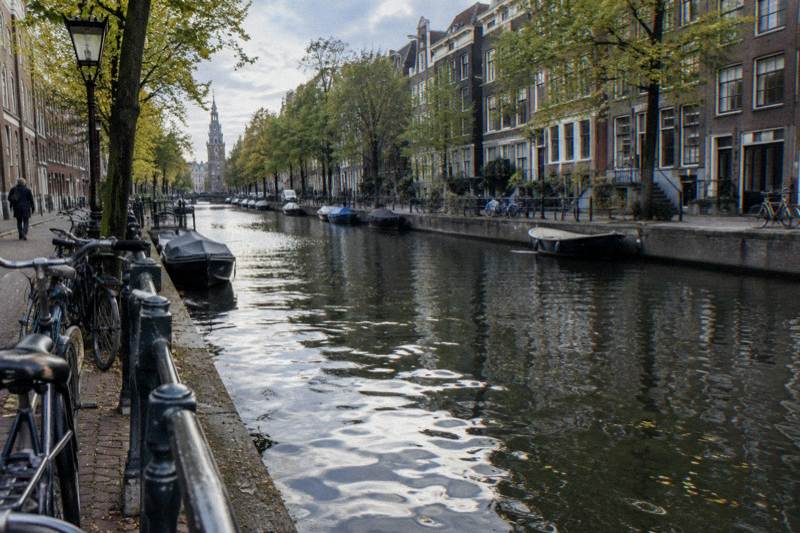
Amsterdam hides its quietest sights in plain sight. Behind the Kalverstraat shopping strip sits an old courtyard where people still live, the Jordaan packs almshouse courtyards behind unmarked doors, and a medieval defence tower still stands at the old harbour edge. Every one of these costs nothing to see, and every one comes with a condition: hours, silence or a simple request not to arrive in a crowd. This guide, part of the Amsterdam free guides hub, walks through the hidden corners that cost nothing and the rules that keep them that way.
Which Quiet Corners Of Amsterdam Cost Nothing?
The free quiet corners are the Begijnhof courtyard, the hofjes of the Jordaan, the Schreierstoren and the surviving wall towers, the Zeedijk stretch with the Waag and Montelbaanstoren, and large parts of the Marineterrein island. The Westerkerk church interior is free to enter at limited hours, though its tower is closed for restoration. None of these needs a ticket, and none can absorb a crowd.
The pattern across Amsterdam's hidden sights is "free for the building, paid for the show", and once you see it, the city arranges itself neatly. The Stadsarchief keeps its Schatkamer exhibition free while its Meesterwerk show is ticketed. The Eye Filmmuseum across the IJ has a free foyer, bar and waterfront terrace, while films and exhibitions inside are paid. NEMO's Rooftop Square is free even though the science museum below it is not. These splits are the real hidden gems, because most visitors assume the whole institution is one price and walk past the free part.
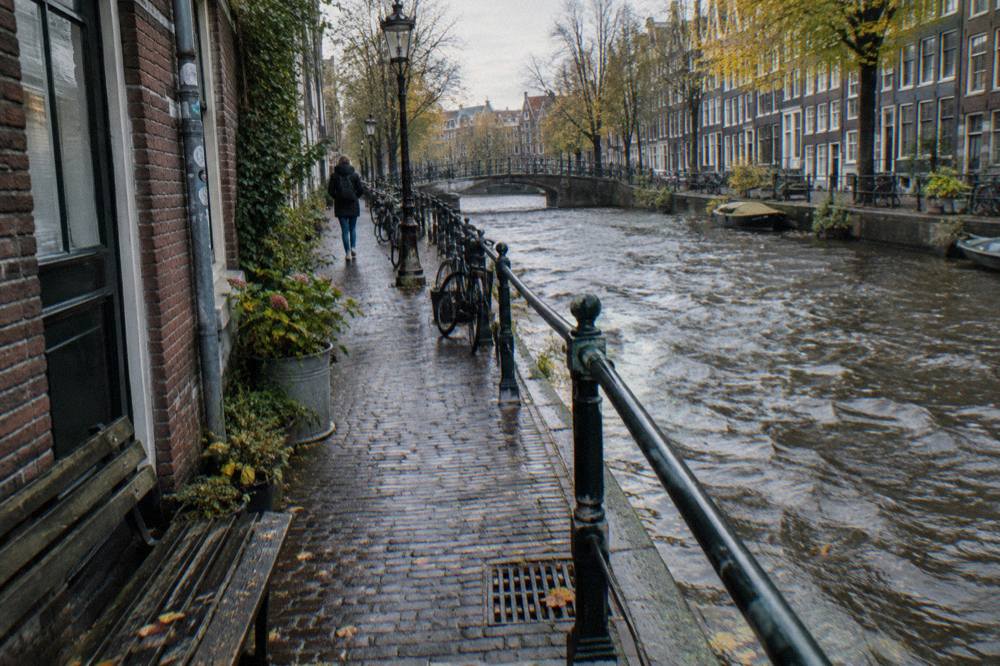
Then there are the genuinely free layers underneath: the Canal Ring itself, a UNESCO-listed street network you walk through for nothing, the Nine Streets crossings, the Magere Brug, and the parks that locals treat as extensions of their living rooms. Our free attractions overview covers the full map of these. The hidden gems in this guide are the ones with a door, a gate or a rule, the places where free access survives only because visitors behave.
A word on towers, because Amsterdam punishes assumption here. The Oude Kerk tower only opens April to October and the church itself is ticketed at EUR 14.50. The Westerkerk tower is closed to visits entirely while restoration runs, though the church interior stays free Monday to Friday, 11:00 to 15:00, September to June, with a donation suggested. The Zuiderkerk's access status is simply not published right now. If a tower view is what you are after, the honest list is in our free viewpoints guide, which separates what is open from what is not.
| Quiet corner | Cost | Condition to know |
|---|---|---|
| Begijnhof courtyard | Free | Open roughly 10:00 to 18:00, residential, no group tours |
| Jordaan hofjes | Free | Quiet courtyards behind doors, residents live around them |
| Schreierstoren and wall towers | Free | Visible from the street at any time |
| Westerkerk church interior | Free | Monday to Friday 11:00 to 15:00, September to June, donation suggested |
| Marineterrein | Free in parts | A living innovation site, some areas working space |
| Eye Filmmuseum foyer and terrace | Free | Films and exhibitions ticketed |
| NEMO Rooftop Square | Free | Museum below is ticketed |
How Do You Visit The Begijnhof Politely?
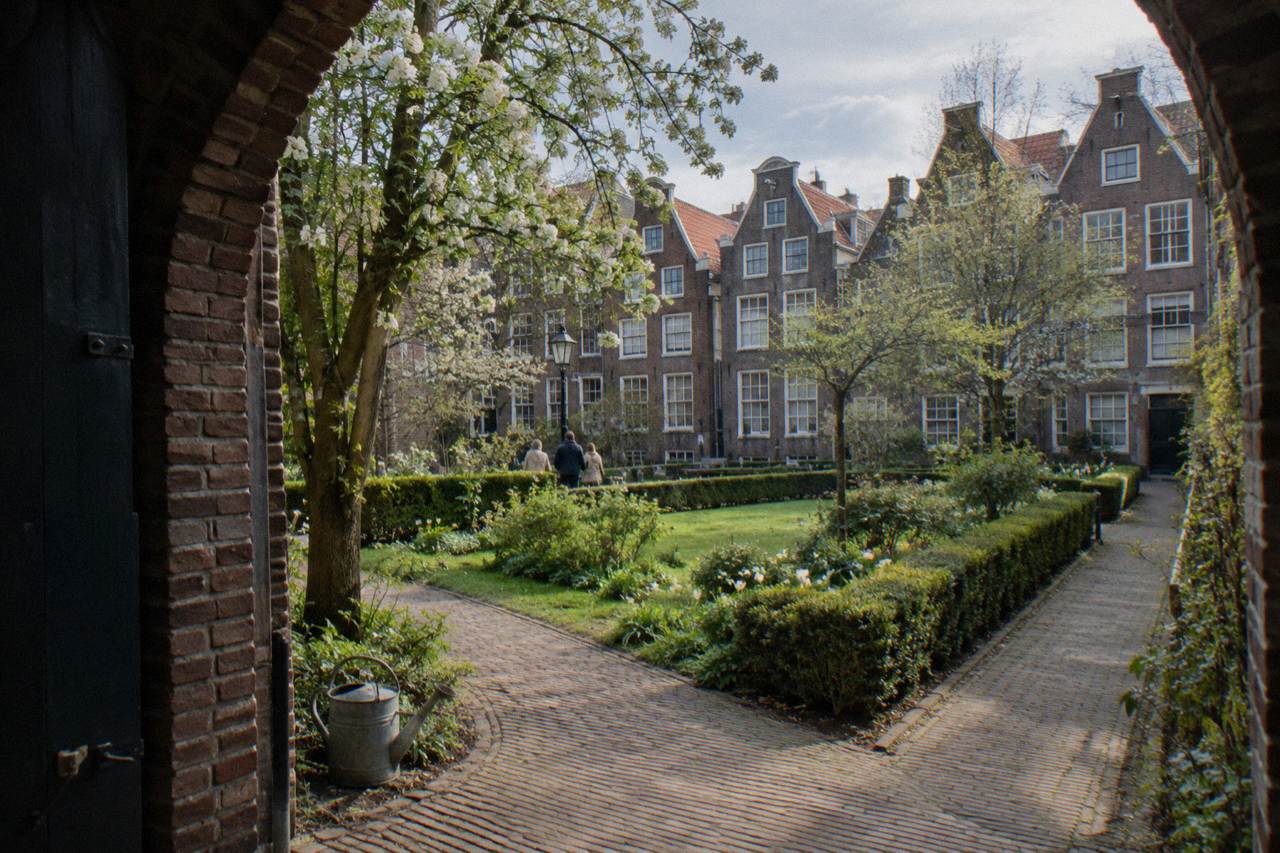
The Begijnhof is a residential courtyard, open to visitors roughly 10:00 to 18:00, and the single most important rule is silence: people live here. Group tours are not allowed inside, so visit alone or in a very small group, keep your voice down, and treat the doors and windows as private homes. The courtyard is closed to visitors on King's Day, 27 April. Entry costs nothing.
The Begijnhof is the clearest example in Amsterdam of a free sight that survives on trust. It is one of the old inner courtyards in the city, and unlike a museum it has no gatehouse, no ticket desk and no staffed checkpoint. What it has is residents, and the courtyard's continued openness depends entirely on the behaviour of the people who walk through it. That is why the no-group-tours rule exists and why a free walking tour will never route through it.
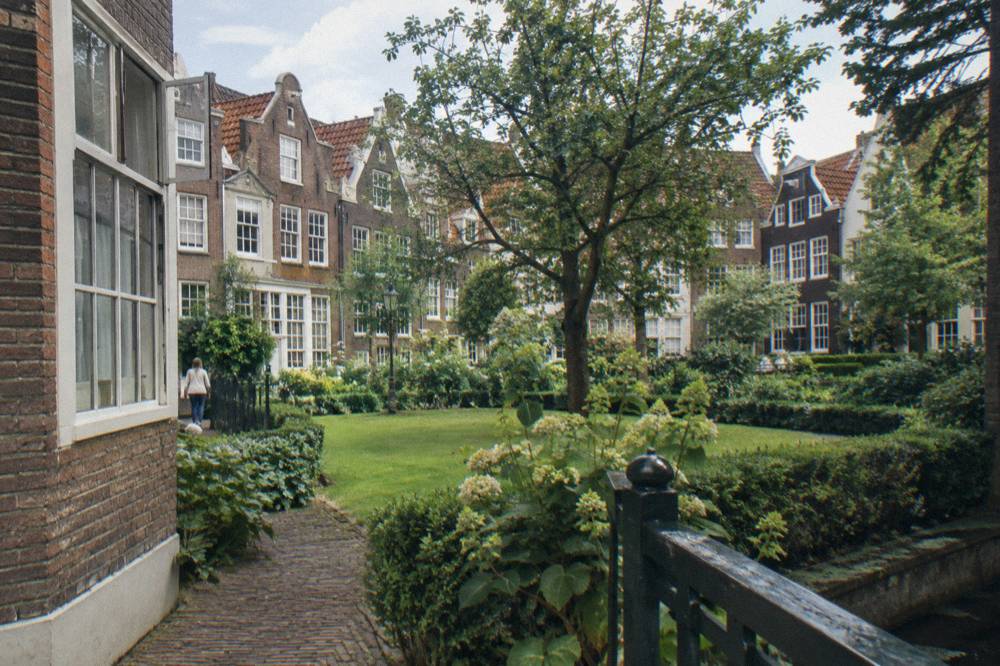
Plan around the hours rather than against them. Roughly 10:00 to 18:00 is the window, and arriving in it matters, because the courtyard is not a public square with a legal right of access, it is a tolerated visit. If you want the comparison with the city's other free sacred spaces, from the Westerkerk to the Basilica of Saint Nicholas, our free churches in Amsterdam guide lists each one's hours and donation customs in one place.
Photography is where politeness gets tested. The courtyard is photogenic and the residents know it, but this is their front garden. Discreet photos of the buildings are tolerated in the open hours; pointing a camera at windows and doorways is not in the spirit of the place. The same discretion applies across the city's contested photographic territory, and the full answer on photography in the Red Light District sits in a separate article.
If you want a guided introduction to the neighbourhood around the courtyard rather than the courtyard itself, a free walk is a good fit. Every walk on this site is free, pay what you want, reserved through GuruWalk, and run by independent local guides.
What Are The Hofjes Of The Jordaan?
Hofjes are enclosed almshouse courtyards, built as charity housing, and the Jordaan neighbourhood holds the densest cluster of them. They are free to enter when their doors are open, but each one is a small residential community, so the etiquette is the same as the Begijnhof: enter quietly, take nothing, disturb nobody, and leave if a gate is shut. A closed door is an answer, not an obstacle to push against.
The hofjes are Amsterdam's most genuinely hidden sights because they are architecturally invisible from the street. A hofje presents a plain door or a narrow corridor to the pavement, and behind it sits a courtyard with small houses around a garden. They were founded as charitable institutions, and a number still function as social housing today. That is the whole reason they stay quiet: they were never built for visitors, and visiting them is a privilege of restraint.
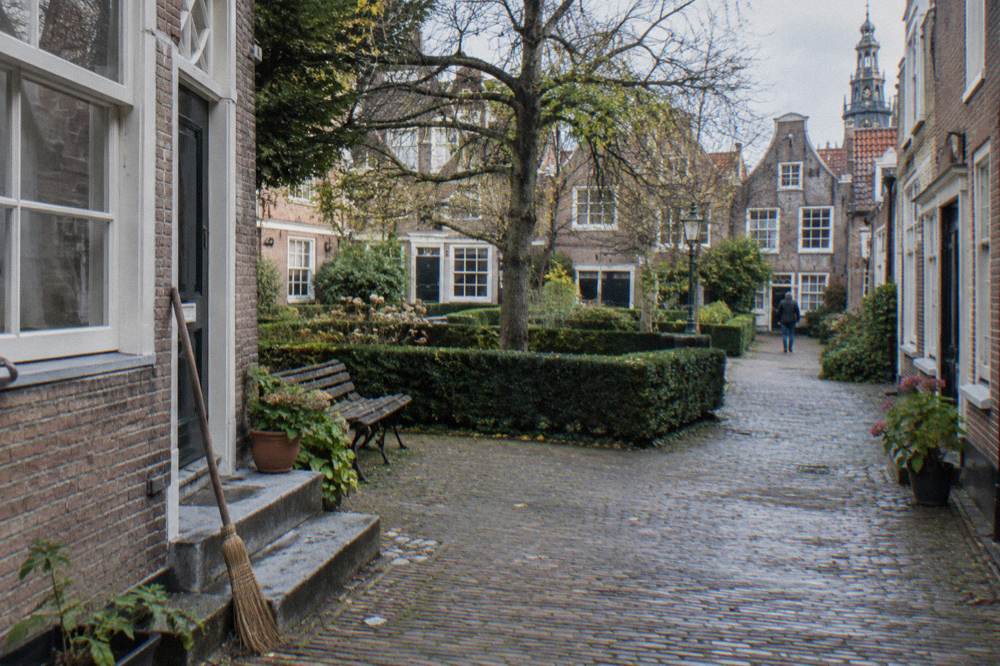
Practically, treat the hofjes as a walk rather than a checklist. The Jordaan itself is one of the city's free pleasures, covered in our Jordaan, Westerkerk and Anne Frank area guide, and wandering its streets with an eye for arched doorways will find you several courtyards without any list. Some hofjes keep regular open hours, others open their gates only on specific days, and access varies courtyard to courtyard and season to season.
What the hofjes reward, more than any single sight in Amsterdam, is going slowly. The courtyards are small, a bench, a patch of grass, a pump, a cluster of housefronts, and they are best understood by sitting in one for ten minutes rather than sprinting through six. This is also where a guided walk earns its keep: a guide who knows the neighbourhood can tell you which doors are public and which are not, and how the almshouse system shaped the Jordaan. The Trilingual Golden Age Walk, rated 4.38 out of 5 across 21 GuruWalk reviews, meets at the obelisk on Dam Square and runs 1 hour 45 minutes in English, French or Russian, and the Golden Age is exactly the era that built the canal-side wealth around these courtyards.
What Is The Story Behind The Schreierstoren?
The Schreierstoren is a medieval defensive tower, part of the old city wall, and it stands free to see on the old harbour front at the Zeedijk end of the old centre. It is one of the few surviving wall towers, alongside the Montelbaanstoren further east and the Waag on Nieuwmarkt. There is no access fee and no ticket, because the tower is seen from the street.
Amsterdam's medieval defences were largely torn down as the city outgrew them, and the survivors are the physical proof of where the old city ended. The Schreierstoren held the wall's corner at the waterfront. The Waag, now standing alone in the middle of Nieuwmarkt, was a city gate. The Montelbaanstoren still rises by the Oudeschans. Between them they trace the outline of medieval Amsterdam, a circuit you can follow entirely on public streets for nothing, and the Zeedijk, Schreierstoren, Montelbaanstoren and Waag all cost nothing to see.
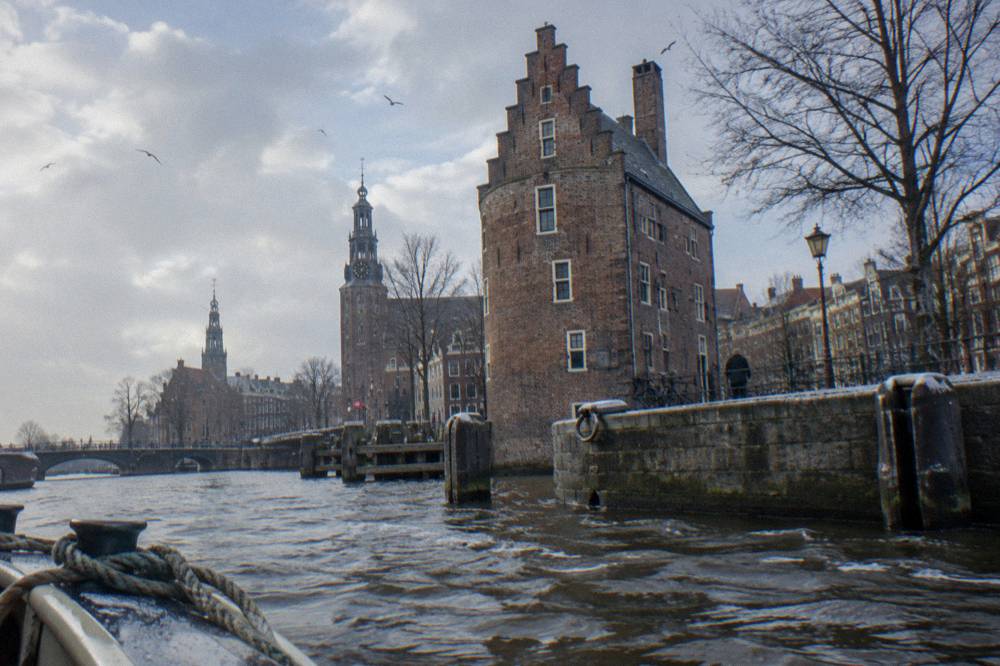
This is the layer of the city that most visitors skip, because it does not advertise. The tower is not a museum, there is no entrance, and no interpretive signage competes for your attention. What there is, is a genuine piece of the medieval defences on a public quay, next to a street, the Zeedijk, that is itself one of the old centre's free walks. If the story appeals, the Medieval City Walls Walk, run on GuruWalk by the guide Dominika, meets at Amsterdam Centraal Station, city side, runs 1 hour 30 minutes in English, and is rated 4.82 out of 5 across 78 GuruWalk reviews. Like every walk on this site it is free, pay what you want.
The old centre has rules of its own that shape how any guided visit works. Guided tours in the old centre run with up to 15 participants per group, larger groups need an exemption from the city, tours operate between 8:00 and 22:00, and no tour may pass the sex workers' windows. Free walking tours are not banned, they simply follow these rules like every other operator, per the municipality's tour rules. For the free-sight side of the same district, see our Red Light District free sights, rules and tours guide.
| Old wall survivor | Where it stands | Cost to see it |
|---|---|---|
| Schreierstoren | Old harbour front at the Zeedijk end | Free, from the street |
| Waag | Nieuwmarkt square | Free to see; the building is a restaurant |
| Montelbaanstoren | By the Oudeschans canal | Free, from the street |
| Rest of the medieval wall | Largely demolished | Traced by street pattern and towers |
What Is Open At The Marineterrein?
The Marineterrein is a former navy yard turned into a living lab, an island district just east of the old centre where historic naval buildings now house workshops, studios and test projects. Parts of it are freely walkable public space. It is a working site rather than a manicured attraction, so some buildings and areas are closed, and the free experience is the public realm: the quays, the water and the architecture.
The Marineterrein matters to the hidden-gems list because it is the newest version of an old Amsterdam pattern: the institution that opens its grounds while keeping its work behind doors. Where the Eye Filmmuseum opens a free foyer and NEMO opens a free rooftop, the Marineterrein opens an island. You walk in past the naval history, around test installations and studio fronts, and out again, having seen a district mid-transformation rather than a finished product.
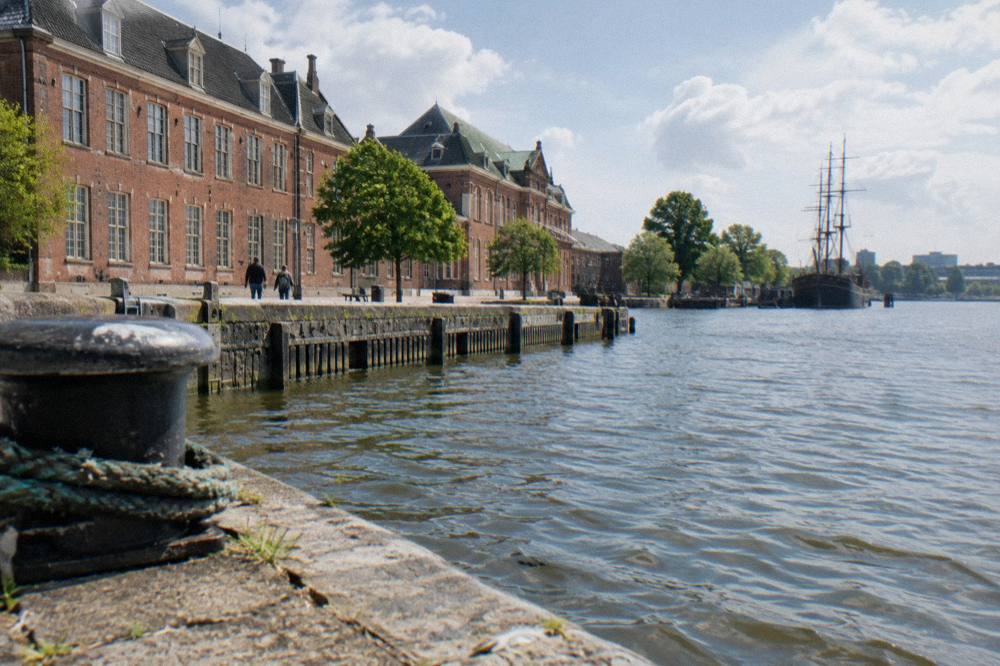
It pairs naturally with the free ferry system. The IJ ferries F1 to F7 are free for pedestrians and cyclists, and the F3 to Buiksloterweg runs 24 hours a day, so a loop that crosses the water, visits the NDSM wharf or the Eye's free terrace on the north bank and comes back costs nothing but time. Our free ferries in Amsterdam guide lays out the routes. Closer to the Marineterrein, the east-side cluster of the Jewish Quarter memorials, including the free-entry Hollandsche Schouwburg, open almost every day 10:00 to 17:00 with no ticket, per its operator's page, and our Jewish Quarter and Plantage free memorials guide covers them.
For history walkers, the Aldo Origins Walk covers Amsterdam's growth from its origins to today in 1 hour 45 minutes, meeting at the National Monument on Dam Square, rated 4.78 out of 5 across 261 GuruWalk reviews, free and pay what you want like every walk listed here.
Which Courtyards Are Closed To Large Groups?
The Begijnhof is the headline case: no group tours of any kind, a rule that exists because it is residential. Across the old centre more broadly, the city caps guided tours at 15 participants and requires an exemption for groups of more than 4, with tours only permitted between 8:00 and 22:00. The practical answer is that every courtyard on this list is a small-group or solo experience by design, not by preference.
This is worth stating plainly, because group rules are the most commonly misunderstood part of free Amsterdam. The municipal rules apply to guided tours in the old centre, they are not a ban, and free walking tours operate legally inside them. But inside gates and courtyards, different logic applies. The hofjes are homes. The Begijnhof is explicitly closed to group tours. The quiet corners stay quiet because nobody sells access to them, and the free walking tours listed on this site respect that by meeting outside and staying in public space.

The table below is the compact version of what closes and what does not.
| Place | Groups allowed | Hours and notes |
|---|---|---|
| Begijnhof courtyard | No group tours | Roughly 10:00 to 18:00, closed to visitors on King's Day |
| Jordaan hofjes | Not designed for groups | Access varies by courtyard; a shut gate means closed |
| Old centre guided tours | Up to 15, exemption needed above 4 | 8:00 to 22:00, no passing sex workers' windows |
| Westerkerk interior | Visits within open hours | Monday to Friday 11:00 to 15:00, September to June |
| Marineterrein public realm | Public space | Working site, some areas closed |
How Do You Find Them Without A Map Full Of Tourists?
The honest method is anchoring: pick one fixed meeting point per neighbourhood, the National Monument on Dam Square, Centraal Station's main entrance, the Homomonument at Westermarkt, and build outward on foot. Every free walk on this site meets at one of these documented points, and Amsterdam's hidden corners cluster inside the old centre, the Jordaan and the eastern Plantage district, all connected by walkable streets and free crossings.
The city's geography does the work for you. The old wall towers, the Begijnhof, the Zeedijk and the Waag all sit inside the medieval core, a compact area where walking beats any transport. The Jordaan wraps around the Westerkerk side of that core. The Marineterrein and the Jewish Quarter memorials sit a short stretch east. Nothing on this list needs a vehicle, and the IJ ferries are the only crossing you might make, free for pedestrians and cyclists.
A guide changes what a street tells you. The Dominika English History Walk, meeting at Amsterdam Centraal Station's main entrance, 2 hours, rated 4.88 out of 5 across 146 GuruWalk reviews, frames the city's growth story; the Niels Origins Walk, meeting at the National Monument, 2 hours, rated 4.81 out of 5 across 116 GuruWalk reviews, covers the same origins ground from the square. Both are on GuruWalk, free, pay what you want.
For the canal-side layer of the same story, the Trilingual Golden Age Walk, 4.38 out of 5 across 21 GuruWalk reviews, 1 hour 45 minutes from the Dam obelisk, connects the merchant city to the streets you will wander afterwards.
Why Do Visitors Find Shut Doors And Closed Towers On The Hidden-Gem Trail?
Most failed visits come from one mistake: treating conditional access as unconditional. The Begijnhof has hours and a King's Day closure, the Westerkerk tower is closed for restoration, the Rijksmuseum garden only opens in summer, and hofje gates simply read as shut when they are shut. Checking the one condition attached to each quiet corner, before you walk to it, is the difference between a find and a locked door.
The tower mistake is the most common. Visitors arrive at the Westerkerk expecting a climb and a view, and find a free church interior plus a tower in restoration. The garden mistake runs the other way: the Rijksmuseum's own page states its green gardens open only during summer, 9:00 to 18:00, so a winter visitor planning a free garden stroll is planning around a closed gate. These are not disappointments the city hides, they are conditions printed on official pages, per the museum's own information.
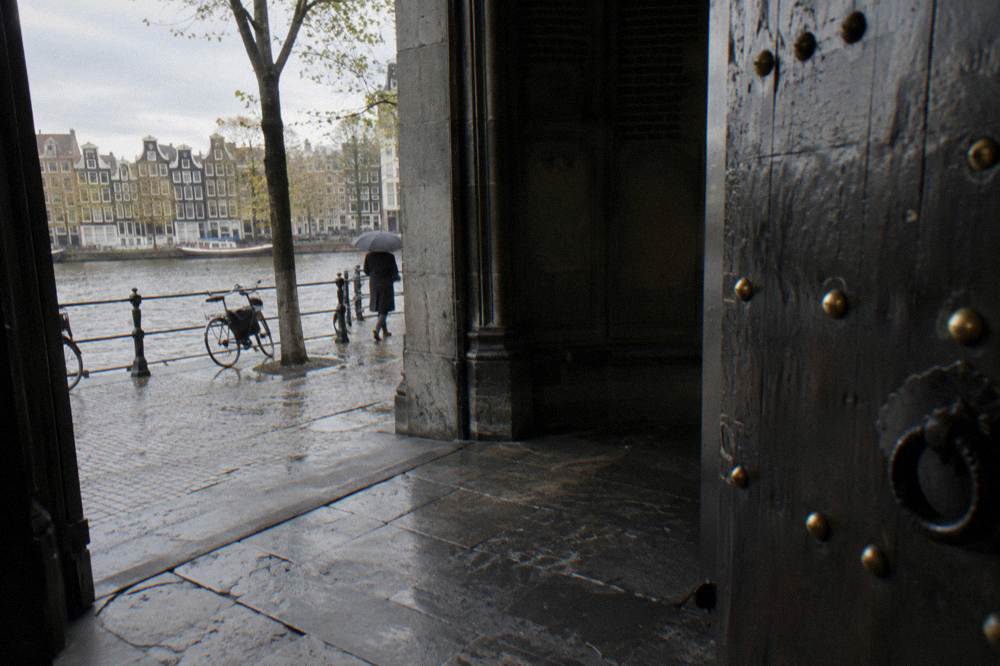
Then there is the crowd mistake: turning up at a residential courtyard in a group of ten, talking at full volume, and being the reason access gets reviewed. The free quiet corners of Amsterdam are a bargain with residents, and the price of entry is behaving like a guest. Walk in small numbers, keep voices low, take your photos of buildings rather than doorways, and leave when the hours end.
The last mistake is paying for the wrong thing. Amsterdam's paid layers are real, the Anne Frank House at EUR 16.50 for adults, the Van Gogh Museum at EUR 25, but none of the hidden corners in this guide carries a price at all. If a resale page is selling you a courtyard, a tower view or a "skip the line" hofje visit, you are buying something that is free, or something that is closed. The site you are reading, Free Things To Do In Amsterdam, exists to keep that line honest: every walk listed is free, pay what you want, and every sight article states its conditions plainly.
Common Questions About Hidden Amsterdam
Which Quiet Corners Of Amsterdam Cost Nothing?
The Begijnhof courtyard, the Jordaan hofjes, the Schreierstoren, the Waag and Montelbaanstoren, the Marineterrein's public realm, the Westerkerk interior at its open hours, and the Eye Filmmuseum's foyer and terrace all cost nothing. Several come with conditions: limited hours, no group tours or paid parts inside the same building.
Can You Enter The Begijnhof For Free?
Yes. The Begijnhof courtyard is free to enter during its opening window, roughly 10:00 to 18:00. It is a residential courtyard: no group tours, quiet conduct expected, and it closes to visitors on King's Day, 27 April.
Are The Jordaan Hofjes Open To The Public?
Some are, at their own doors' discretion. Hofjes are former almshouse courtyards with residents, and access varies by courtyard and by day. A closed gate means closed, and open hours are each courtyard's own affair rather than a citywide schedule.
What Is The Schreierstoren And Can You Go Inside?
It is a defensive tower from Amsterdam's medieval city wall, standing on the old harbour front. It is free to see from the street, and it is appreciated from outside rather than entered as an attraction.
Why Are Group Tours Not Allowed In Some Courtyards?
Because people live there. The Begijnhof bans group tours outright, and across the old centre the city caps guided tours at 15 participants with an exemption needed above 4. The quiet corners stay open precisely because they are not group venues.
Is There A Free Walking Tour That Covers Hidden Amsterdam?
Yes. All 28 walks listed on this site are free, pay what you want, reserved on GuruWalk. The Medieval City Walls Walk, rated 4.82 out of 5 across 78 GuruWalk reviews, meets at Amsterdam Centraal Station and covers the old defences in 1 hour 30 minutes.