Is The Museumkaart Worth It For Tourists?
The Museumkaart costs EUR 75 for adults, and it never replaces a timed slot. Here is the honest maths for a short Amsterdam trip.
In Short
The Museumkaart costs EUR 75 for adults and EUR 39 up to age 18. With the Rijksmuseum at EUR 25 for adults, the card needs roughly three full-price museum visits to break even. It never replaces a timed slot, under-18s already enter the big museums free, and Amsterdam has a large free layer, from the Stadsarchief Schatkamer to free GuruWalk walks. For a two or three day visit the card is usually the wrong buy.
This question sits inside the Museumkaart and I amsterdam City Card guide, which compares both cards sight by sight.
Is The Museumkaart Worth It For Tourists?
For most tourists on a short Amsterdam visit, no. The card costs EUR 75 for an adult, so it needs about three full-price museum visits, at Rijksmuseum pricing of EUR 25, before it stops costing extra money. A visitor staying four or more days and packing in several museums is the exception. Under-18s gain the least, because the big museums already admit them free.
The Museumkaart is a Dutch national museum pass, sold to residents and tourists alike, and its headline promise is simple: one card, many museums, no ticket queue at the counter. That promise is real, but the tourist maths is unforgiving. The card is a paid product, EUR 75 for adults and EUR 39 for ages up to 18, and it does not make any museum free. It makes museums pre-paid, which is a different thing entirely.
Start with what a tourist actually pays without the card. The Rijksmuseum charges adults EUR 25, rising to EUR 26.50 in 2027, and children aged 18 and under enter free. The Van Gogh Museum charges adults EUR 25, about EUR 26 from 2027, free under 18. The Anne Frank House charges adults EUR 16.50, ages 10 to 17 EUR 7, and ages 0 to 9 EUR 1, with timed tickets sold online only. An adult visiting all three pays for three separate tickets, a total that lands close to the card's EUR 75 adult price, and the fourth museum visit is the first where the card starts to save money.
The card's strength is volume. A visitor who plans four, five or six museum-heavy days, mixing the big names with smaller houses, can clear the break-even point comfortably and then save real money. The card's weakness is that the classic short trip, two or three days, one big museum a day, never reaches the threshold. The card costs EUR 75, the same as three EUR 25 museum visits, so the fourth visit is the first that saves money, about EUR 25.
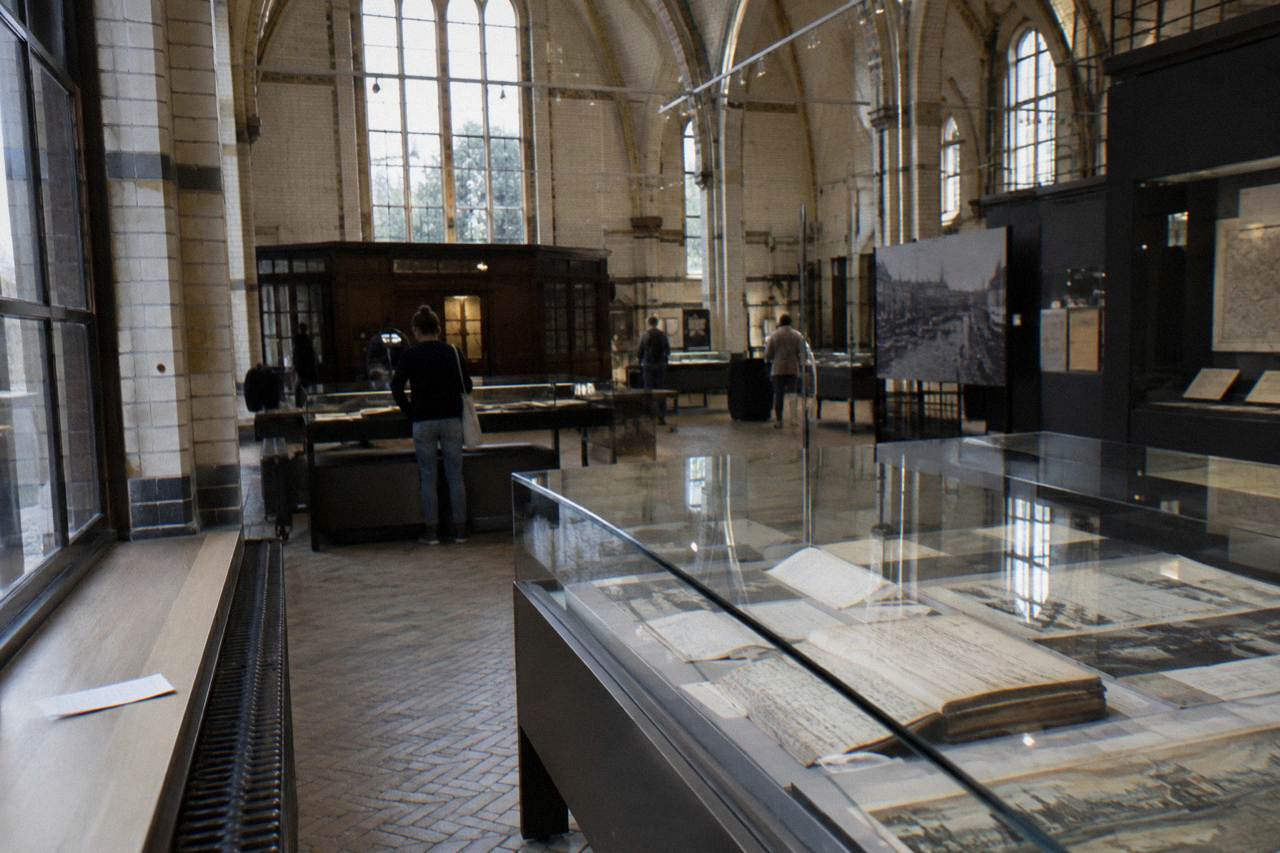
There is also a free layer in Amsterdam that competes with the card directly, and this site exists because of it. The Stadsarchief Amsterdam runs the Schatkamer van Amsterdam as a permanent free exhibition, with no ticket needed. The Hollandsche Schouwburg is free to enter, open almost every day from 10:00 to 17:00. The Concertgebouw gives free lunchtime concerts every week at 12:30 outside July and August, with a free ticket ordered online up to a week ahead, two per person. Add the free IJ ferries, the NEMO Rooftop Square and the city's parks and markets, and a visitor can fill two days without buying a single museum ticket.
The cheapest introduction to the city is not a card at all. GuruWalk lists free, pay what you want walks run by independent local guides, and 28 of them cover Amsterdam on this site. The old centre and Dam Square group includes Absolutely Amsterdam by FreeDam, rated 4.82 out of 5 across 9,929 GuruWalk reviews, meeting at Beursplein in front of the Stock Exchange for 2 hours 30 minutes in English. History-minded visitors can also compare three GuruWalk options that all meet around Dam Square and Centraal Station before spending a cent on museums.
How Many Museums Make It Pay Off?
Three full-price adult museum visits is the minimum, four is the comfortable target. At EUR 25 per adult entry, the Rijksmuseum's current price, the EUR 75 card breaks even on the third visit, so the fourth visit is the first that saves money, about EUR 25 at that point. By the fourth visit the card is saving money, and every entry after that is the saving. Under-18s should almost never buy one.
Do the arithmetic plainly. The card costs EUR 75 for an adult and EUR 39 for anyone up to 18. Divide by EUR 25, the Rijksmuseum's adult price, and the answer is three visits to cover the sticker, a touch more once the fee is counted. So a two-museum trip loses money with the card, a three-museum trip is close to a wash, and a four-museum trip starts saving. A five-museum trip saves about the price of one museum entry, and a six-museum week saves more still. Those savings assume every museum on the itinerary charges full adult price and accepts the card, and the traveller's own plan decides whether that holds.
Children change the maths completely. The Rijksmuseum and the Van Gogh Museum both admit ages 18 and under free, stated on their official tickets pages, so the EUR 39 junior card buys a benefit the big museums already give away. A family with two teenagers would pay for two adult cards plus fees and still buy the Anne Frank House tickets for the 10 to 17 band at EUR 7 each, where the same family without cards pays two adult entries and two junior entries. The card is a volume product for adults, not a family discount.
Here is the honest comparison for the common trip shapes:
| Trip shape | Museums without a card | With the card (adult) | Verdict |
|---|---|---|---|
| 2 days, 2 big museums | two adult entries, each up to EUR 25 | EUR 75 plus EUR 4.95 fee | card loses |
| 3 days, 3 big museums | three adult entries, each up to EUR 25 | EUR 75 plus EUR 4.95 fee | wash, card slightly behind |
| 5 days, 5 museums | five adult entries, each up to EUR 25 | EUR 75 plus EUR 4.95 fee | card saves clearly |
| Museum week, 6 or more | six or more adult entries | EUR 75 plus EUR 4.95 fee | card saves most |
| Family with under-18s | adults pay, children free at big museums | same, plus cards nobody needs | skip the card |
One more angle belongs in the same sum: the hours the card cannot buy back. A museum-heavy Amsterdam day is tiring, and the free alternatives, the free concerts in Amsterdam among them, cost nothing and need no card at all. A traveller who books a paid museum morning and a free afternoon often ends the day richer in both money and energy than one sprinting through a fifth gallery to justify a pass.
Before committing, it is worth pairing the decision with a free walk in the same neighbourhood, since the old centre holds both the card's best museum neighbours and the city's most reviewed free tour on GuruWalk.
What Does The Card Not Cover?
The card does not cover the Anne Frank House as a timed-entry shortcut, does not include the city's paid attractions outside museums, and never waives a timed slot. The Van Gogh Museum accepts the card for entry but still requires a timed ticket, as its official page states. Boozy and interactive attractions like the Heineken Experience and A'DAM Lookout sit outside the card's world, as do canal cruises.
The biggest gap is procedural rather than financial. Every big Amsterdam museum still needs a timed slot, card or no card, and the Van Gogh Museum's official page says so explicitly: timed tickets even with a pass. The card does not jump the diary. If the Van Gogh Museum's slots for your dates are gone, the card is an expensive piece of plastic and a lesson in planning. The Rijksmuseum opens daily from 9:00 to 17:00, which softens the problem there, but the principle stands everywhere: book the slot first, then consider the card.
The Anne Frank House deserves its own sentence. Its timed tickets are sold online only, at EUR 16.50 for adults, and nothing in the card system waives that or opens a cardholder lane. A visitor whose trip is built around the Anne Frank House should price that ticket separately from any museum pass decision, because it is the one entry most likely to sell out and the one the card helps with least.
Then there is everything in Amsterdam that is not a museum. The A'DAM Lookout across the IJ costs about EUR 16.50. The Heineken Experience is paid. The standard canal cruise is paid. Open Garden Days, when the canal house gardens open, are ticketed at about EUR 25. Museum Night ran at EUR 25 for 65-plus museums. The card touches none of these. A traveller who expects one pass to cover "Amsterdam" will be surprised by the bill for everything between the museums.
The card also does not create free access where a record is conditional. The Eye Filmmuseum's foyer, bar and waterfront terrace are free to everyone, while its films and exhibitions are ticketed. NEMO's Rooftop Square is free, the museum inside is not. The Royal Palace is free to see from Dam Square and EUR 13.50 inside. No pass changes those splits, and a visitor can enjoy the free halves of all three without any card at all.
Finally, the seasonal traps. The Rijksmuseum's gardens are only open during summer, 9:00 to 18:00, per the museum's own prices page, so a winter cardholder gets no garden stroll. The Amsterdam Museum's main building on Kalverstraat is closed for renovation, with a return expected in 2029, so it contributes nothing to a card itinerary. The Westerkerk tower is closed for visits during its restoration, and the Oude Kerk tower only opens April to October. Cards do not open doors that are shut.
Does The Card Replace Your Time Slot?
No. Every big museum in Amsterdam requires a timed slot, with a card or without one, and the Van Gogh Museum states this on its own tickets page: free with Museumkaart, timed ticket still required. The card pays the entry, the slot controls the door, and the slot is the scarcer of the two. Plan the slots first and the card second.
This is the mistake that turns a bargain into a disappointment. The card feels like a fast lane, and visually it is: a cardholder walks past the ticket counter. But the counter was never the bottleneck. The bottleneck is the museum's daily capacity, carved into timed slots that sell out for peak dates weeks ahead. A cardholder without a slot stands in the same digital queue as everyone else, refreshing the same page, holding an expensive pass that cannot be redeemed.
The mechanics matter for the under-18s too. Since children enter the Rijksmuseum and the Van Gogh Museum free anyway, a family with the card still books timed slots for the children, at zero cost, alongside the adult cardholder slots. The booking step never disappears, it only changes price. That is also true for the Concertgebouw's free lunchtime concerts, where the free ticket must be ordered online up to a week ahead, limited to two per person: free still means booked.
There is a planning shape that survives all of this. Book the Anne Frank House slot on the day sales open, book the Van Gogh Museum slot next, then decide whether the remaining museum plan justifies the card. If the answer is yes, the card saves money from the fourth visit onward. If the answer is no, the money not spent on the card funds a paid attraction or two, and the free layer of the city fills the gaps.
Amsterdam's old centre rewards exactly that kind of mixed plan. Absolutely Amsterdam by FreeDam, the English GuruWalk meeting at Beursplein in front of the Stock Exchange, rated 4.82 out of 5 across 9,929 GuruWalk reviews, gives 2 hours 30 minutes of the old centre and Dam Square for nothing up front, pay what you want at the end.
Adults-only alternatives exist on the same streets: the Essential Walk, Adults Only by Felipe is an English GuruWalk, rated 4.94 out of 5 across 2,591 GuruWalk reviews, meeting at In De Waag on Nieuwmarkt, 1 hour 30 minutes. It is never a family option, but for adults it compresses the old centre into an evening-sized walk that leaves the daylight hours for the museums the card does cover.
Which Cheaper Options Exist?
Three, and they stack. Under-18s already enter the Rijksmuseum and Van Gogh Museum free, so a junior card is wasted money. The I amsterdam City Card, about EUR 67 to 140, bundles transport and attractions but is a different product with its own break-even. And the free layer, Stadsarchief Schatkamer, Hollandsche Schouwburg, Concertgebouw lunch concerts, parks, ferries and free GuruWalk walks, costs nothing at all.
Take the free layer seriously, because it is not a consolation prize. The Stadsarchief's Schatkamer is a permanent free exhibition, and the building also lists a Sunday 14:00 walk-in tour. The Hollandsche Schouwburg, the wartime Jewish theatre and now a memorial, is free with no ticket, open almost every day 10:00 to 17:00. The Concertgebouw's free lunchtime concerts run every week at 12:30 except July and August. The OBA's rooftop terrace is free outside its November to March closure. The IJ ferries, all of them free for pedestrians and cyclists, with the F3 running 24 hours, cross to Amsterdam Noord whenever you like.
Then compare the two cards honestly. The Museumkaart, EUR 75 plus EUR 4.95, is museum-only and national. The I amsterdam City Card, about EUR 67 to 140 depending on duration, bundles GVB transport with attractions, but transport is a known cost too: the day ticket is EUR 10 in 2026, and children aged 4 to 11 travel free nationwide with a paying adult from 1 January 2027. A visitor who walks a lot and museums a little may need neither card, a visitor who museums hard may want the Museumkaart, and the rare visitor who does both wants the City Card arithmetic done line by line before buying. Neither card makes a museum free, and every big museum still needs its timed slot, a point the card sellers' own pages concede.
The Rijksmuseum's own prices page and the Concertgebouw's lunchtime concert page are the two places to check current figures before buying anything, because the museum prices move annually, EUR 25 to EUR 26.50 at the Rijksmuseum in 2027, and the free concerts pause in summer. The Anne Frank House's tickets page is the third, since its online-only slots are the hardest constraint in any Amsterdam museum plan.
For background on how the city's costs fit together, the companion piece is Amsterdam expensive works through a full daily budget, and how free walking tours in Amsterdam work explains the pay what you want model this site's walks run on. Free Things To Do In Amsterdam exists as a Free Things To Do In Amsterdam directory precisely because the free layer is large enough to plan whole days around, with or without a card in your pocket.
Why Do Tourists Buy The Card Before Booking A Single Slot?
Because the card is sold as access, and access is not the constraint. The timed slot is. Tourists buy the EUR 75 pass first, discover every big museum still requires a reserved slot, and then find peak-date slots gone. The Van Gogh Museum's own page is blunt: timed tickets even with a pass. Book the slots first, then count whether the surviving plan clears four paid museums.
The mistake compounds in museum-dense neighbourhoods. Around Museumplein the cardholder walks between the Rijksmuseum and the Van Gogh Museum believing the pass is the ticket, when in fact each door checks a slot. The same visitor then faces a wasted card and a missed museum, paying for both.
The fix is a two-step order of operations. Step one, book the Anne Frank House and Van Gogh Museum slots the moment dates are known. Step two, look at what remains and run the arithmetic from the first section: four or more full-price museums means the card wins, three means roughly break-even, two means skip it and spend the difference on a canal cruise or a paid tower view. The card is a fine product bought second and a poor one bought first.
The final category worth knowing before any card decision is the history group of free GuruWalk walks, which covers themes the museums charge for. Three of them run in English from meeting points at Centraal Station and Dam Square, and none costs anything to reserve: free, pay what you want, on GuruWalk's own pages.
Common Questions About The Museumkaart
Is The Museumkaart Worth It For Tourists?
Only on museum-heavy trips. The card costs EUR 75 for adults, so it needs roughly four full-price museum visits to save money, three to break even. Under-18s should skip it, since the Rijksmuseum and Van Gogh Museum already admit ages 18 and under free. Short visits are better served by the city's free layer and pay what you want GuruWalk walks.
Does The Museumkaart Get You Into The Van Gogh Museum?
Yes, entry is covered, but the museum's official page states that a timed ticket is still required even with a pass. The card pays the admission, it does not reserve the slot, and peak-date slots sell out. Book the timed slot first, then use the card at the door. Adults pay EUR 25 without it, about EUR 26 from 2027.
Do Children Need A Museumkaart In Amsterdam?
Almost never. The Rijksmuseum and the Van Gogh Museum admit ages 18 and under free, per their official tickets pages. The junior card costs EUR 39, yet the big museums already admit under-18s free, so it buys little there. Children still need their own timed slot at zero cost.
Does The Museumkaart Cover The Anne Frank House?
Not as a shortcut. Anne Frank House tickets are sold online only, EUR 16.50 for adults, EUR 7 for ages 10 to 17 and EUR 1 for ages 0 to 9, and nothing in the card system waives the timed slot or opens a cardholder lane. Treat it as a separate booking in every museum pass calculation.
What Is Free In Amsterdam Without Any Card?
A great deal. The Stadsarchief Schatkamer is a permanent free exhibition, the Hollandsche Schouwburg is free, and the Concertgebouw gives free lunchtime concerts weekly at 12:30 outside July and August. The IJ ferries, the NEMO Rooftop Square, the parks and the markets cost nothing, and 28 free, pay what you want GuruWalk walks cover the city's neighbourhoods.
Museumkaart Or I Amsterdam City Card?
Different products. The Museumkaart, EUR 75 plus EUR 4.95, is museums-only and pays off from the fourth full-price visit. The I amsterdam City Card, about EUR 67 to 140, bundles GVB transport with attractions, and a day ticket alone is EUR 10 in 2026. Museum-heavy weeks suit the Museumkaart, mixed itineraries need the City Card priced line by line, and quiet trips need neither.