Amsterdam After Dark: A Guide To Free Things To Do At Night
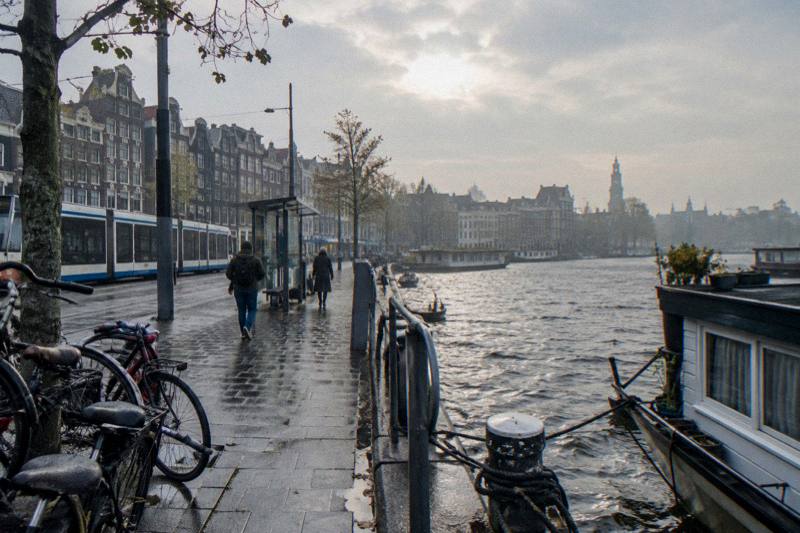
After dark Amsterdam does not lock up. The IJ ferries run through the night for free, the canal bridges are lit from the waterline up, a 4.5 km Light Festival route is free to walk from late November to mid-January, and the rules that shape an evening in De Wallen cost nothing to follow.
In Short
Plenty is free in Amsterdam after dark. The IJ ferries, including the F3 to Amsterdam Noord, run day and night and cost pedestrians nothing. Canal bridges such as the Magere Brug are lit and free to cross. The Amsterdam Light Festival's 4.5 km walking route is free from 26 November 2026 to 17 January 2027, with lights on from 16:30 to 23:00. De Wallen is free to walk under municipal tour rules.
After dark Amsterdam shifts rather than shuts. The IJ ferries keep crossing the water through the night, the Light Festival turns a 4.5 kilometre stretch of the centre into a free open-air exhibition from late November, and the bridges of the canal ring light the water from below. This guide, part of the Free Things To Do In Amsterdam guides, walks through what is genuinely free once the sun goes down, what the evening rules in De Wallen actually say, and which free sights you should not plan around after dark because they have closed hours.
Everything here comes from official operator pages and the city's own published rules. Where a sight is free only in part, the paid part is named. Where something closes by evening, it is listed as closed, not as an evening option. Money figures appear only where an official source states them for a sight, and no walk on this site carries a price, because every walk listed here is free, pay what you want, reserved through GuruWalk.
What Is Free In Amsterdam After Dark?
After dark, Amsterdam hands out real freebies: pedestrians and cyclists ride the IJ ferries F1 to F7 free, with the F3 running 24 hours, the lit canal bridges and the Magere Brug cost nothing to cross, the Amsterdam Light Festival's 4.5 km walking route is free from 26 November 2026 to 17 January 2027, lights on 16:30 to 23:00, and De Wallen is free to walk under the city's tour and behaviour rules. No tickets needed.
Start with the water, because it is the one part of the city that never closes and never charges. The GVB IJ ferries, F1 to F7, are free for pedestrians and cyclists, and the F3 to Buiksloterweg in Amsterdam Noord runs 24 hours a day. That makes a night crossing of the IJ one of the few genuinely free experiences in Amsterdam that has no closing time, no season and no condition. You board behind Amsterdam Centraal and the crossing is simply part of the city's public transport network.
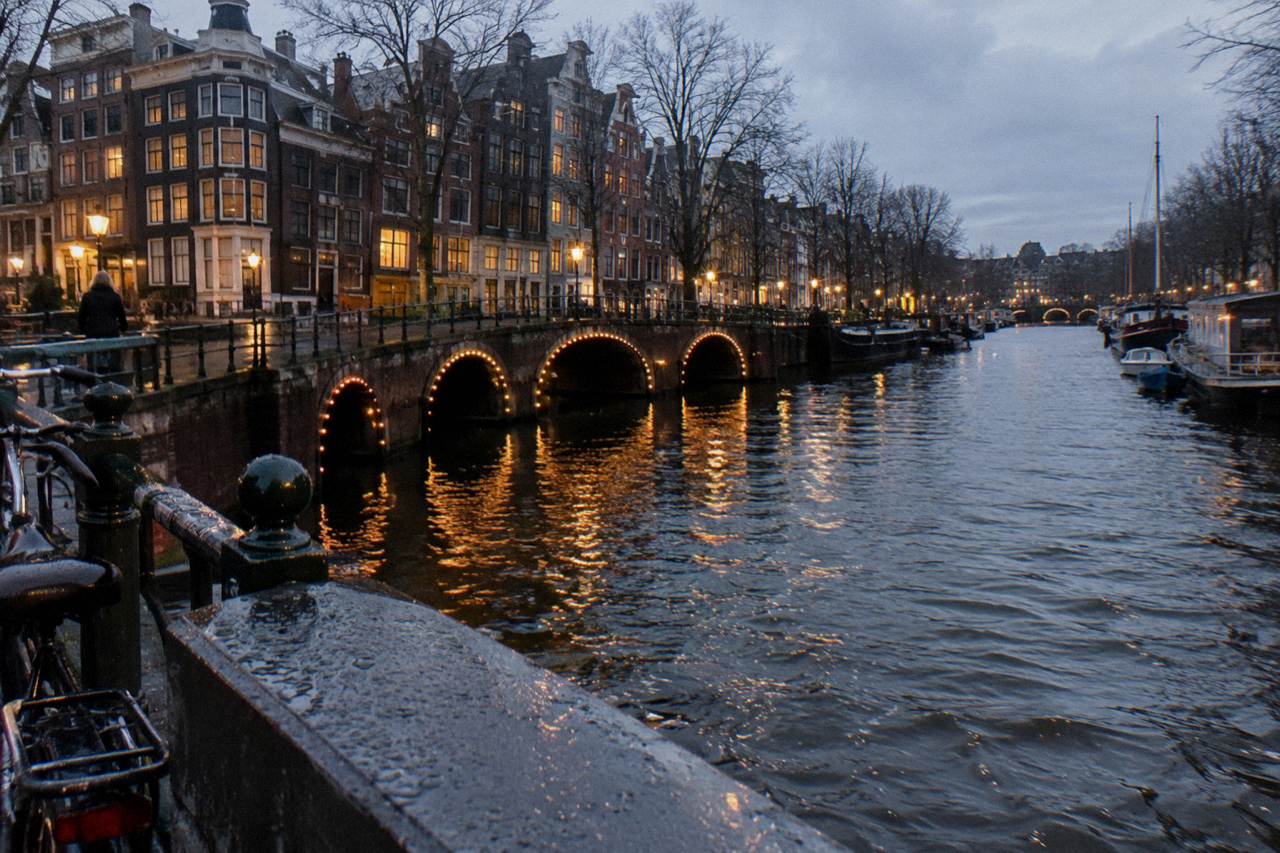
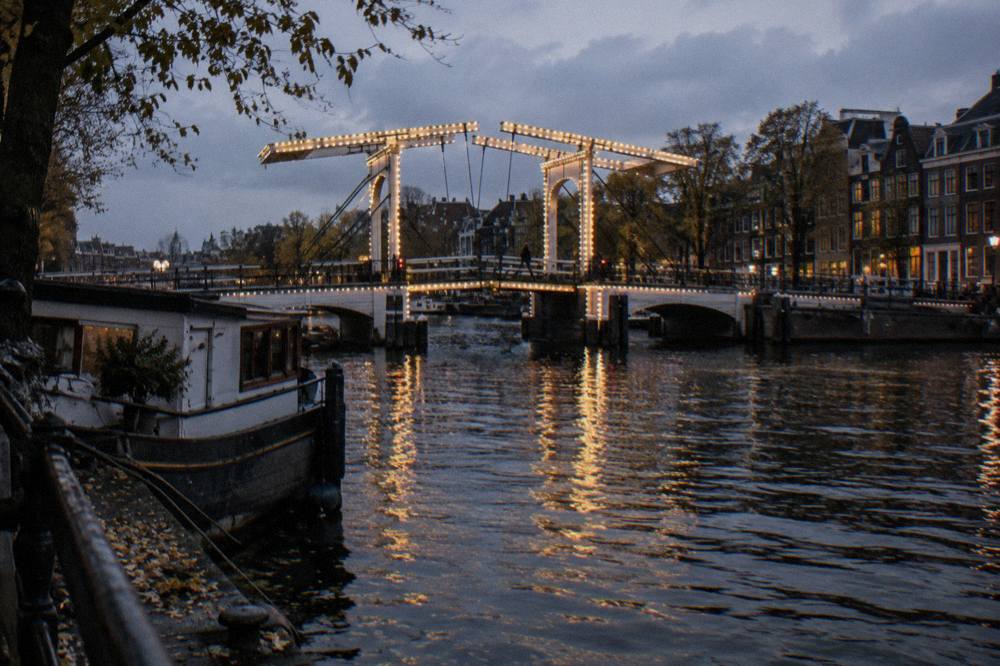
On land, the canal ring does the evening work. The Canal Ring, the UNESCO-listed grachtengordel, is free to wander, and its bridges are lit after dark. The Magere Brug, the Skinny Bridge over the Amstel, is a free open public space and one of the city's classic night viewpoints. The Reguliersgracht bridges viewpoint is another free spot where the lit bridge arches line up over the water. Neither has a gate, a fee or a ticket.
The seasonal headline is the Amsterdam Light Festival, edition 15, which runs 26 November 2026 to 17 January 2027. The 4.5 km walking route past the artworks is free, with lights on from 16:30 to 23:00 daily and until 21:00 on 31 December. The boat cruises, from about EUR 29.75, and the app audio walks are paid. That split is the single most useful thing to know about the festival: the artworks themselves, seen from the walking route, cost nothing.
De Wallen, the old centre's red light district, is free to walk through as a public neighbourhood. The city regulates guided tours there, up to 15 participants with an exemption needed for groups of more than 4, and tours must not pass the sex workers' windows, but individual visitors walk freely and pay nothing. The rules and the free status are covered in full later in this guide.
For a sense of how the evening options split between always free, conditionally free and closed, the table below sets them side by side.
| Evening option | Status after dark | The condition |
|---|---|---|
| IJ ferries, including the F3 | Free, 24 hours | Free for pedestrians and cyclists only |
| Canal Ring and lit bridges | Free | Open public space |
| Magere Brug | Free | Open public space |
| Amsterdam Light Festival walking route | Free, seasonal | 26 Nov 2026 to 17 Jan 2027, lights 16:30 to 23:00 |
| De Wallen streets | Free to walk | City rules on tours and behaviour apply |
| Westerkerk church interior | Closed by evening | Open Mon to Fri 11:00 to 15:00, Sep to Jun |
| Begijnhof courtyard | Closed by evening | Open about 10:00 to 18:00 |
| OBA rooftop terrace | Closed in winter | Closed November to March |
Museumplein deserves a winter mention here, with a careful split. The ice rink runs 24 October 2026 to 16 January 2027 and the Christmas Village runs 3 to 27 December 2026, 12:00 to 21:00 daily. Watching both is free; skating is ticketed. That is the pattern this whole guide follows: the building or the street or the spectacle is often free, the activity inside it usually is not.
Does The F3 Ferry Really Run All Night?
Yes. The F3 ferry to Buiksloterweg in Amsterdam Noord runs 24 hours a day, and all GVB IJ ferries, F1 to F7, are free for pedestrians and cyclists. There is no fare, no ticket and no off-hours charge. The F3 is the one free Amsterdam experience with no closing time at all, which makes it the backbone of any zero-budget evening in the city.
The details are straightforward. The ferries cross the IJ, the body of water behind Centraal Station, and they carry pedestrians and cyclists without charge as part of the city's transport setup. The F3 serves Buiksloterweg, the Amsterdam Noord side where the Eye Filmmuseum sits on the waterfront. The Eye's foyer, bar and terrace are free to enter, while its films and exhibitions are ticketed, so a free night ferry crossing plus a free foyer visit is a legitimate evening combination.
A few practical points follow from the official record. No departure minutes are published in the sources used here, so do not plan around a printed timetable; the ferries leave every few minutes according to the Eye Filmmuseum's own page, and the F3 runs around the clock. Cyclists and pedestrians share the ferries, and the crossing is short. Bicycles are not charged either, and the ferries are free for pedestrians and cyclists.
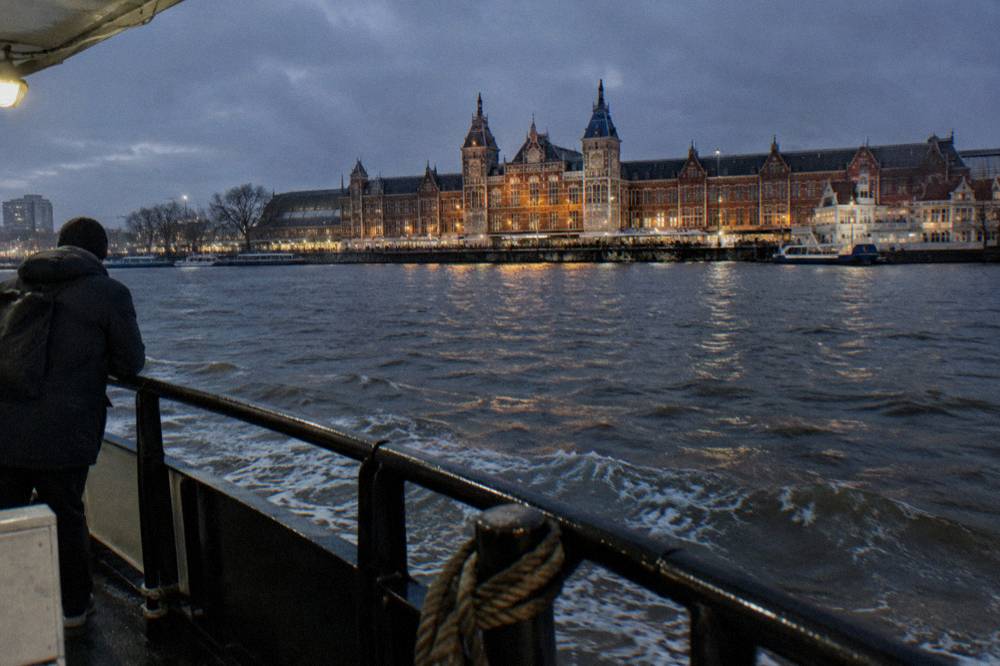
The night-time value of the F3 is the water view. From the deck you get the IJ waterfront, the Noord skyline and, crossing back, the lit mass of Centraal Station behind you. It is a free boat ride in a city where the canal cruises cost money, and unlike the cruises it runs at 2am if that is when you want to be on the water.
For anyone building an evening around it, the ferry pairs with free ground on the Noord side. NDSM Wharf is a free public area reached by the F4 ferry, and the broader free-Noord options are laid out in the free things to do in Amsterdam Noord guide. The IJ ferries connect both, free, all night.
If your evening starts with a guided walk rather than a ferry crossing, the English-language history walks above are all free, pay what you want, reserved on GuruWalk. Dominika English History Walk meets at the main entrance of Amsterdam Centraal Station and runs 2 hours, rated 4.88 out of 5 across 146 GuruWalk reviews. Niels Origins Walk, 2 Hours meets at the National Monument on Dam Square, rated 4.81 out of 5 across 116 GuruWalk reviews. The Medieval City Walls Walk, 1 hour 30, also meets at Centraal Station, city side, and has 78 GuruWalk reviews. Each ends in the early evening in practice, so treat them as a pre-dark start to a night itinerary rather than the night itself.
One transport note for the way home, expanded in the last section: the GVB day ticket is EUR 10 at the 2026 price, contactless card payment works with no registration, and from 1 January 2027 children aged 4 to 11 travel free nationwide with a paying adult. The ferries, though, never enter the fare calculation. They are free, full stop.
Which Canal Bridges Look Best Lit Up?
The Magere Brug over the Amstel and the Reguliersgracht bridges are the two free night viewpoints on record. Both are open public space with no gate, fee or closing time. The wider Canal Ring, the UNESCO grachtengordel, is free to wander after dark, and its bridges are lit from the waterline, so the view is a product of the street lighting itself rather than any ticketed attraction.
The Magere Brug, the Skinny Bridge, is a free open public space crossing the Amstel. At night its wooden structure is lit and the light carries across the water, which is why it holds its place on every free-viewpoint list. You cannot pay to see it better and you cannot be locked out of it. The free viewpoints in Amsterdam guide covers where it sits among the city's other no-cost outlooks.
The Reguliersgracht bridges viewpoint is the second name on the list. From the right angle on the Reguliersgracht, the lit arches of several bridges line up over the canal in a row. It is a street view, free by nature, and it counts as a free viewpoint in its own right. Between the two, you have the Amstel's wide dark water on one side and the canal ring's narrow lined-up arches on the other.
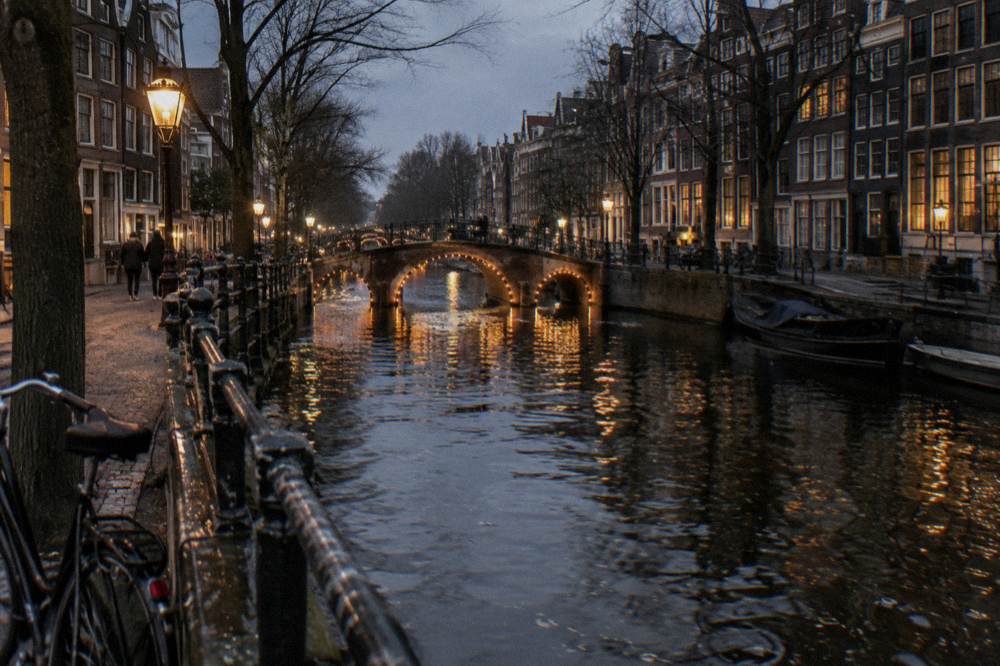
Around them sits the Canal Ring as a whole, a UNESCO-listed free area where the evening appeal is simply the lit facades and bridges over water. The Nine Streets, De Negen Straatjes, are a free open set of streets crossing the main canals, covered in detail in the Nine Streets and the Canal Ring guide. A night walk that links the Nine Streets, the Reguliersgracht bridges and the Magere Brug costs nothing but shoe leather.
Two honest limits belong here. First, the Oude Kerk tower, which would be a fine night landmark in the old centre, runs April to October only, and the Oude Kerk itself is ticketed at EUR 14.50 anyway, so do not build an evening around it. Second, the OBA Centrale Bibliotheek's rooftop terrace, a free daytime view over the city, is closed from November to March, so in winter it is not an evening option at all. The bridges, by contrast, have neither a season nor a closing time.
The table below is the compact night-view answer: which free water-and-bridge spots deliver after dark, and what each one actually is.
| Free night spot | What it is | Evening status |
|---|---|---|
| Magere Brug | Wooden bridge over the Amstel, open public space | Lit at night, no closing time |
| Reguliersgracht bridges | Lined-up lit bridge arches over the canal | Street view, always free |
| Canal Ring streets | UNESCO-listed grachtengordel | Free to wander, lit facades |
| IJ waterfront from the F3 deck | Free 24-hour ferry crossing | Runs all night |
| NDSM Wharf | Free public wharf area across the IJ | Reached by the free F4 ferry |
How Does The Light Festival Walk Work At Night?
The Amsterdam Light Festival runs 26 November 2026 to 17 January 2027, and only the 4.5 km walking route is free. Lights are on from 16:30 to 23:00 daily, and until 21:00 on 31 December. The boat cruises, from about EUR 29.75, and the app audio walks are paid, so a free visit means walking the route yourself between those hours.
The festival's 15th edition installs 19 artworks, with build-up beginning the week of 10 November 2026. The official Amsterdam Light Festival site carries the dates and the lights-on hours, and the free claim has a precise boundary: it is the walking route that costs nothing, not everything sold under the festival name. Artworks stand in and along the water, and the 4.5 km route is designed to be walked.

The paid parts are the boats and the app. Canal cruises during the festival start from about EUR 29.75, and the app's audio walks are paid products. If you want the festival free, you walk, and the walking route delivers the artworks from the quayside. The distinction is the same one the Amsterdam Light Festival what is free guide explores in depth.
Timing matters more than anything else here. Lights come on at 16:30 and go off at 23:00, so the festival effectively creates a free early-evening attraction in the darkest weeks of the year. On 31 December the lights go off earlier, at 21:00. Arrive outside the window and you will walk a dark route past unlit installations, so the hours are the one figure worth memorising.
The festival overlaps with other free winter events worth folding into the same evening. The Museumplein Christmas Village runs 3 to 27 December 2026, 12:00 to 21:00 daily, and watching is free. The Funky Xmas Market at Westerpark on 20 December 2026 has free entrance. The Amsterdam in December free events guide gathers these into one calendar. None of them charges for standing in the street and looking, which is the entire point of a free winter night out.
What Are The Rules For Evening Walks In De Wallen?
De Wallen is free to walk through, but guided tours follow municipal rules: up to 15 participants per group, an exemption needed for more than 4, tour hours 8:00 to 22:00, and no passing the sex workers' windows even with 4 or fewer people. Free walking tours are not banned. Smoking cannabis in the old centre is banned with a possible EUR 100 fine, and street drinking is forbidden in the centre.
The old centre rules come from the city itself, published on its permits page for tours. A guided group runs at up to 15 participants. An operator wanting more than 4 people per group needs an exemption, which costs about EUR 212 and runs around six weeks. Tour hours are 8:00 to 22:00, megaphones are not allowed, and tours must not pass the sex workers' windows regardless of group size. Fines run EUR 190 per guide and EUR 950 per company. Free, pay-what-you-want tours are explicitly within these rules; they are allowed, and they route around the windows. The rest of the planning pages sit on Free Things To Do In Amsterdam.
For an individual walking at night, the behavioural rules matter more than the tour rules. Smoking cannabis in the old centre, meaning De Wallen, Nieuwmarkt and Dam Square, has been banned since 2023 with a possible EUR 100 fine. Drinking alcohol in the street is forbidden in the centre. On-the-spot fines of EUR 100 to 150 apply for intoxication, noise and urination. Photography is its own question: the city found no enforceable photo ban in public space in a December 2023 council letter, though signs and campaigns discourage photographing the windows, and the photos in the red light district post covers it fully.
One thing the rules do not do is charge you for being there. Walking through De Wallen at night is free, and the red light district free sights, rules and tours guide lays out the whole neighbourhood on that basis. The people in the windows are working, not performing for visitors, and the neighbourhood is treated here as a residential and work district with rules, not as a spectacle.
If you want a guide for the district in the evening window before 22:00, two English-language options exist on GuruWalk, both free, pay what you want. The Bilingual Red Light District Walk by Friendly Tours Amsterdam meets at the Barbizon Hotel on Prins Hendrikkade, runs 1 hour 30 minutes in English and Spanish, and is rated 4.86 out of 5 across 1,194 GuruWalk reviews. It is the walk this site features alongside its neighbourhood guide.
The second is the RoamWorld English Red Light Walk, meeting at the Prins Hendrik Hotel on Prins Hendrikkade, 1 hour 30 minutes, rated 4.77 out of 5 across 161 GuruWalk reviews. Both are described here only by operator, meeting point and neighbourhood, and both are reserved on GuruWalk.
The rules table below compresses what the city publishes, so you can check the evening boundaries at a glance.
| Rule in the old centre | What the city says |
|---|---|
| Group size for guided tours | Up to 15 participants |
| Groups of more than 4 | Exemption needed, about EUR 212, around six weeks |
| Tour hours | 8:00 to 22:00 |
| Passing sex workers' windows | Not allowed for tours, any size |
| Megaphones | Not allowed |
| Cannabis in the old centre | Banned since 2023, possible EUR 100 fine |
| Street drinking in the centre | Forbidden |
| Photography of windows | No enforceable ban in public space; discouraged |
Which Free Spots Are Closed By Evening?
Several daytime freebies shut well before dark: the Westerkerk church interior is open Monday to Friday 11:00 to 15:00 from September to June, the Begijnhof courtyard runs about 10:00 to 18:00, the OBA rooftop terrace closes from November to March, and the Oude Kerk tower only runs April to October. The Westerkerk tower is closed to visits entirely right now because of restoration. None of these belongs in a night plan.
The pattern to watch is the short-hours free sight. The Westerkerk's church interior is free to enter with a donation suggested, but its hours are 11:00 to 15:00, Monday to Friday, September to June. That is a midday sight, not an evening one, and the tower above it cannot be visited at all while restoration work runs, a point the separate Westerkerk tower answer tracks directly. Do not arrive at 8pm expecting either.
The Begijnhof is the same story an hour later. It is a residential courtyard, free to visit about 10:00 to 18:00, closed to visitors on King's Day, with no group tours and an expectation of quiet. By evening it is closed, and being residential, that closing is real rather than nominal. The is the Begijnhof free post gives the full picture.
Winter adds a second layer of closures. The OBA Centrale Bibliotheek building is free to enter, but its rooftop terrace closes from November to March, so the view is a summer-only freebie. The Rijksmuseum's gardens are only open in summer, 9:00 to 18:00, per the museum's own prices page, and the official page does not even promise free entry, so winter evenings are doubly out. The is the Rijksmuseum garden free post carries that contested question in full.
Then there are the paid-at-night sights that look free from the street. The Royal Palace on Dam is free to see from the square and EUR 13.50 inside. The A'DAM Lookout across the IJ costs about EUR 16.50, and the free alternative is the ferry ride itself, not the deck. The full splits live in the free attractions in Amsterdam guide and the table below.
| Sight | Free part | When the free part works | Evening verdict |
|---|---|---|---|
| Westerkerk church | Interior, donation suggested | Mon to Fri 11:00 to 15:00, Sep to Jun | Closed by evening |
| Westerkerk tower | None | Closed for restoration | Not available |
| Begijnhof | Courtyard | About 10:00 to 18:00 | Closed by evening |
| OBA rooftop terrace | Terrace | Closed Nov to Mar | Not a winter option |
| Rijksmuseum gardens | Gardens | Summer only, 9:00 to 18:00 | Closed in winter |
| Eye Filmmuseum | Foyer, bar, terrace | Building open | Free to enter, films paid |
| Royal Palace | Exterior from Dam Square | Always | Free view, paid interior |
The honest summary: after dark, the free city shrinks to the ferries, the bridges, the streets, the festival route in season and the free ferries' Noord side. That is still a full evening, but it is an evening of water, light and streets, not of interiors.
How Do You Get Home After A Late Ferry Ride?
The ferries themselves are the answer on the Noord side: the F3 runs 24 hours, free for pedestrians and cyclists, so the crossing back never stops. On land, the GVB day ticket is EUR 10 at the 2026 price, contactless payment works with no registration, and from 1 January 2027 children aged 4 to 11 travel free nationwide with a paying adult. Beyond these figures, no travel times or transit fares are given on this page.
Start with what never closes. The F3 to Buiksloterweg runs around the clock, so if your evening ends in Amsterdam Noord at any hour, the crossing back is free and running. The other IJ ferries, F1 to F7, are likewise free for pedestrians and cyclists, though the F3 is the one with 24-hour service on record. The free ferries in Amsterdam guide covers the network in detail.
On the tram and metro side, the fare facts that can be printed are few and firm. The GVB day ticket costs EUR 10 at the 2026 price. Contactless card payment works with no registration. From 1 January 2027, two changes land nationwide: children aged 4 to 11 travel free with a paying adult, and the national 65-plus discount on bus, tram and metro ends. No departure minutes, journey times or per-ride fares are published in the sources used here, so plan against the GVB's own pages for those.
A late-night budget structure then looks like this: the outbound and return ferry crossings cost nothing, the walk on either bank costs nothing, and the only money you can spend is the money you choose to spend on food, drink or a paid attraction. The risk in the plan is not cost, it is counting on land transport after dark, so keep the ferry, which runs 24 hours, as the spine of a late evening.
For anyone whose night ends with a history walk rather than a ferry, the old-centre options stay free too. The Aldo Origins Walk meets at the National Monument on Dam Square, runs 1 hour 45 minutes in English, and is rated 4.78 out of 5 across 261 GuruWalk reviews, reserved on GuruWalk like every walk on this site.
Why Do People Plan A Night Visit To Sights That Shut At 15:00?
The common evening mistake is treating short-hours free sights as night options: the Westerkerk interior closes at 15:00, the Begijnhof by 18:00, the OBA terrace from November, the Rijksmuseum garden all winter, and the festival's lights go off at 23:00. Each has a published limit, and each limit is easy to check before you leave. Building a night itinerary around a daytime freebie wastes the evening.
The mistake has a shape. A visitor reads that the Westerkerk is free, or that the library has a rooftop view, or that the Rijksmuseum has gardens, and files all of it under "free Amsterdam" without the hours. Then the evening plan collapses, because the free part of each of those sights lives in a narrow daytime window. The fix is to sort free sights by when their free part actually works, which is exactly what the closed-by-evening table above does.
The second version of the mistake is seasonal. Winter visitors hear "Light Festival" and assume it covers the whole evening, when the lights run 16:30 to 23:00, or they hear "rooftop view" in December when the OBA terrace is closed November to March. Summer visitors do the reverse with the Rijksmuseum garden, which only opens in summer. Season and hour are both part of the price of "free" here, and the official pages state them plainly, including the Rijksmuseum's own prices page for the garden's summer-only hours.
The third version is the paid part hiding inside the free one. The Eye Filmmuseum's foyer is free but its films are ticketed. Stadsarchief's Schatkamer is free but the Meesterwerk exhibition, running to 7 March 2027, needs a ticket. NEMO's Rooftop Square is free but the museum is paid. Watching the Museumplein rink is free, skating is not. Naming the paid part in advance is what stops a free evening from turning into an unexpected spend.
The reliable night spine, one more time: the F3 ferry, free at any hour; the lit bridges and canal ring, free with no closing time; the festival walking route in season, free between 16:30 and 23:00; De Wallen's streets, free to walk under the rules. Everything else deserves a hours check before it earns a place after dark, and the free things to do in Amsterdam in winter guide does that check for the cold months.
Common Questions About Amsterdam After Dark
What Is Free In Amsterdam After Dark?
The IJ ferries including the 24-hour F3, the lit canal bridges and the Magere Brug, the Canal Ring streets, De Wallen's public streets under the city rules, and the Amsterdam Light Festival's 4.5 km walking route from 26 November 2026 to 17 January 2027, lights on 16:30 to 23:00. None of these needs a ticket.
Does The F3 Ferry Really Run All Night?
Yes. The F3 to Buiksloterweg in Amsterdam Noord runs 24 hours a day, and all IJ ferries F1 to F7 are free for pedestrians and cyclists. No fare, no ticket and no night surcharge apply, which makes it the only free Amsterdam experience with no closing time at all.
Which Canal Bridges Look Best Lit Up?
The Magere Brug over the Amstel and the Reguliersgracht bridges viewpoint are the two free night bridge spots on record. Both are open public space with no gate, fee or closing time, and the wider UNESCO Canal Ring is free to wander with its bridges lit after dark.
How Does The Light Festival Walk Work At Night?
The walking route is the free part: 4.5 km past the artworks, 26 November 2026 to 17 January 2027, lights on 16:30 to 23:00 daily and until 21:00 on 31 December. Boat cruises from about EUR 29.75 and the app audio walks are paid, so a free visit means walking it yourself.
What Are The Rules For Evening Walks In De Wallen?
Guided tours run up to 15 participants, need an exemption above 4, operate 8:00 to 22:00, and must not pass the sex workers' windows. Free walking tours are allowed. Cannabis smoking in the old centre is banned with a possible EUR 100 fine, and street drinking is forbidden in the centre.
How Do You Get Home After A Late Ferry Ride?
The F3 runs 24 hours and crosses free for pedestrians and cyclists, so the return from Amsterdam Noord never stops. On land, the GVB day ticket is EUR 10 at the 2026 price and contactless payment needs no registration. From 1 January 2027 children aged 4 to 11 travel free with a paying adult.